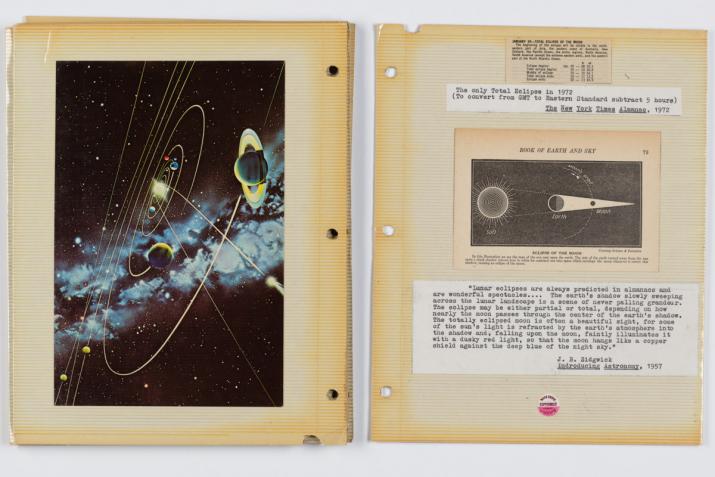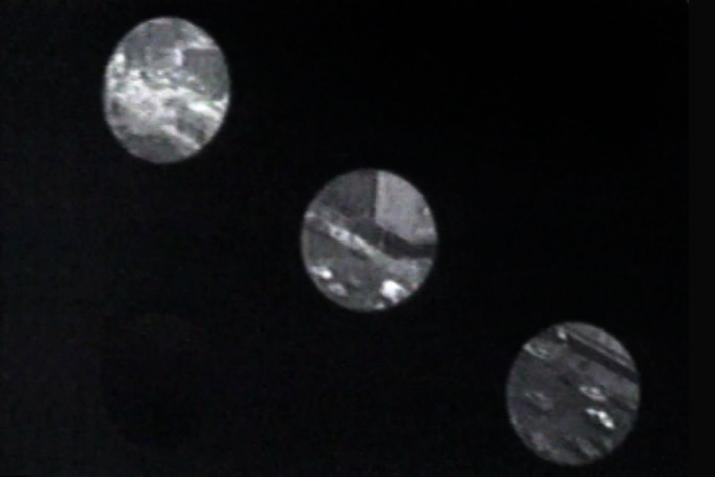
Lunar Imaginaries and Realities in Nancy Holt’s "Moon Book"
Nancy Holt’s System Works: A Reflection on Research
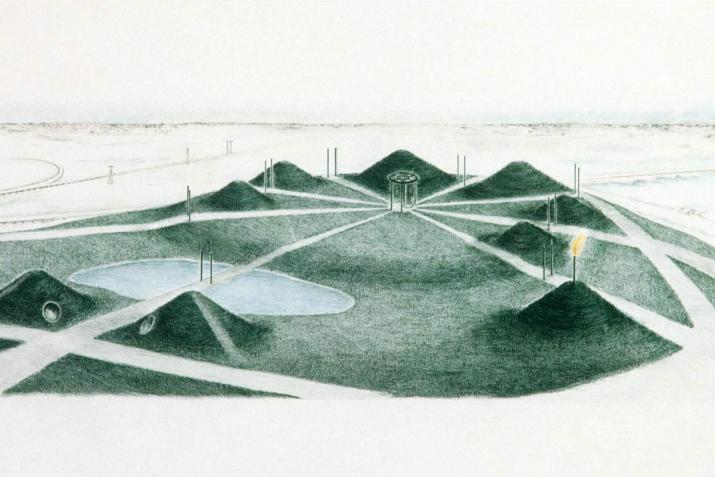
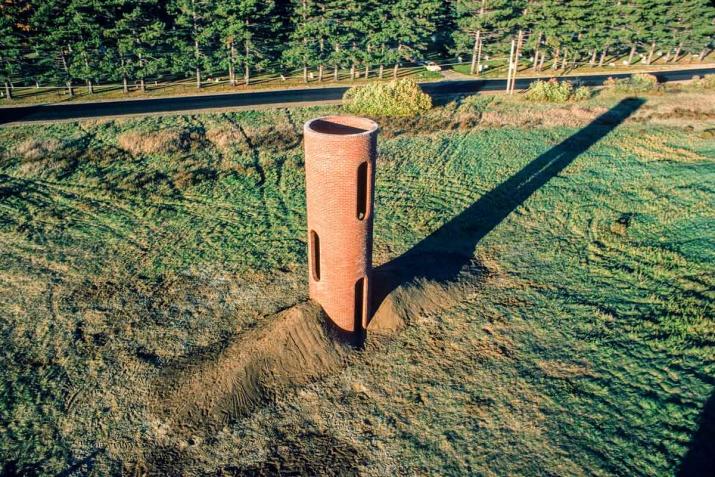
Nancy Holt’s Sky Mound: “The exposure is better than at the Met”
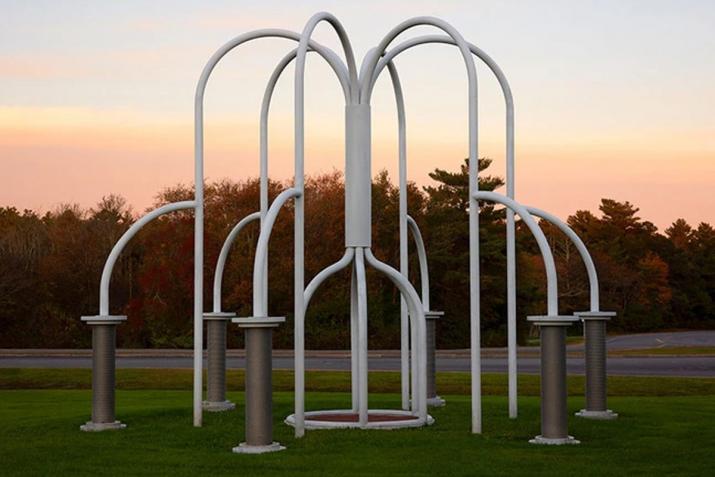
Every time I travel from Strasbourg, where I live and work, to Princeton, where I go for research, I fly from Frankfurt to Newark and then drive to my destination. The landscape is made of highways, parking lots, office buildings, motels, and occasional vegetation, but nothing stands out and invites one to pause. Nancy Holt’s unfinished Sky Mound (1984-1991) was meant to catch the eye, provoke awe and tear the texture of suburban New Jersey by its stunning difference.
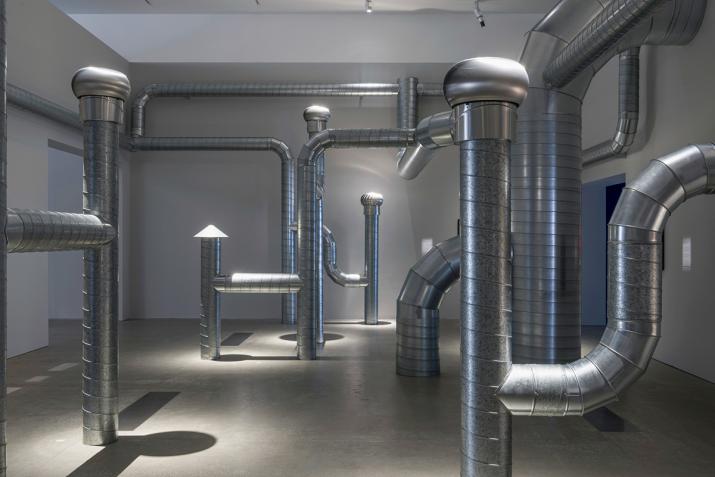
Articulations of Air: the pneumatic aesthetics of Nancy Holt’s "Ventilation System"
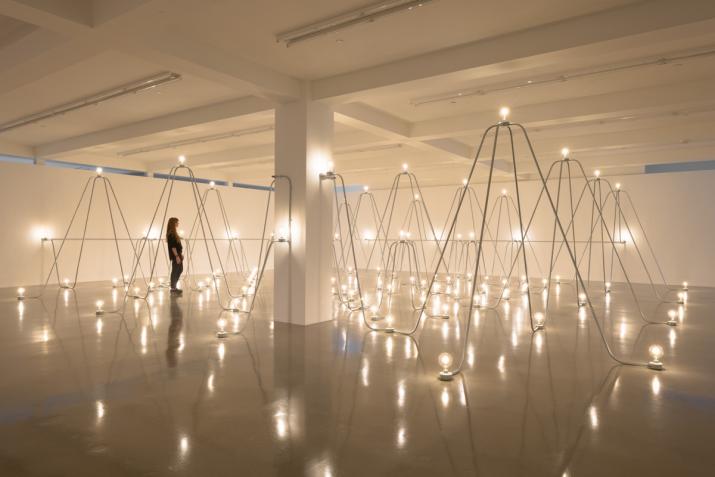
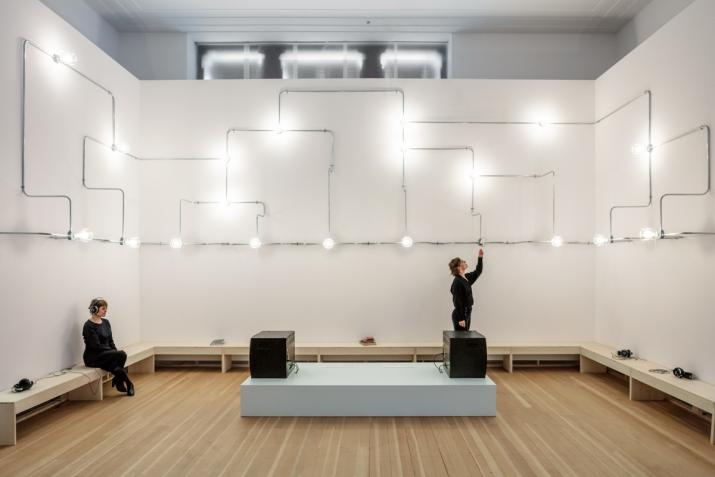
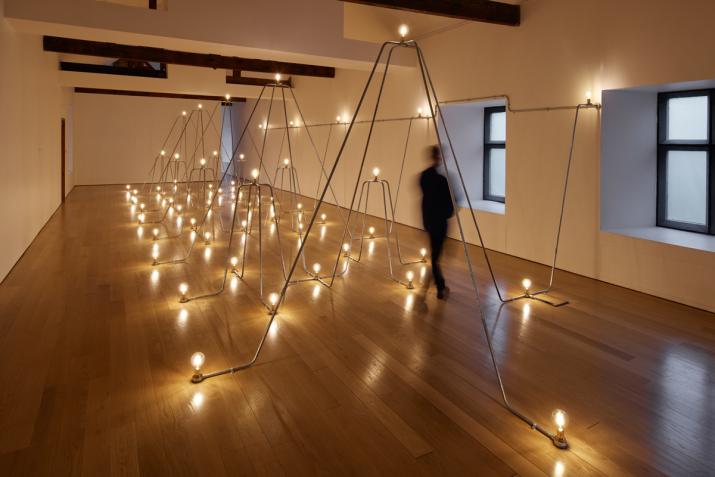
“We live in a world of steel mandalas” — Nancy Holt’s "Electrical Lighting for Reading Room"
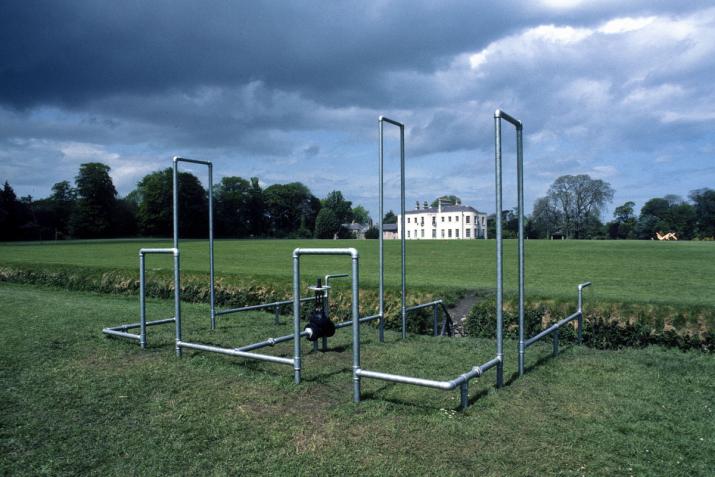
Nancy Holt, "Sole Source," 1983
Nancy Holt’s Sole Source was commissioned by the Independent Artists Group of Dublin as part of the twenty third Independent Artists Exhibition in 1983, which took place across two venues in Dublin: the Douglas Hyde Gallery and Marlay Park in Rathfarnham, at the foothills of the Dublin mountains, around six miles from the city center.
Nancy Holt’s "Ventilation System" (1985–1992)
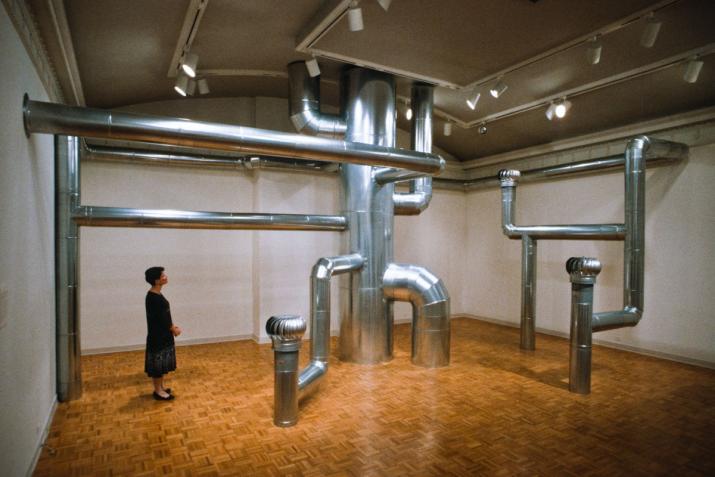
First conceived in 1985, Nancy Holt’s Ventilation System is a site-responsive installation in which interconnected industrial-scale stainless steel ducts channel airflow in and out of a gallery space.
Spinwinder (1991)
In a moment captured in a photograph at the start of the twentieth century, in the knitting room of the New Bedford Textile School, three students stand at individual machines. Each holds a circular creel from which spooled yarn was drawn up, then down, through a mechanized system that knits a tubular shape. I encountered this image in the archives of the Claire T. Carney Library at UMass Dartmouth, where I worked from 2017 until 2022 in a lecturer position, configured to combine teaching and curatorial work (later with the title Director of Community Engagement Initiatives).
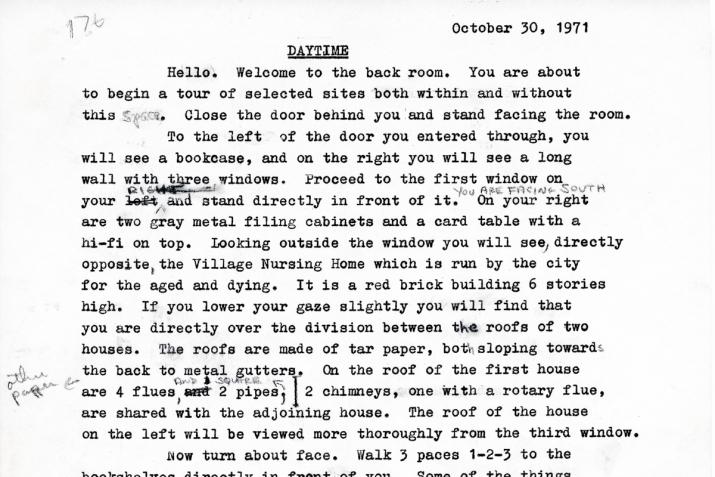
How to Share Space: Nancy Holt’s "Studio Tour: Daytime"
Electrical System: An Archaeology of an Artwork
Nancy Holt, "Underscan" (1974)
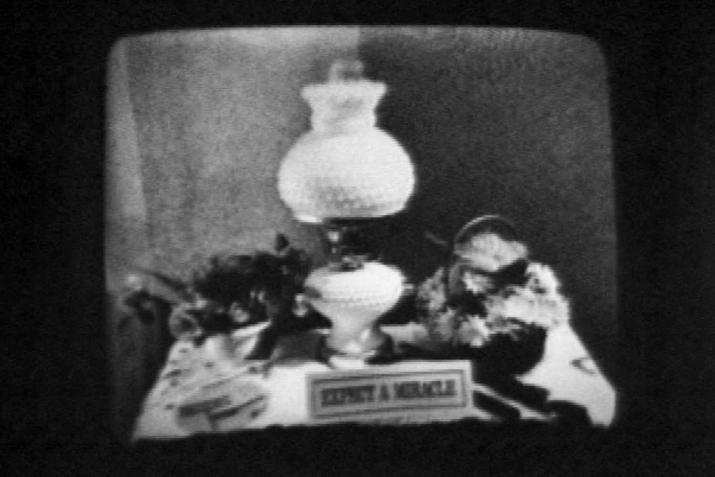
We locate ourselves in various ways: phenomenologically we understand our bodies within our surroundings, cartographically we measure our position on the earth, imaginatively we locate ourselves in relation to places we call home as much as those we have never visited. Much of Nancy Holt’s work pays close attention to these interlinked processes of locating. Holt’s 1974 video Underscan brings to the fore the act of imaginative location, and its ties to family and care. This act of locating had a lasting impact on her practice.
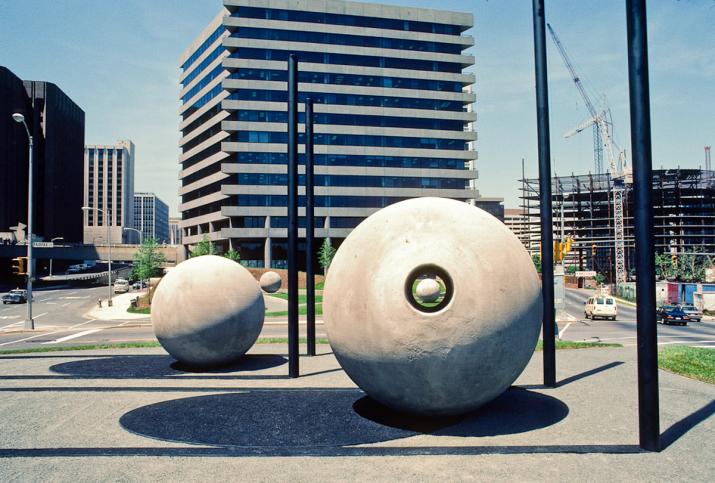
Here Before & Where Beyond: "Dark Star Park"
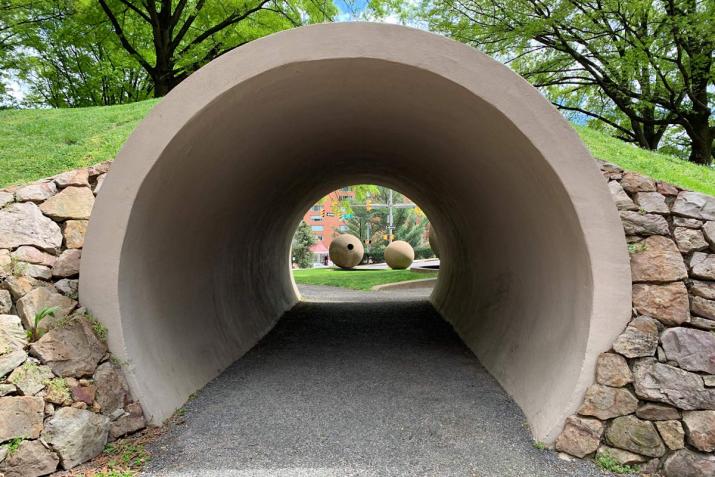
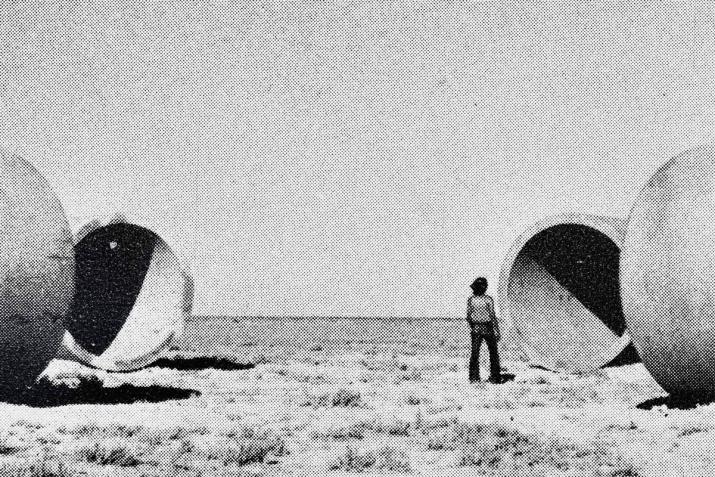
Everything and Nothing: On Nancy Holt’s "Sun Tunnels" (1973–76)
Nancy Holt's "Dark Star Park"
Monument wars contesting public space. Controversies arising over renovations of Brutalist landscape design. As the custodian of a world-renowned artist-designed park now in its fourth decade, these recent developments resonate.
30 Below
Voice and Vision in "Swamp"
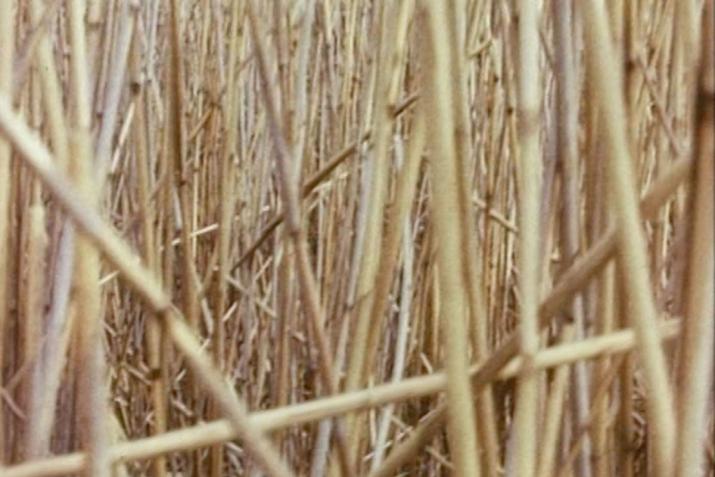
The film opens with a disembodied male voice and a landscape in motion. “Just walk in a straight line,” the man directs, as the camera advances tentatively towards an expanse of tall grasses. “I think, I think I am,” replies an unseen woman, the camera inching forward into the reeds. “Straight in…to that clump,” the man continues. “It’s OK, Nan, you’re on fairly solid ground. Straight in. Just go right in.…”
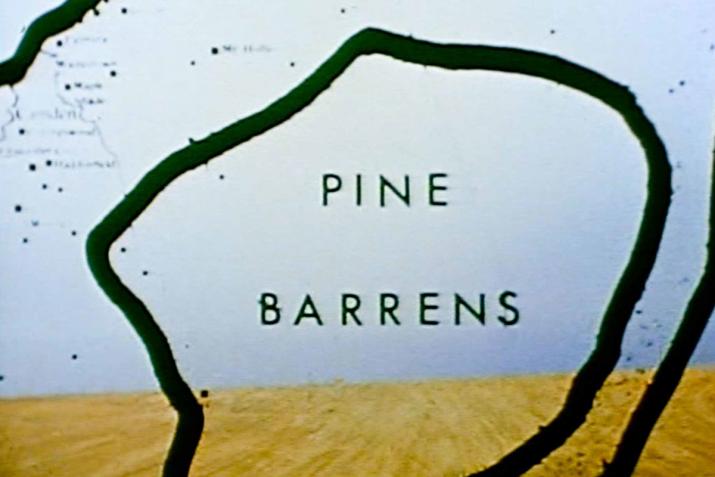
Pine Barrens
In 1975, Nancy Holt created Pine Barrens, an experimental film shot on a tract of land in the dead center of New Jersey known mostly for its cranberry bogs, sand pits, and stumpy pine trees. Pine Barrens is a brilliant rumination on one of modernity’s central dialectical knots: the relationship between center and margin. That it does so not from a metropolis but from a periphery lodged within a periphery makes it prescient indeed. As Holt well recognized, no better place to explore this particular antinomy exists than the Pine Barrens.
Nancy Holt: Zeroing In
Nancy Holt strove to provoke the “concretization of perception” by isolating “limited visions through holes and things” that would cause people to “really focus, really perceive intensely the thing seen.”1 Holt’s 1973 video Zeroing In is a conversation, a game, and an experiment.
Mono Lake: Ring of Fire
Swampy Ecologies
You are in the middle of an expanse of tall thick dry grass, head height. As you look and move through this, a world unfurls that you become immersed in feeling, hearing, seeing, and experiencing fully in each moment. Expansive. The experience feels vivid and rich despite the difficulties of movement across uneven ground and against a fierce wind. Immersive. You cannot see beyond your immediate surroundings. There is no horizon.
Nancy Holt "Trail Markers" (1969) or, the walk from Wistman’s Wood
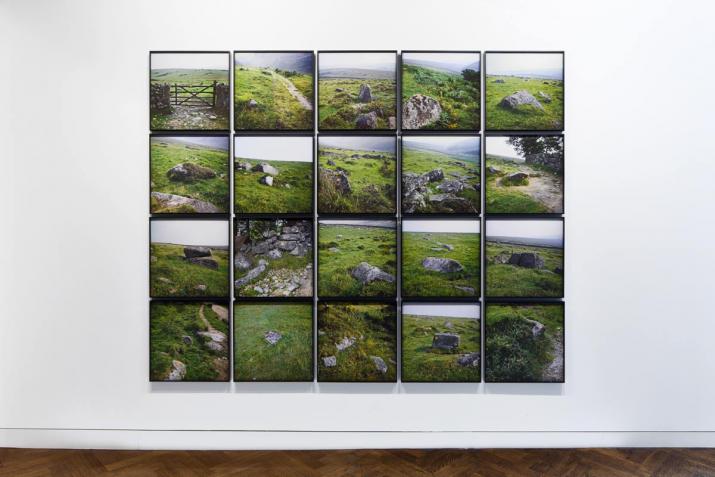
Trail Markers was photographed over a short stretch of publicly accessible footpath on the granite upland in the South-West of England known as Dartmoor. The path stretches between Two Bridges and Wistman’s Wood. The painted orange dots were a means to indicate the direction of the path for walkers and hikers. [Fig.1]
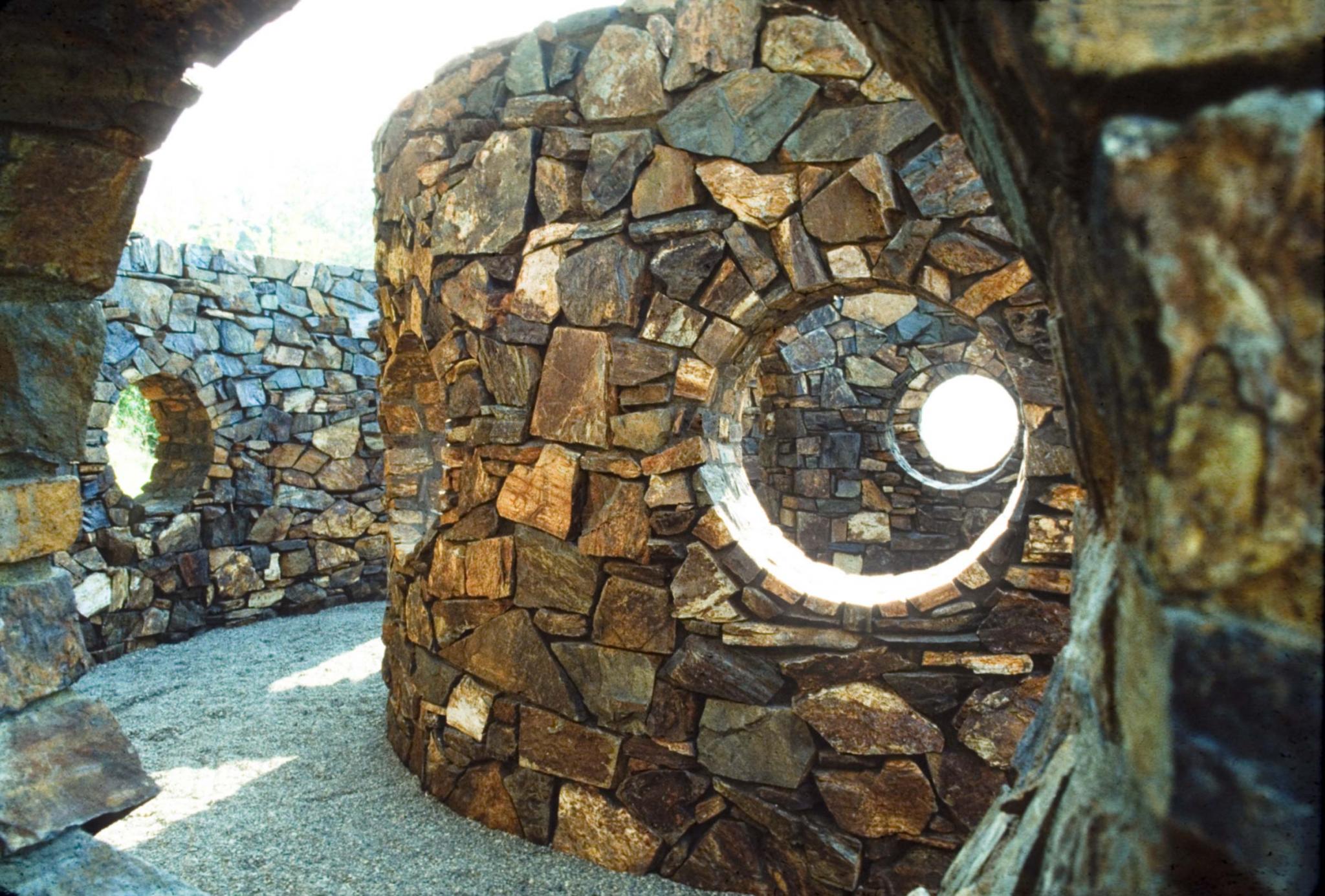
Doubling Down: Nancy Holt’s Stone Enclosure: Rock Rings
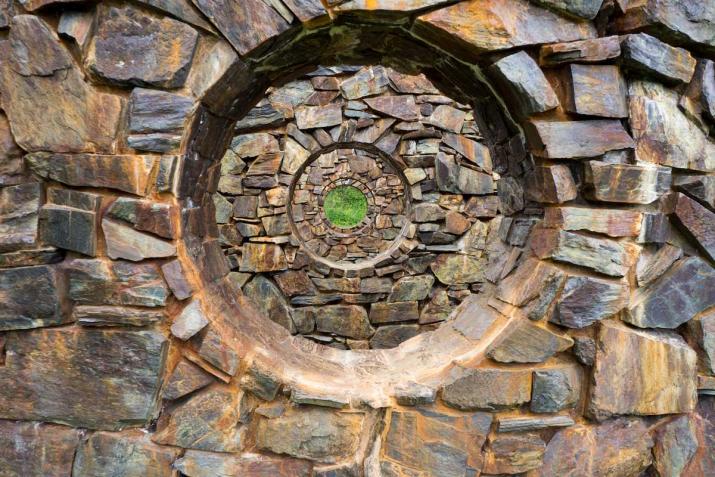
Circles everywhere! Upon entering Nancy Holt’s 2018 solo exhibition at Dia Art Foundation in Chelsea, New York City the observer is engulfed by a network of flat circular line drawings, round cast shadows, and orbicular light pools. Circles also appear dimensionally: as dark voids cut into walls and as mirrored surfaces shaped into orbs. Very tangibly Holt’s circles telescope out, forming lens-less viewfinders. As one stoops to look through cast-iron spyholes, for example in Dual Locators (1972), a tunneling effect occurs: circles become layered onto circles.