Ecological Aspects of My Work
For the last twenty-four years I have made large-scale, outdoor, site-specific sculptures. Each work evolves out of its site, with consideration given to the topography, the built environment and to local materials, along with the psychology, sociology, and history of each place. Many of these works have astronomical aspects, being aligned with the sunrises and sunsets on the equinoxes and solstices, the North Star and/or the moon. Others of my works are System Sculptures1 which variously channel water, air, electricity (a form of fire), and methane gas from decomposing organic matter.
Since incorporating natural elements, channeling natural substances, and being sensitive to outdoor sites are so much a part of my work, it was inevitable that ecological concerns would crop up in my art process, and that a few works with ecological aspects would be produced. Three of these works, Views Through a Sand Dune (1972), Catch Basin (1982), and Sky Mound, are included in this study.
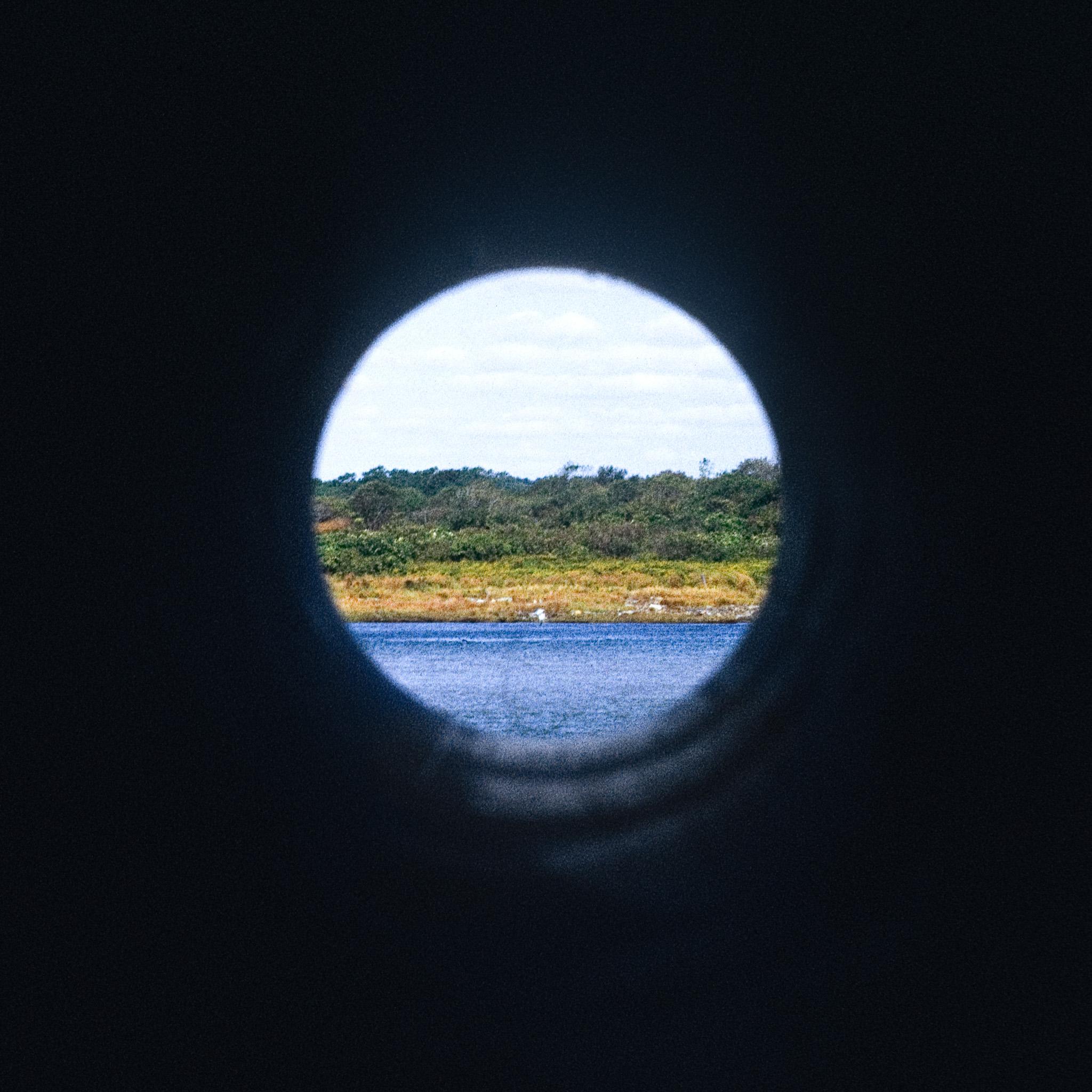
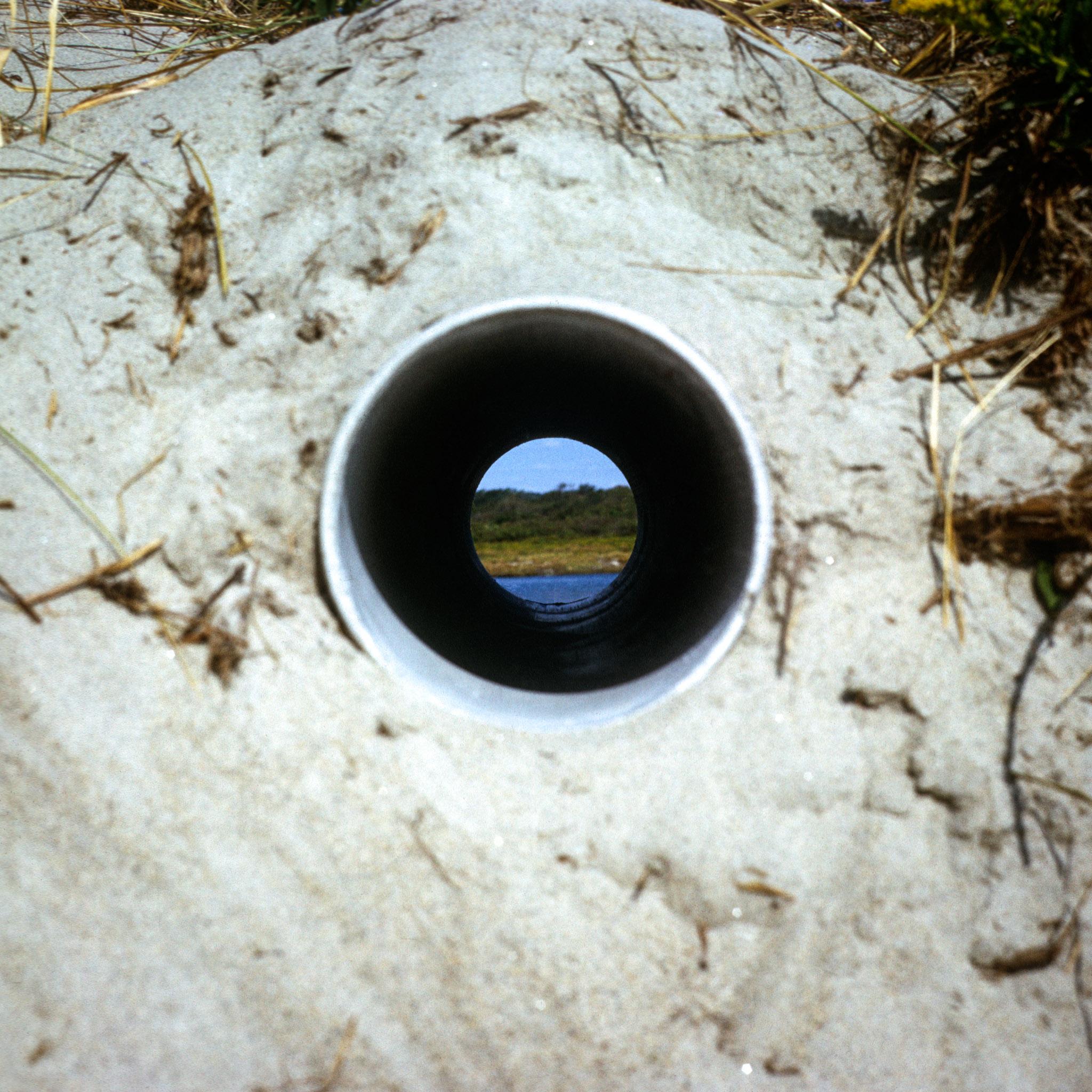
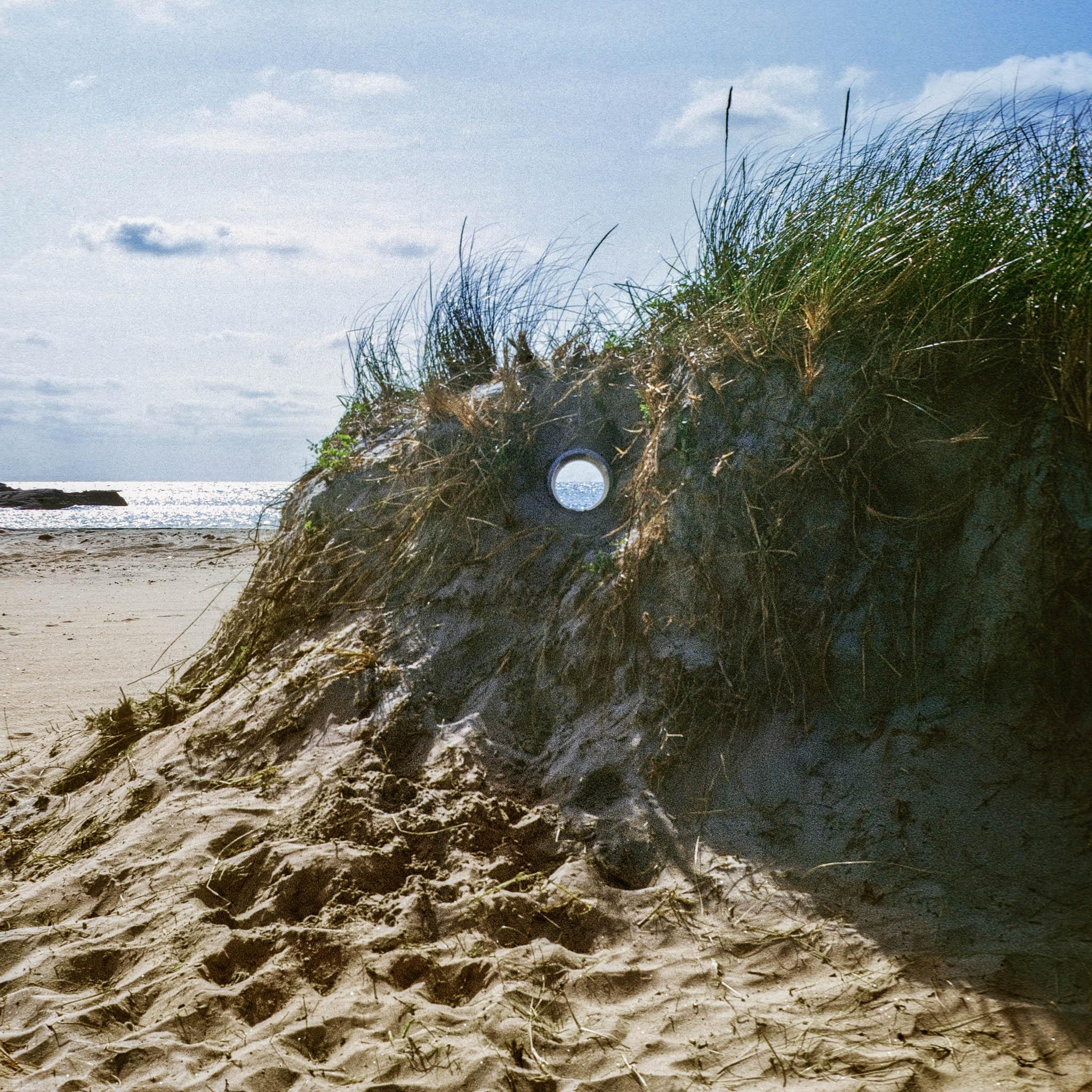
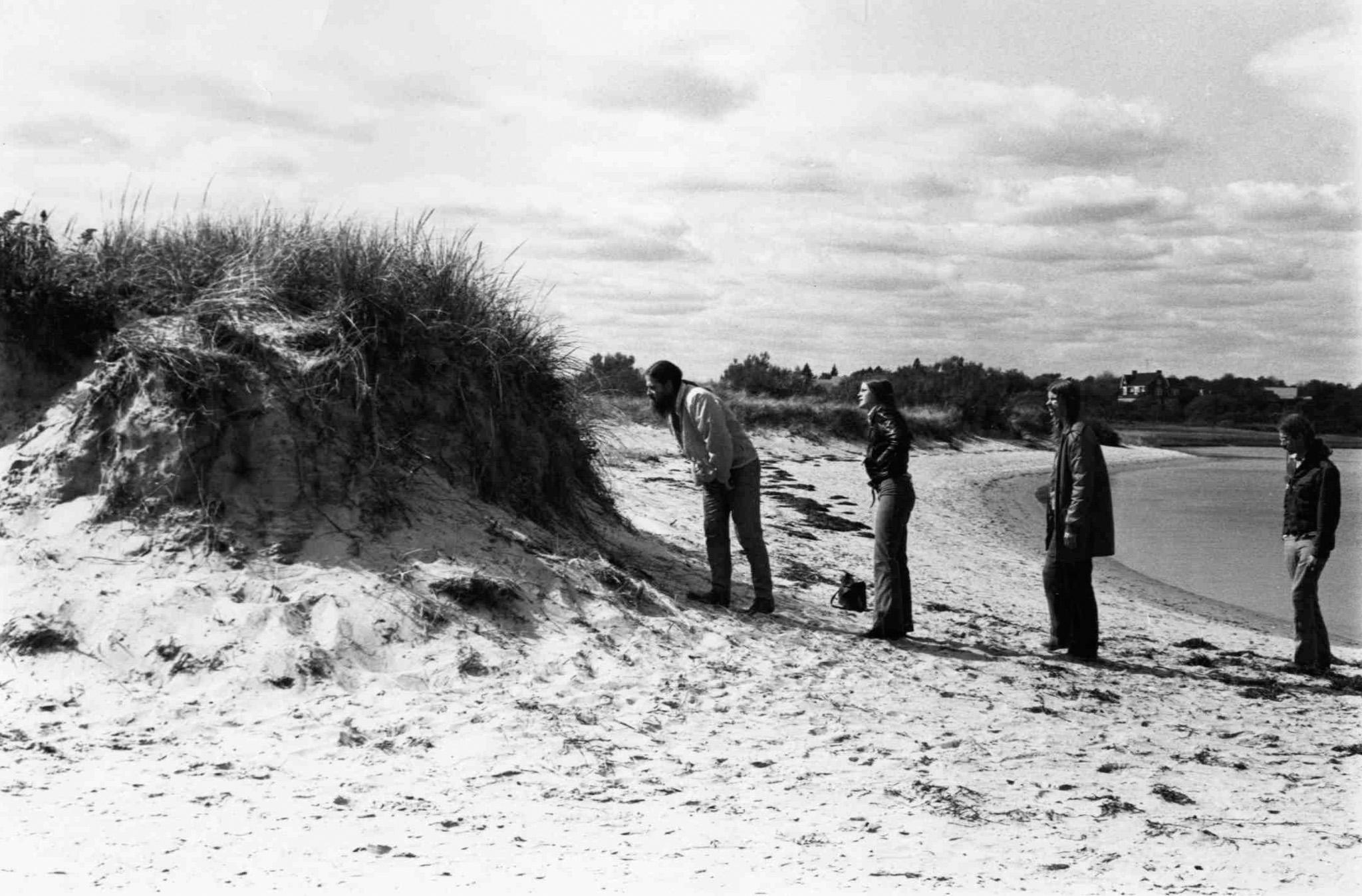
In Views Through a Sand Dune the pipe through the dune actually helped retard the wind erosion, which was slowly eating away at this highly exposed dune situated at the end of a peninsula where the Narragansett River and the Atlantic Ocean meet. [When I made the earthwork] this ecological connection certainly was not the most critical aspect of the work. Views Through a Sand Dune framed horizons of earth, water and sky, as well as occasional appearances of the sun and moon or, far more frequently, the sun and moon seen indirectly as light glimmering on the water. However, I would never have made Views Through a Sand Dune, an essential work for me, in that place if the engineer I consulted had thought it would harm the environment. That it actually enabled the dune to last longer was very satisfying and added another dimension to the work.
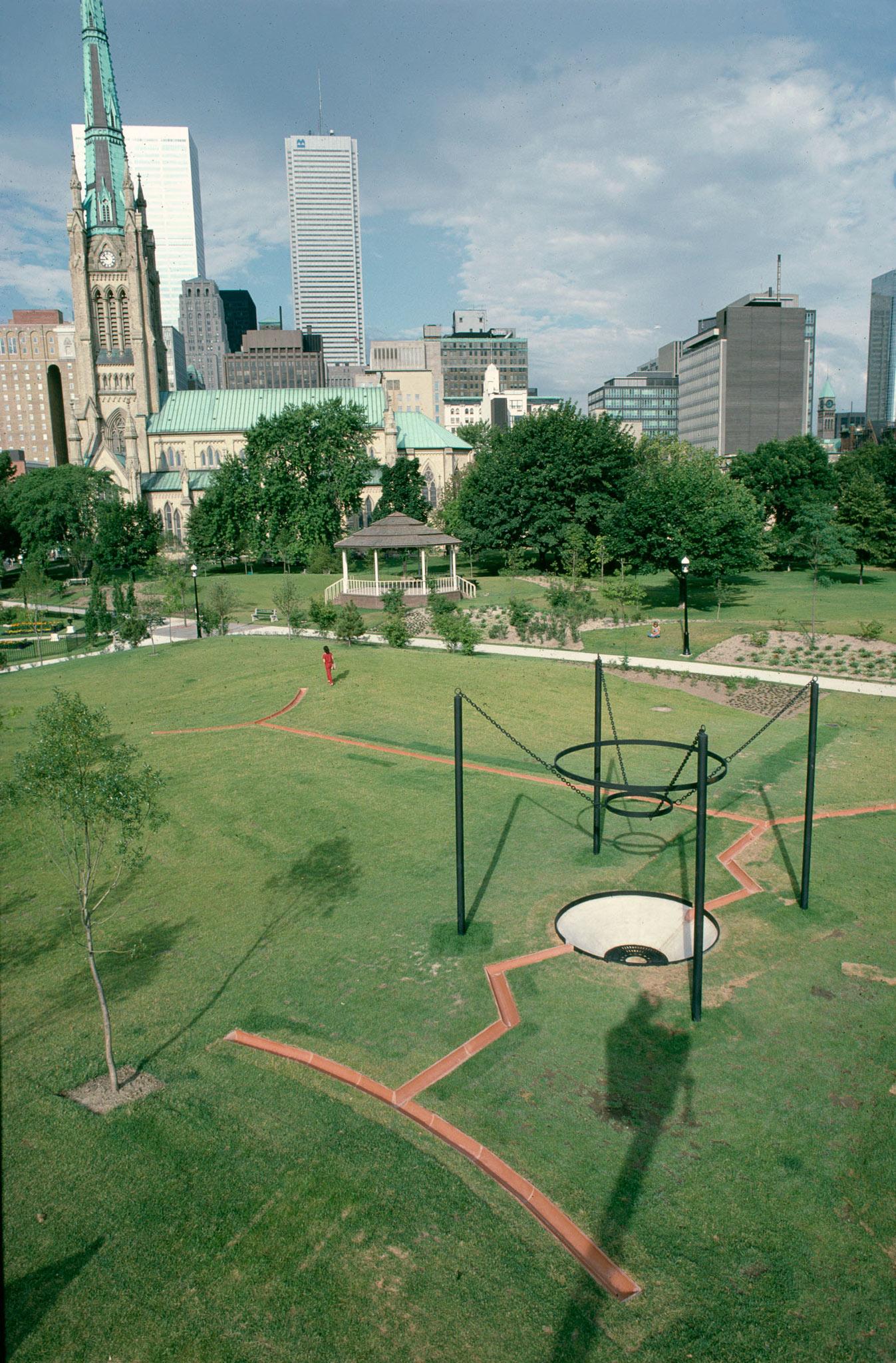
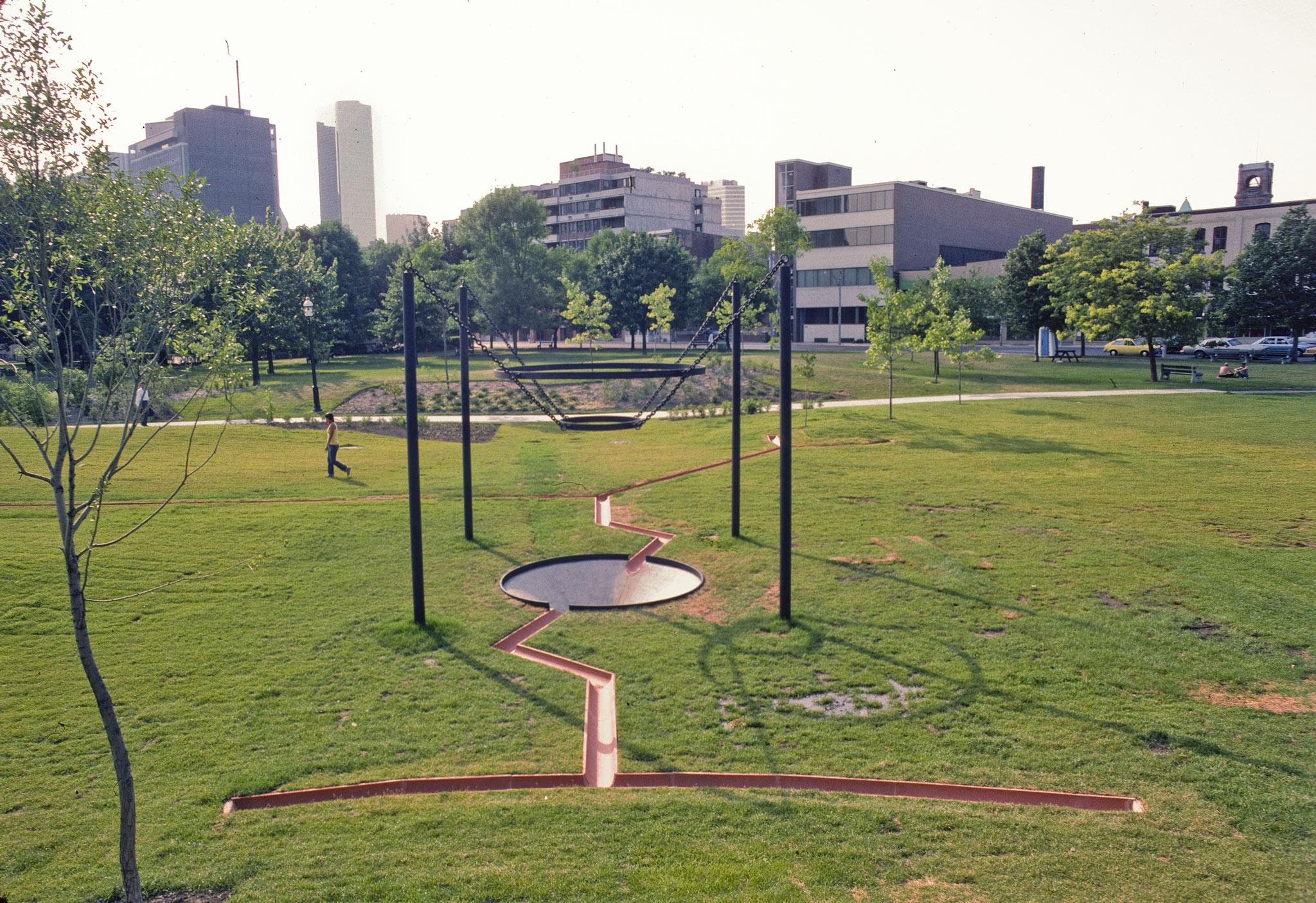
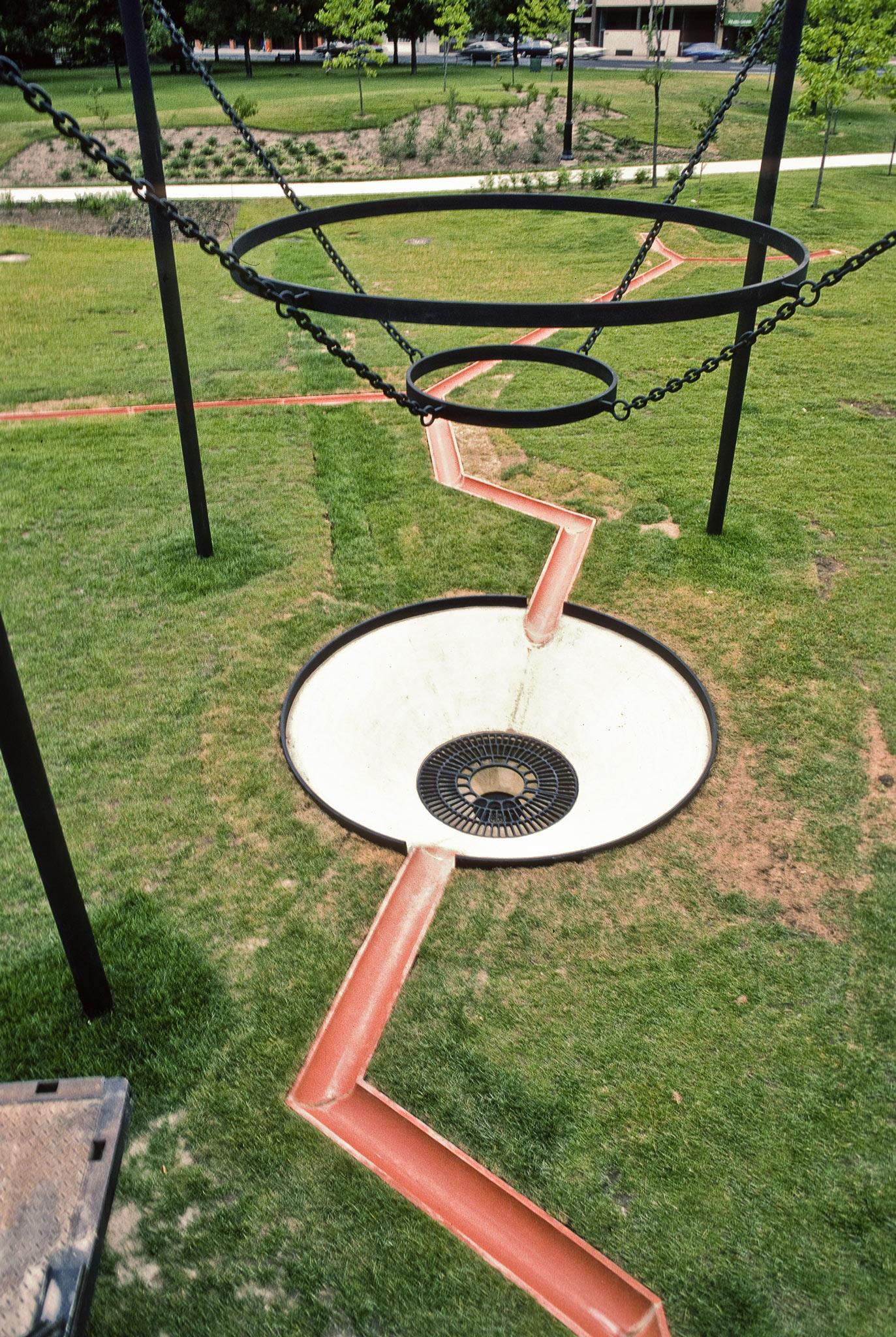
Ecological implications of a technological order are evident in Catch Basin, one of an ongoing series of works I began in 1981. Using basic technological systems, such as plumbing, electrical, drainage, heating, and ventilation systems, my System Works exposed sections of vast, ordinary hidden networks. Over the years these technological systems have become necessary for our everyday existence, yet they are usually hidden behind walls or beneath the earth and forgotten. We have trouble owning up to our almost total dependence on them. Yet with greater awareness of these systems, the channeling of the energy and elements of the earth can be done intelligently with the long-term benefit of the planet in mind. In doing so we become nature’s agents, rather than aggressors against nature.
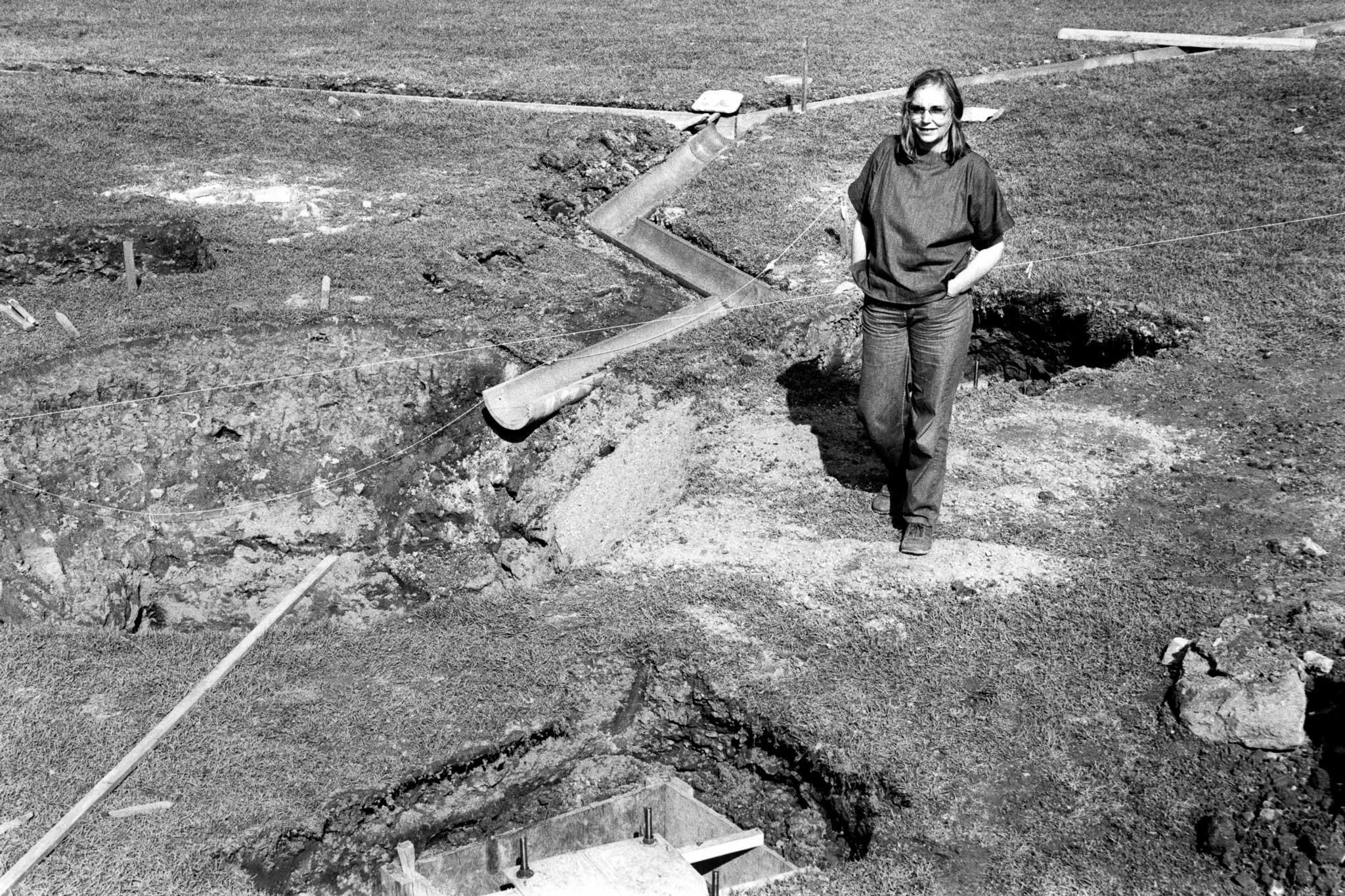
In 1982 I visited St. James Park in Toronto, the future site of Catch Basin. Several buildings had been destroyed and the park had been extended into the demolition area. Someone, either the landscape architect or the landscaping contractor, had erred, leaving a low area in the land where water collected after each rain. The soil, being a dense fine clay, absorbed very little water. Consequently, a stagnant pool remained in the midst of the park most of the time, becoming polluted and killing the grass. Catch Basin is art that at the same time resolves this drainage problem by using modern technology with ancient origins (drainage systems having been in use since 5,000 B.C.E. in Crete, Egypt, and Babylon). The rainwater now flows down the park slopes into the clay channel pipes and eventually into a basin, where it is either absorbed into four feet of gravel or is channeled through an overflow pipe into the city’s underground stormwater drainage system.
When I first visited the site for my work Dark Star Park, in the Rosslyn section of Arlington, Virginia in 1979, I saw, at the convergence of two busy streets, two triangles of barren land, about an acre in area, strewn with broken asphalt, giant weeds, collapsed fencing, and fragments of glass and rusting steel. Rosslyn, just across the Potomac River from Washington D.C., was the fastest growing metropolitan area in the country at that time, but one very important element was missing—there were no public parks. In making Dark Star Park (1979–1984), I was reclaiming a blighted urban site.
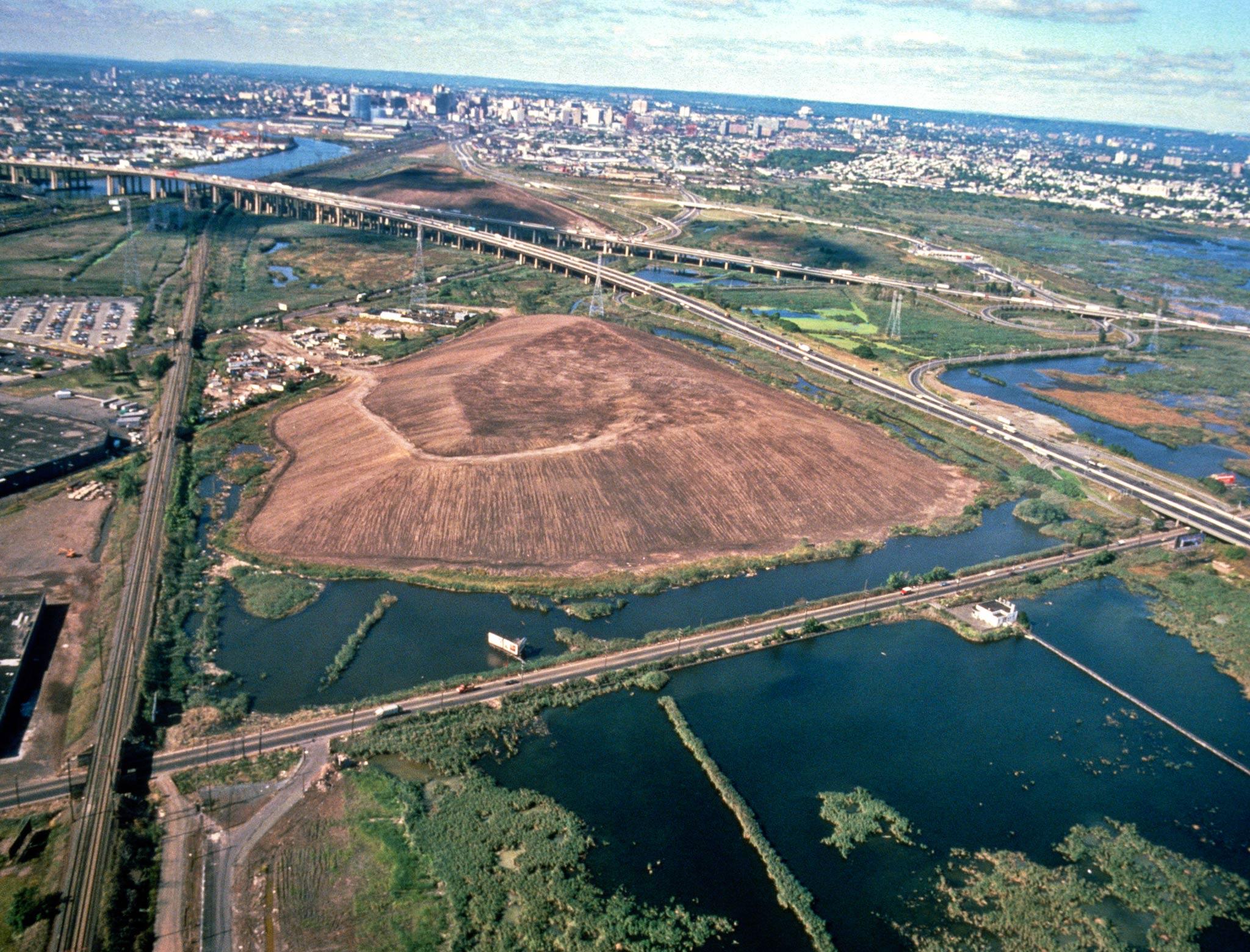
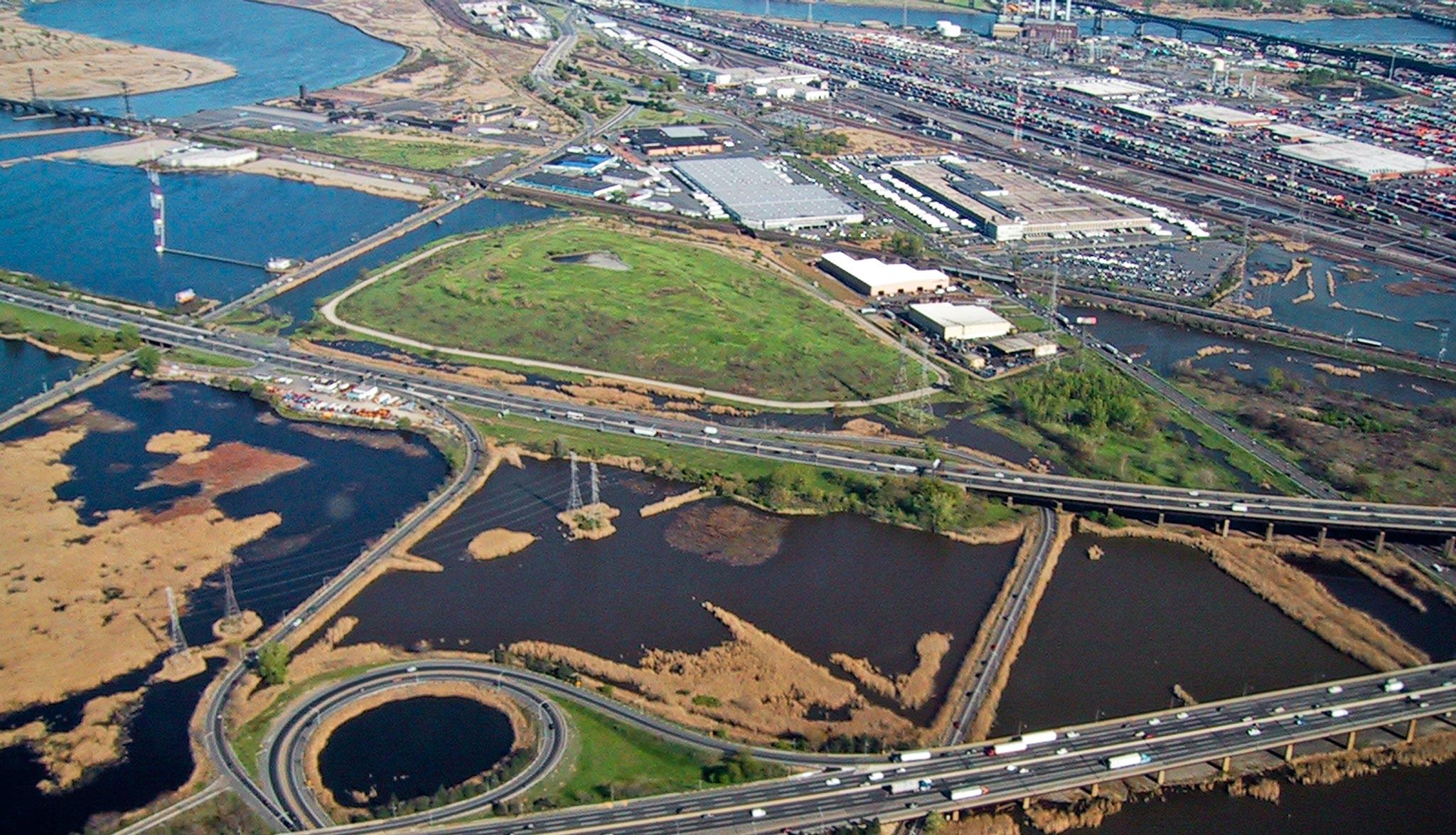
In 1984, partially as a result of my Dark Star Park experience, I signed a contract with the Hackensack Meadowlands Development Commission (HMDC) to reclaim a landfill in the New Jersey Meadowlands as a park/artwork. The Meadowlands is a vast open space in the heart of the New York / New Jersey metropolis. It is a place where sky and ground meet, where you can track the sun, moon, and stars with the naked eye, and where you have 360-degree panoramic views of Manhattan, Newark, the Pulaski Skyway, networks of roads and train tracks, old steel turn bridges and here and there some decaying remnants of the industrial revolution. I said yes, yes, yes, to HMDC as soon as I saw the site, sat up all night writing a contract, and hand-delivered it first thing the next morning.
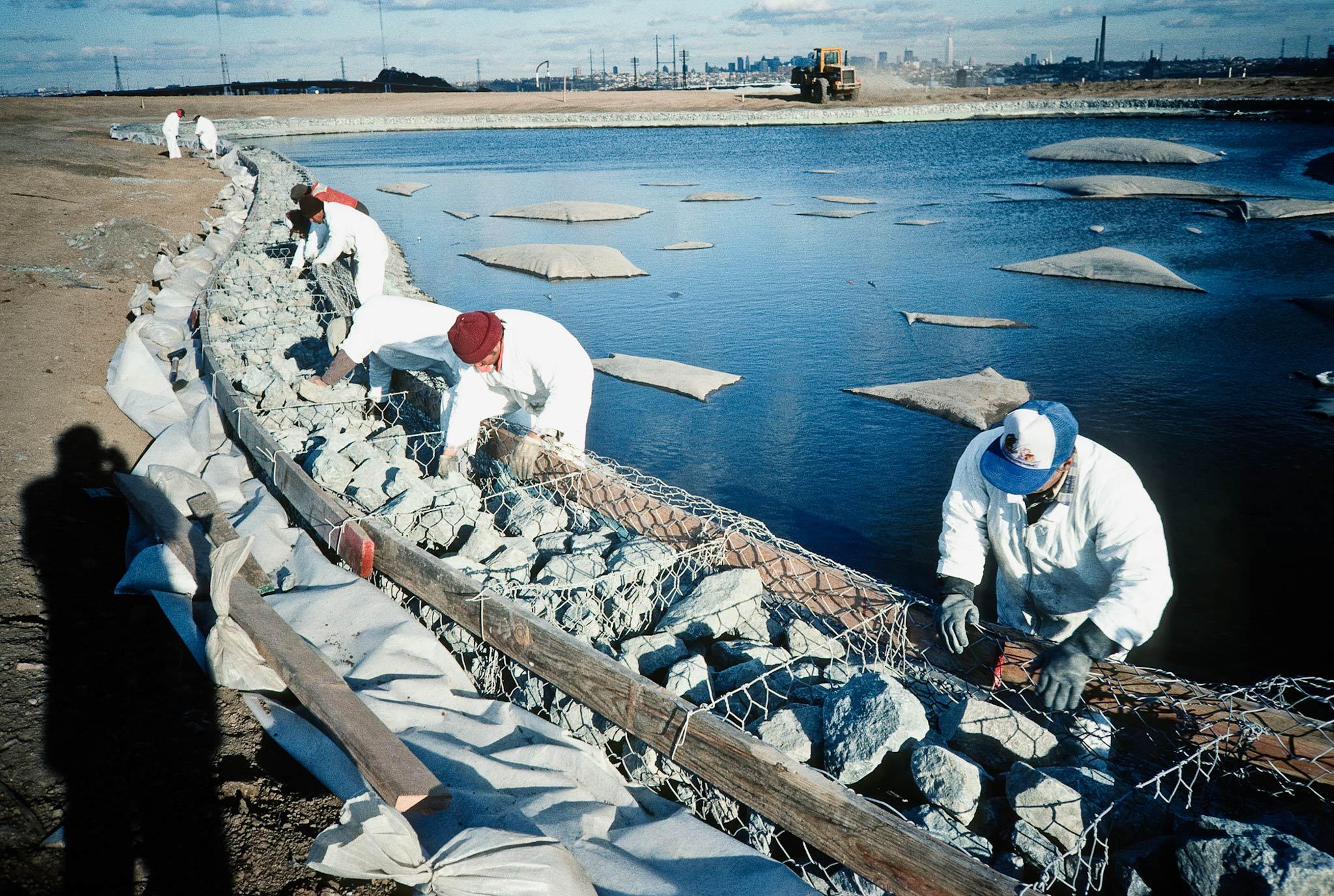
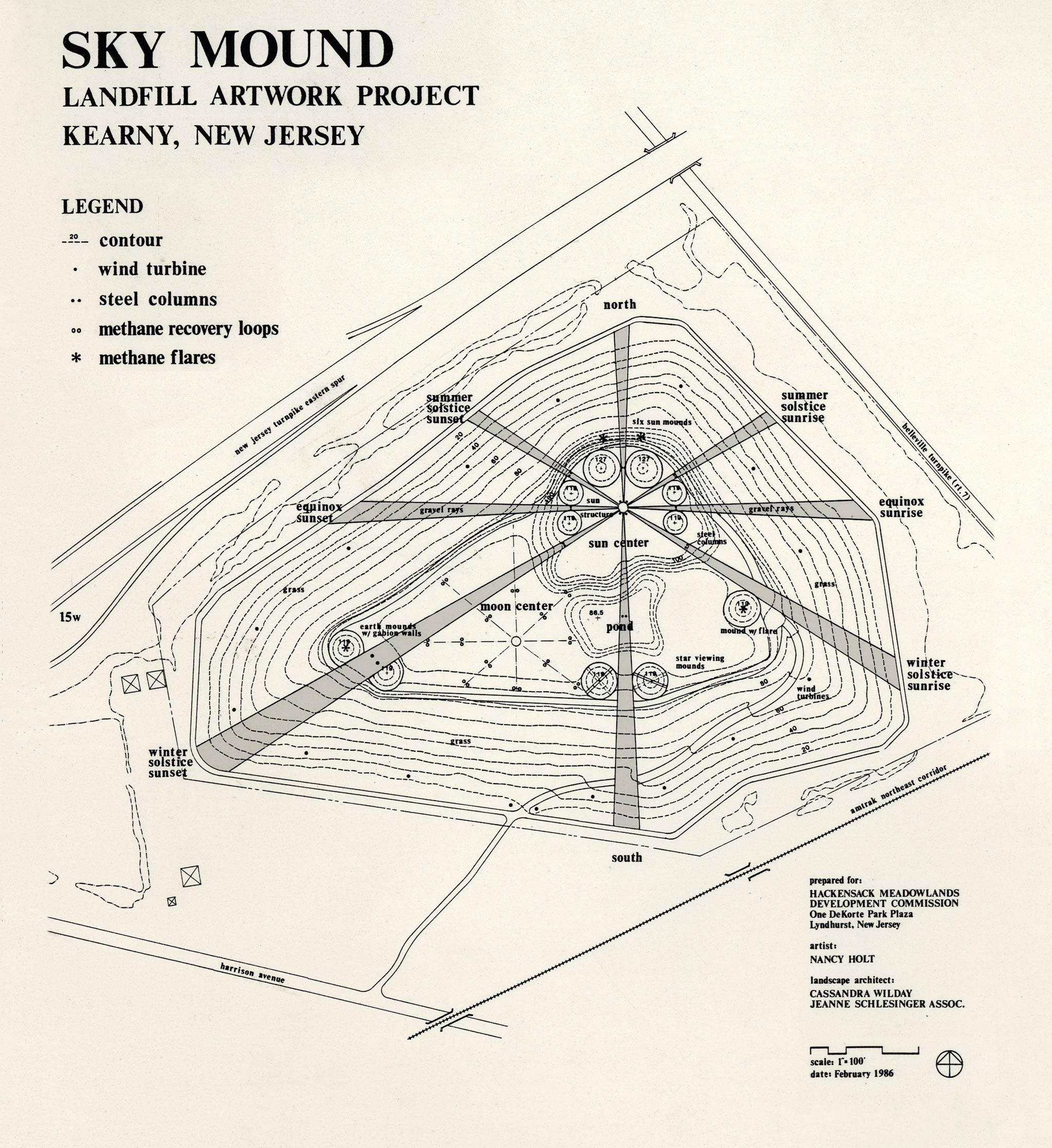
With the New Jersey Turnpike on one side of the landfill, the Amtrak and NJ Transit trains on the other and jets flying low over it on their way to Newark Airport, the 57-acre, 100-feet. high landfill is one huge, highly visible, human-made mound. My proposal, Sky Mound, incorporates the entire landfill, top and side slopes, as well as a methane gas system, already in place, which was collaboratively designed to be part of the artwork, while recovering the methane gas generated by the decomposition of the organic garbage in the landfill. This gas is an alternative energy source for the community, supplying about ten percent of the gas used locally.
The Sky Mound pond, already completed on top of the landfill, also functions as a stormwater retention pond. Various bushes have been planted in an irregularly shaped pattern around the perimeter of the pond, and the water has been stocked with fish. Hopefully, Sky Mound will attract some of the larger variety of birds in the Meadowlands—ducks, geese, and egrets have already been sighted there.
The feeling of awe I frequently feel while on top of Sky Mound landfill is similar to the wonder I experience on the huge American Indian mounds in Miamisburg, Ohio, and in the Cahokia site along the Mississippi River in Illinois. Both kinds of human-made mounds were built to meet vital social necessities, but here the similarity ends. American landfills, of course, result from essential needs of human beings to rid themselves of the used-up, cast-off materials of our culture, while American Indian mounds derived from deep spiritual, social, and ritualistic needs.
Trash piles, however, have been with us for thousands of years, as far back as the archaeologists have traced. With an archaeologist friend I once visited a cave home of the Anasazi, 2 the earliest known human beings in the Southwest of the United States, which happens to be in a high butte a few miles from my work Sun Tunnels in Utah. When this deep cave was inhabited, the rocky butte was on the edge of an ancient inland sea. The Great Salt Lake, a puddle in comparison, is a remnant of this sea. There at the base of the butte just below the cave I saw my first prehistoric trash—a large pile of broken pottery, fish and animal bones, shells, and such. Another excavated refuse-pile several feet deep fills the back of the cave.
Today’s landfills, then, have a long heritage. Around the globe there are millions of these shunned earthen forms—forgotten trash heaps relegated to the realms of the unconscious. By the end of the century, with more reliance on improved methods of recycling and incinerating our refuse, laws will go into effect which will prohibit the use of landfills for garbage disposal. These heaps of garbage will be seen as the artifacts of our generation, our legacy to the future. So, there is no escaping our responsibility for making these mounds of decaying rubbish safe with the latest closure technology, and then reinterpreting and reclaiming them, giving them new social and aesthetic meanings and functions.
This essay was first published in 1993 in the exhibition brochure for Creative Solutions to Ecological Issues, edited by Gail Gelburd.The exhibition Creative Solutions to Ecological Issues was presented at Dallas Museum of Natural History, touring to Laumeier Sculpture Park, St. Louis, Missouri; Arthur Ross Gallery, University of Pennsylvania, Philadelphia, Pennsylvania; and Longwood Fine Art Center, Farmville, Virginia. Footnotes have been added by the editor.