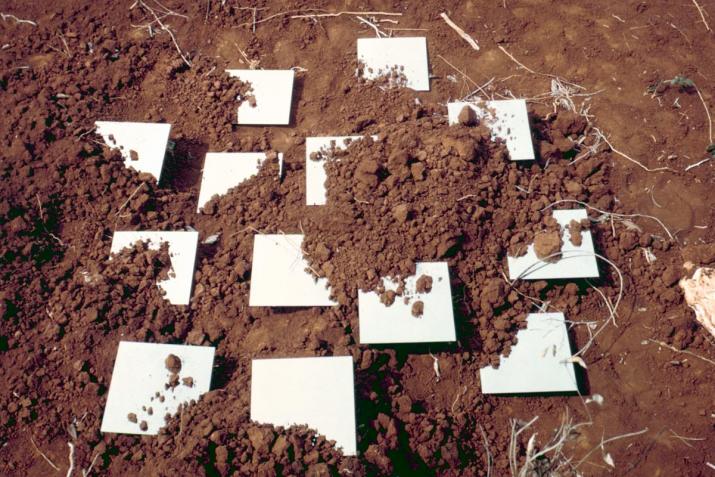
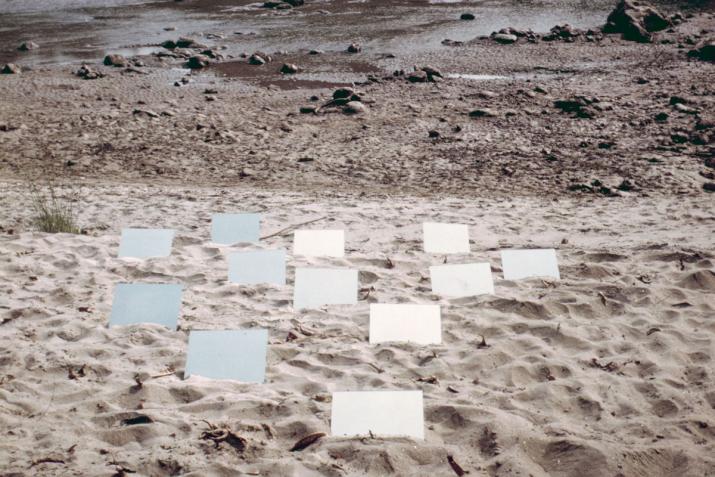
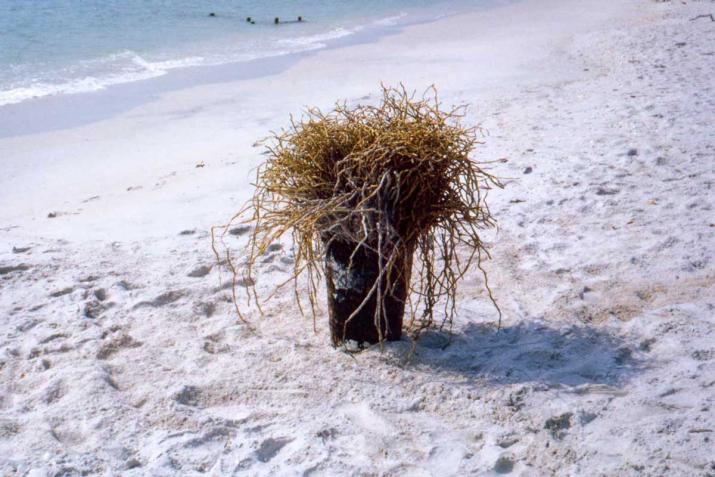
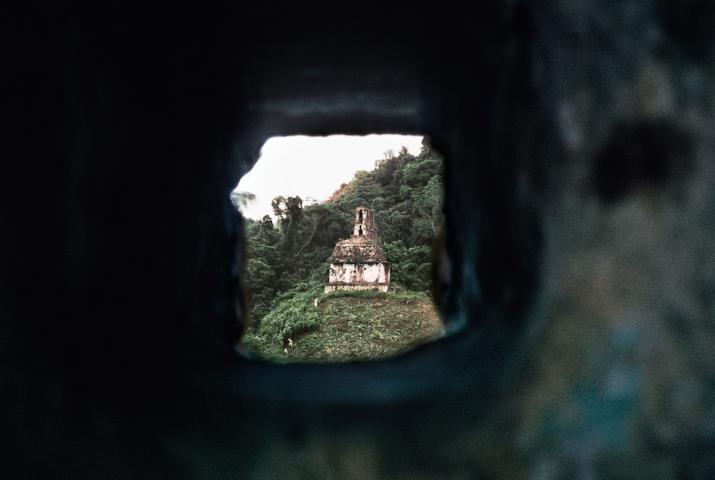
Slide projection of thirty-one 35 mm color slides (126 format) and audio recording of a lecture by the artist at the University of Utah in 1972 (42 min, 57 sec)
Collection Solomon R. Guggenheim Museum, New York
© Holt/Smithson Foundation / Licensed by Artists Rights Society, New York
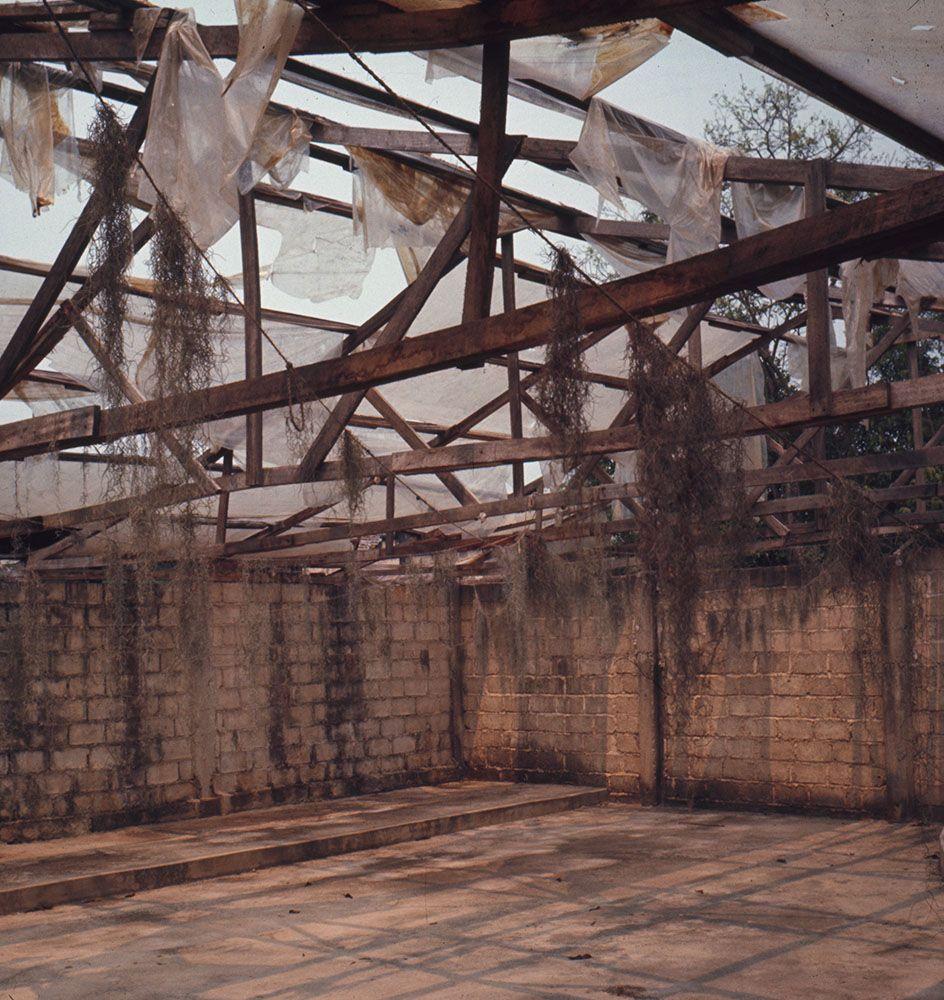
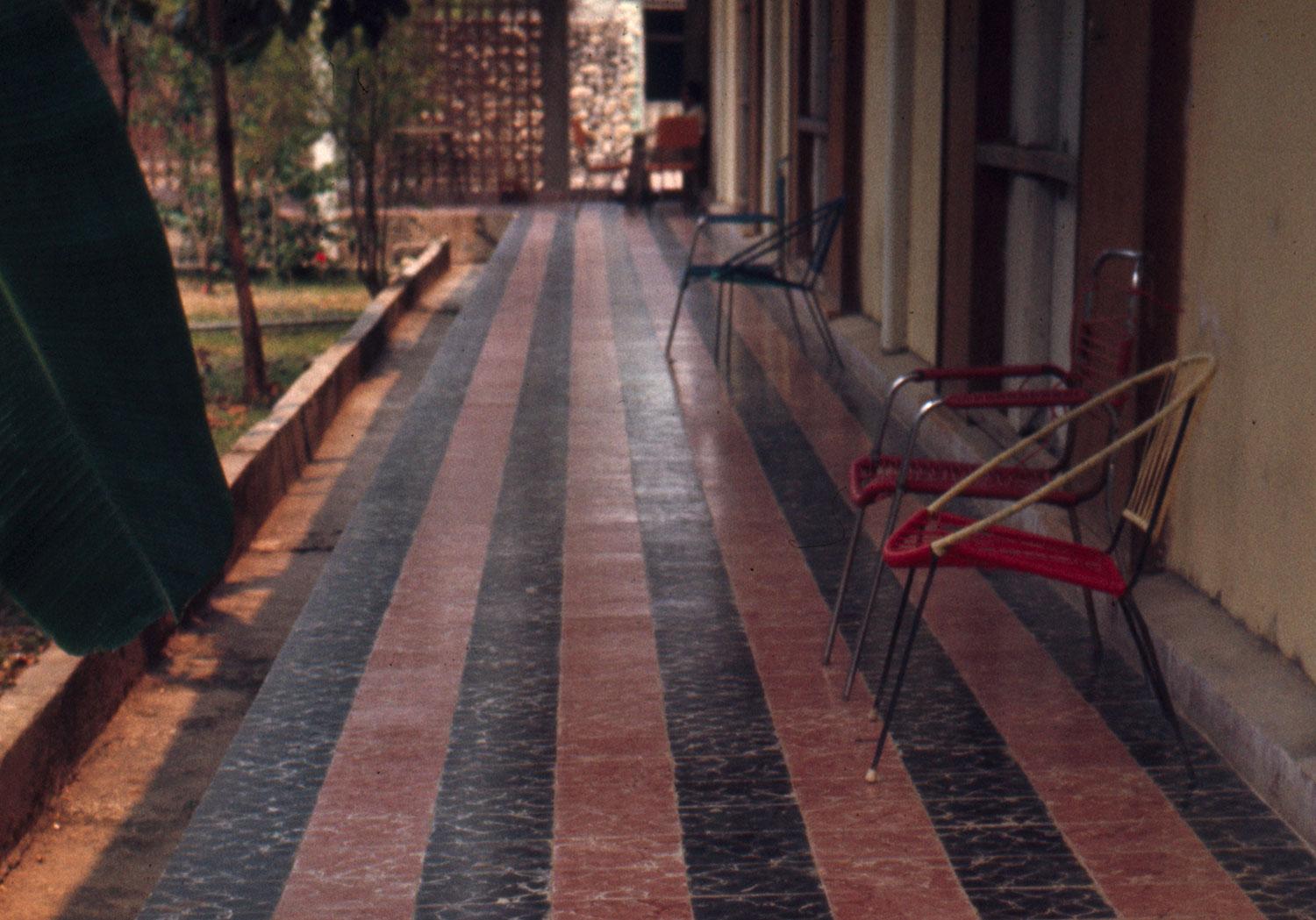
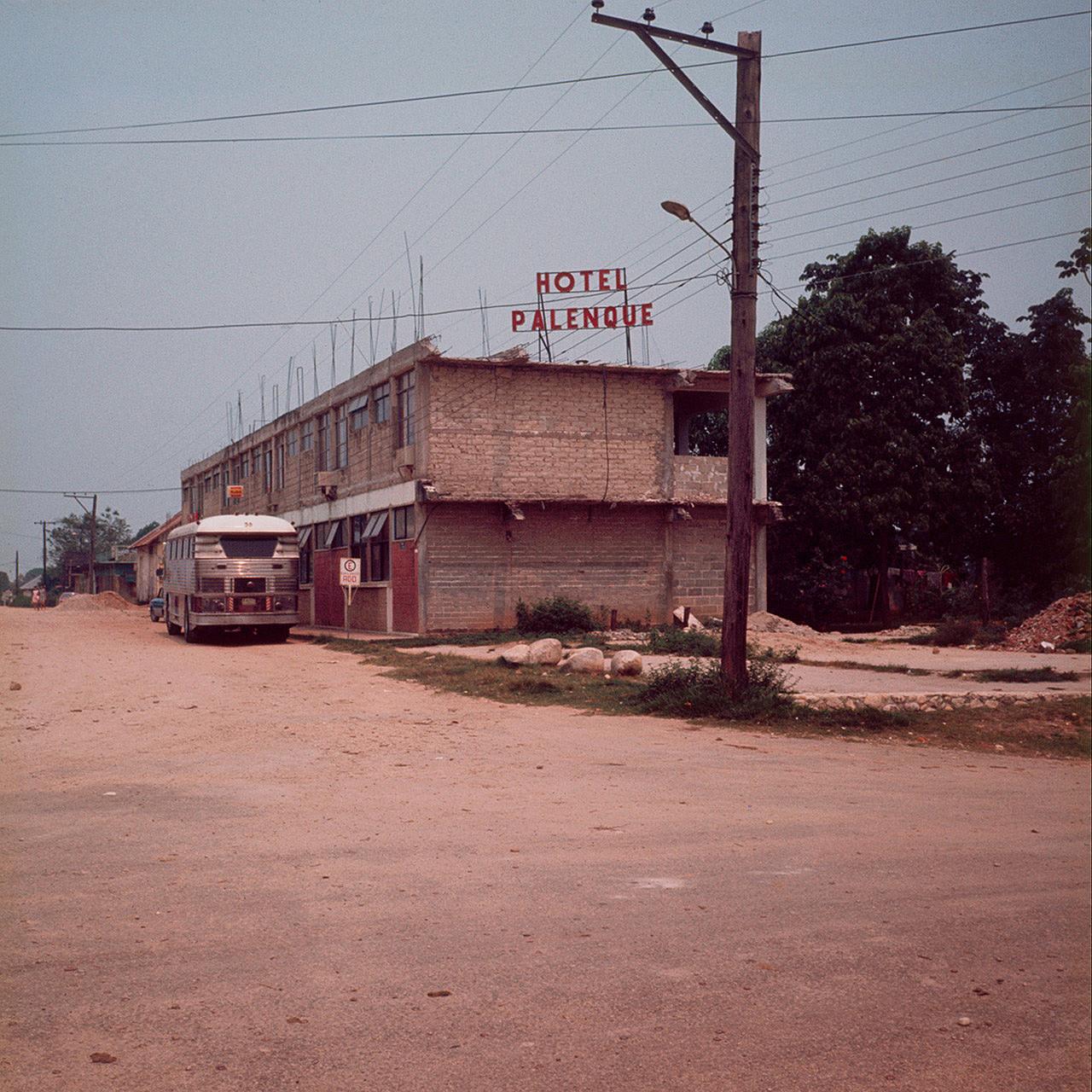
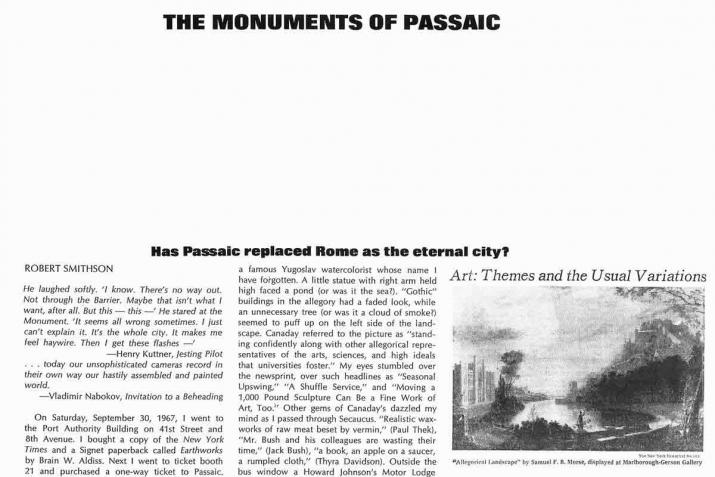
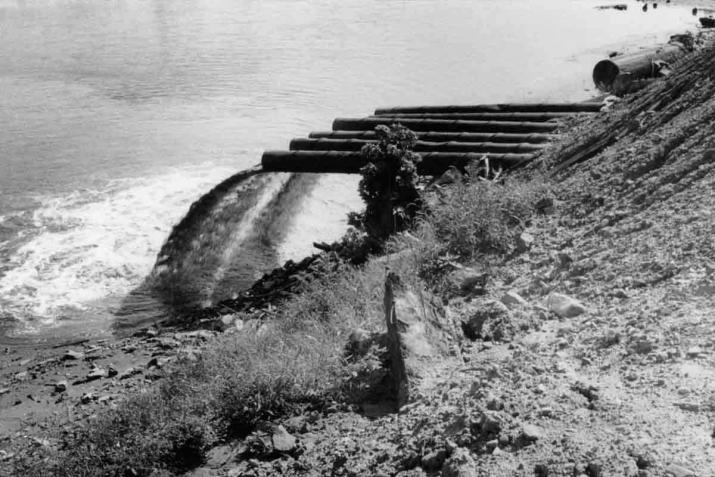
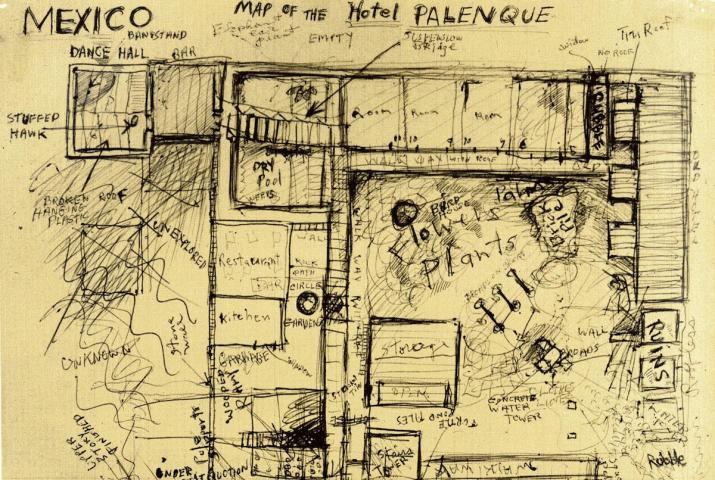
Robert Smithson’s Hotel Palenque (1969-72) uses the format of the travel slide lecture to reconsider tourism, monuments, and the expectations of travel itself. It develops from his wry 1967 work A Tour of the Monuments of Passaic, in which he made an expedition to his hometown in New Jersey to document what he saw as its monuments, focusing on incomplete infrastructure, wastepipes, bridges, and a playground sandpit. Two years later he traveled to Mexico and chose to extensively document the hotel where he stayed. The building was, in his words, “rising into ruin.” As one part was being built, another section started to crumble and needed attention—just like any home improvement project.
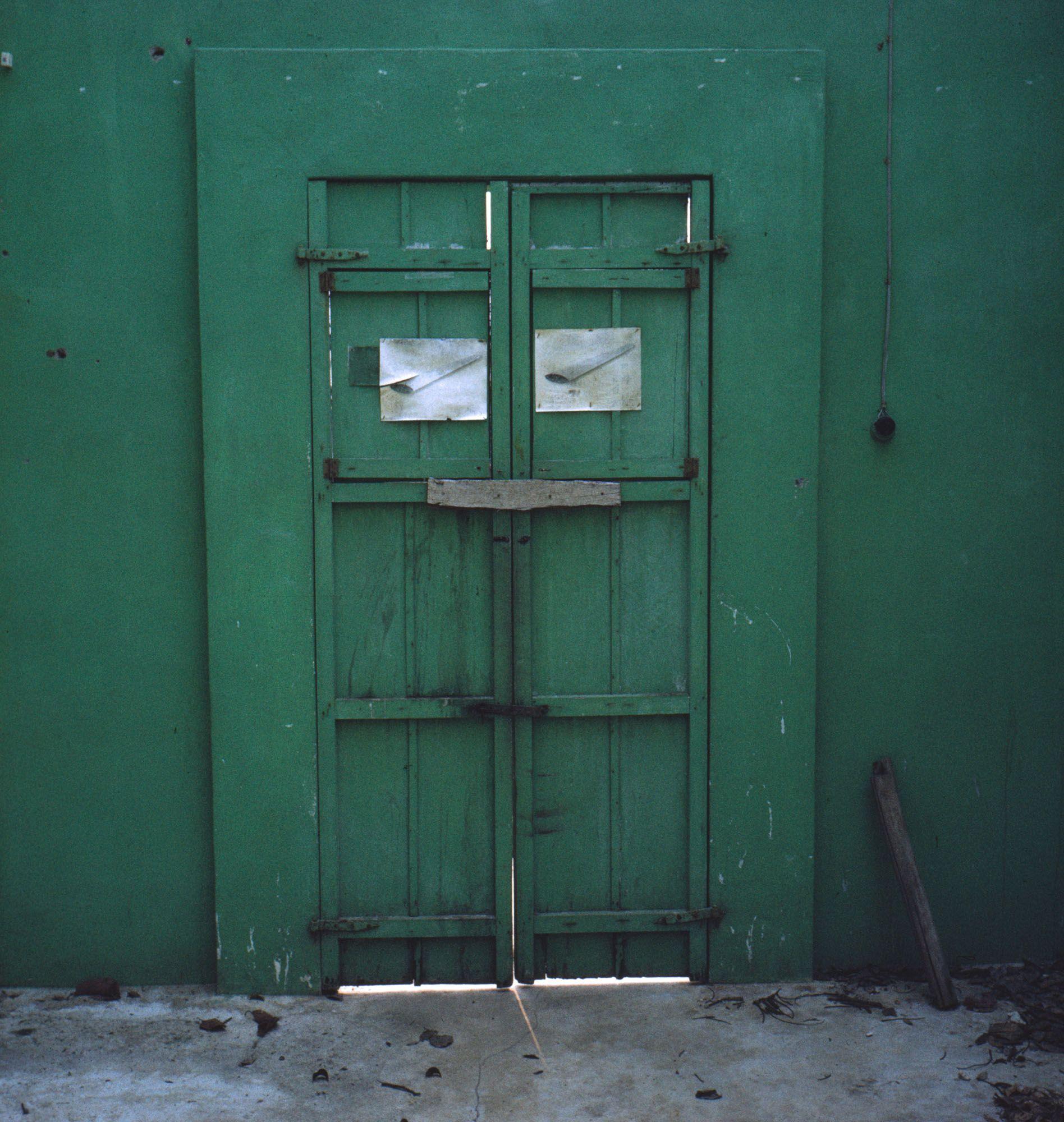
In 1972 Smithson was invited to give a lecture to architecture students and he chose to present the images he took at Hotel Palenque, extemporizing as he talked through each image. He did not speak of the nearby ruins, instead drawing attention to details such as an empty swimming pool that had become a playground for iguanas, a green door, and the traditional farming system known as milpa. At this time, a common convention upon returning from a vacation was the home slide show—a presentation to friends and family recounting, often in too much detail, what had been seen “elsewhere.” A trip from New York to the Yucatán Peninsula and Chiapas in 1969 would have been prime material for such a report.
In the mid-1960s, many artists associated with conceptual art worked with the now-obsolete medium of photographic slides. Pointing to their popular uses as domestic reports from travel, as tools for teaching art history, and as commercial tools, artists actively questioned the authority, truth claims, and celebration of the extraordinary associated with slide shows. Like A Tour of the Monuments of Passaic, there is a sardonic edge to this work. Smithson intended it as a report from an “anti-expedition,” a journey that would undo the prejudice of the widely circulated mid-19th-century guidebook to the Yucatán, Incidents of Travel in the Yucatan, written by John Lloyd Stephens and illustrated by Frederick Catherwood. Yet its language fails to escape the xenophobia of Stephens, perpetuating the same assumptions. Existing today as a unique slide installation with a recording of the artist’s voice, Hotel Palenque reveals Smithson’s fascination with architectural improvisation, decay, and the unstable relationship between construction and collapse.