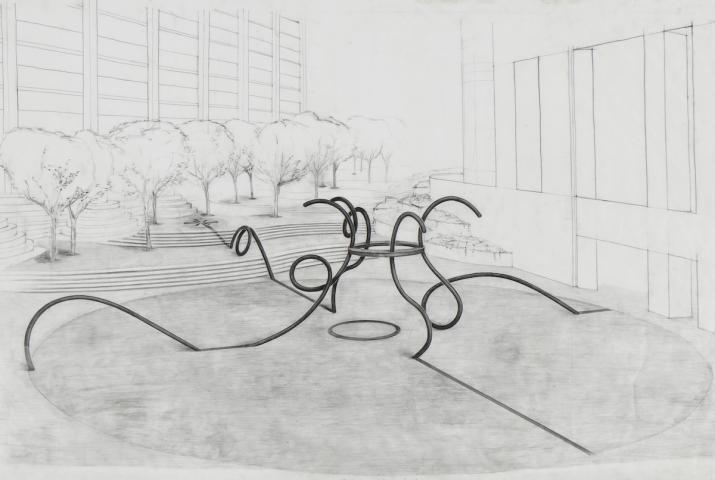
Dimensions and media various
Collection Holt/Smithson Foundation
© Holt/Smithson Foundation / Licensed by Artists Rights Society, New York
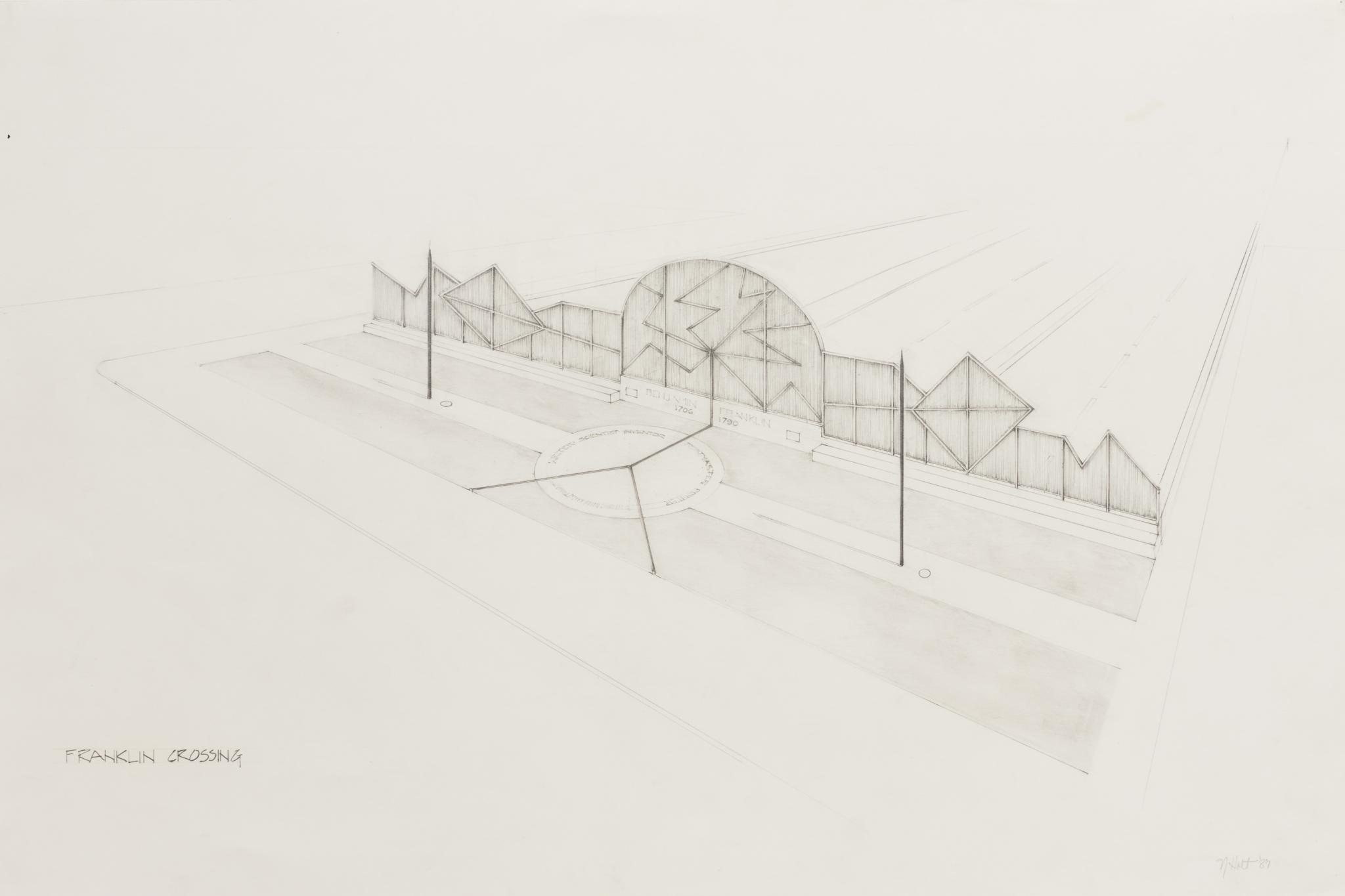
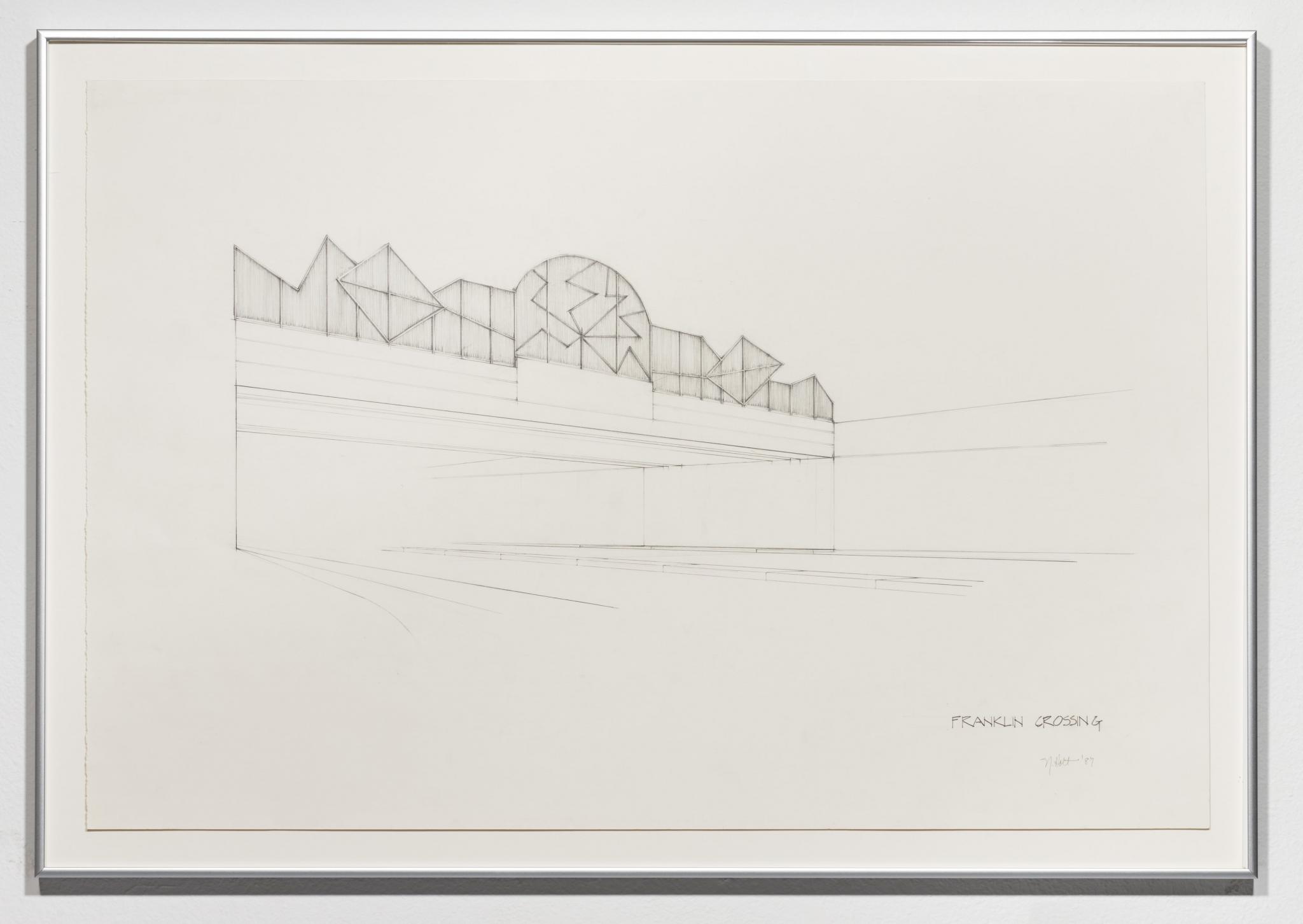
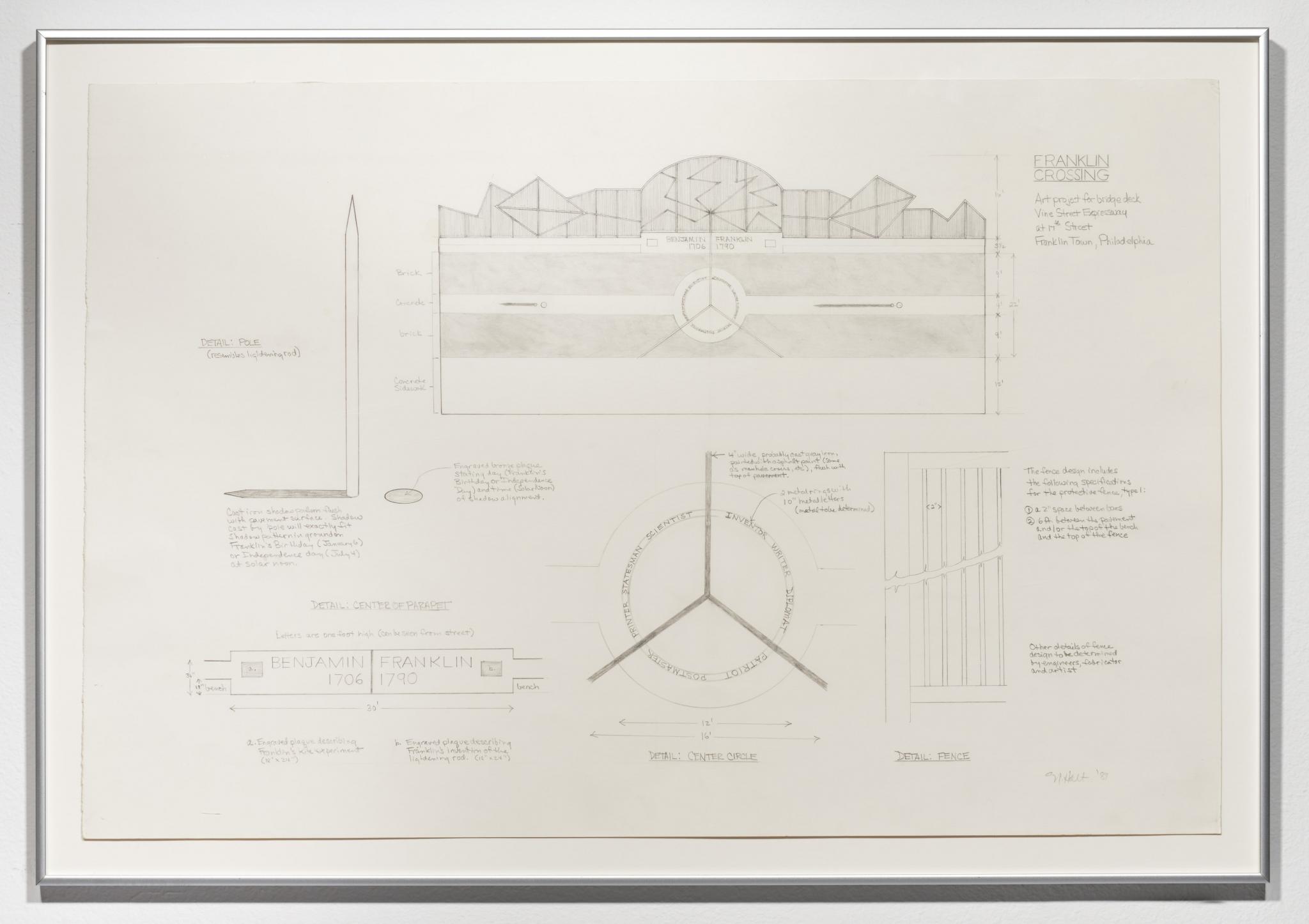
In 1985 Nancy Holt developed Franklin Crossing for Philadelphia’s Percent for Art program. She was one of five artists invited to make a proposal for the Vine Street Expressway in Franklin Town. Her letter of invitation cites Annual Ring (1980-81) and Catch Basin (1982)as sculptures that had inspired the selection committee. The work was selected in 1987, but Holt withdrew her proposal in 1990 following contract disagreements.
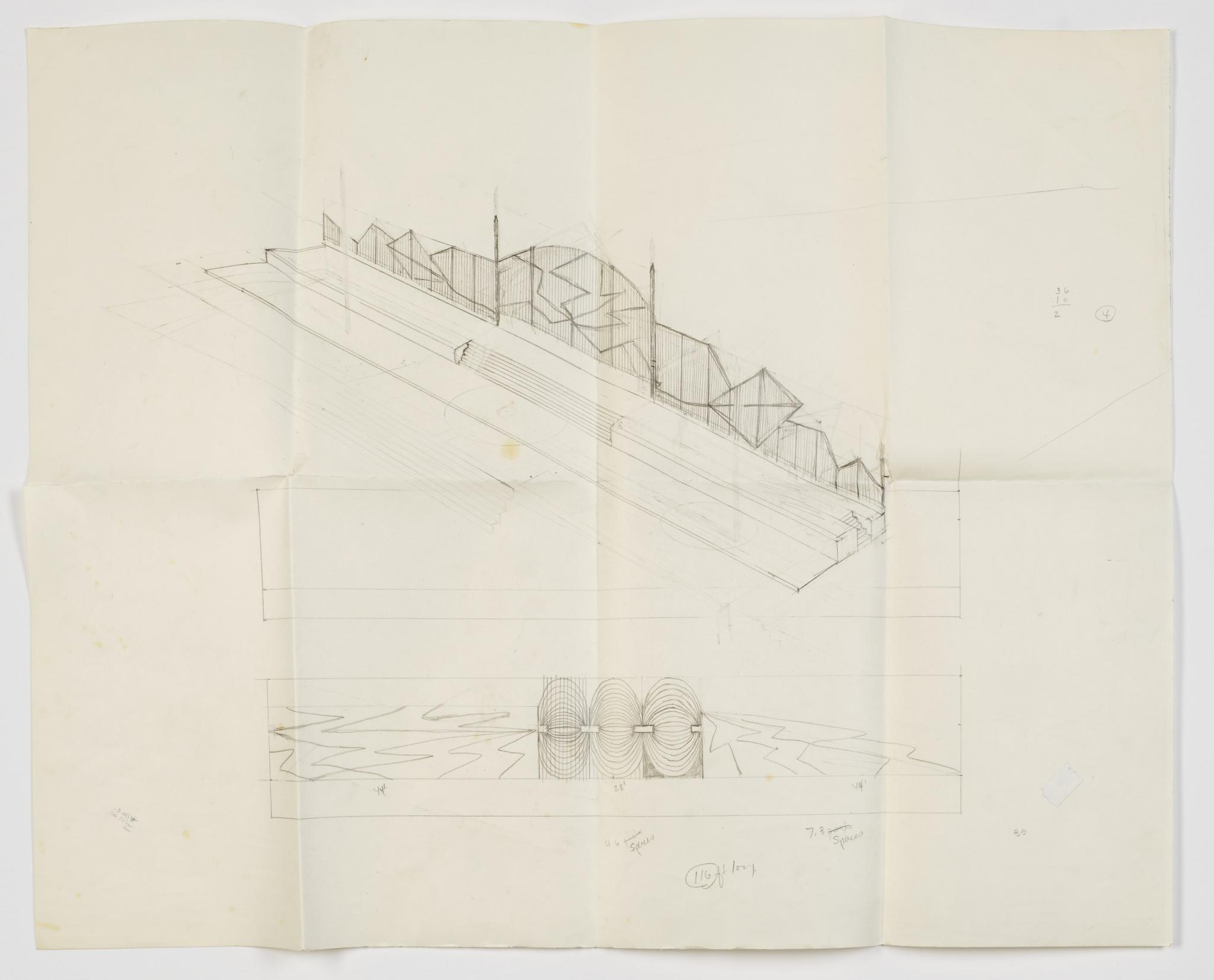
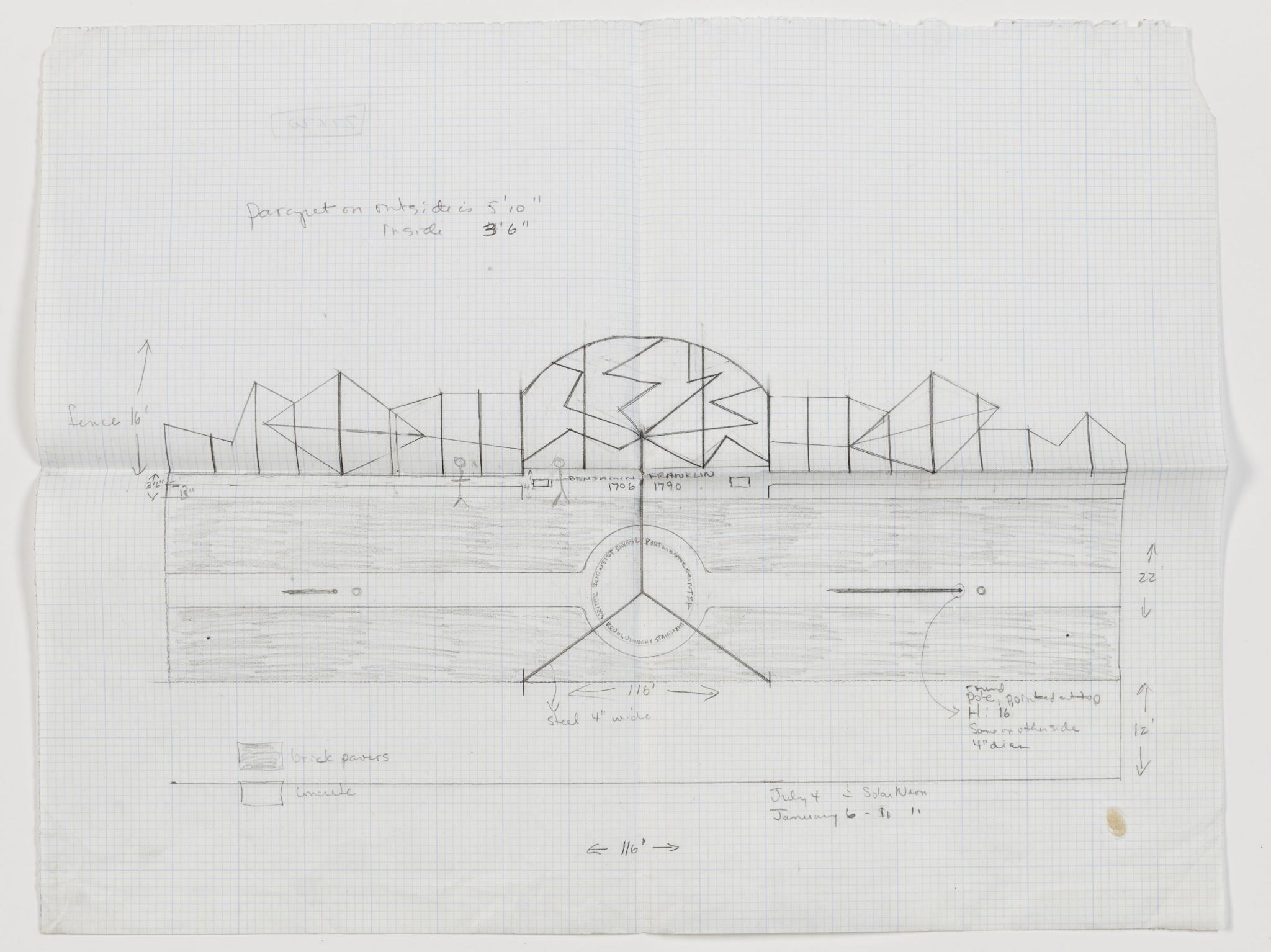
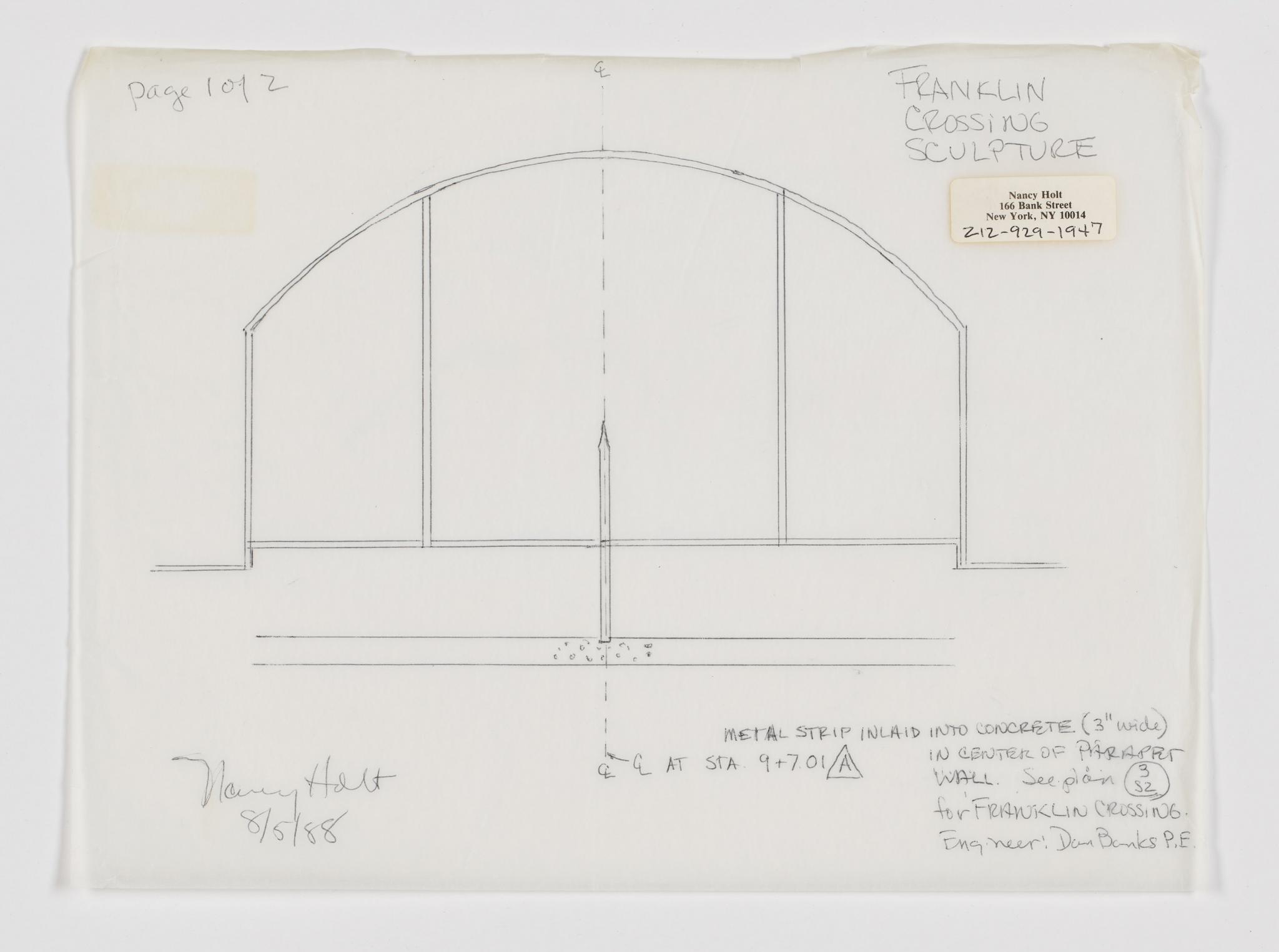
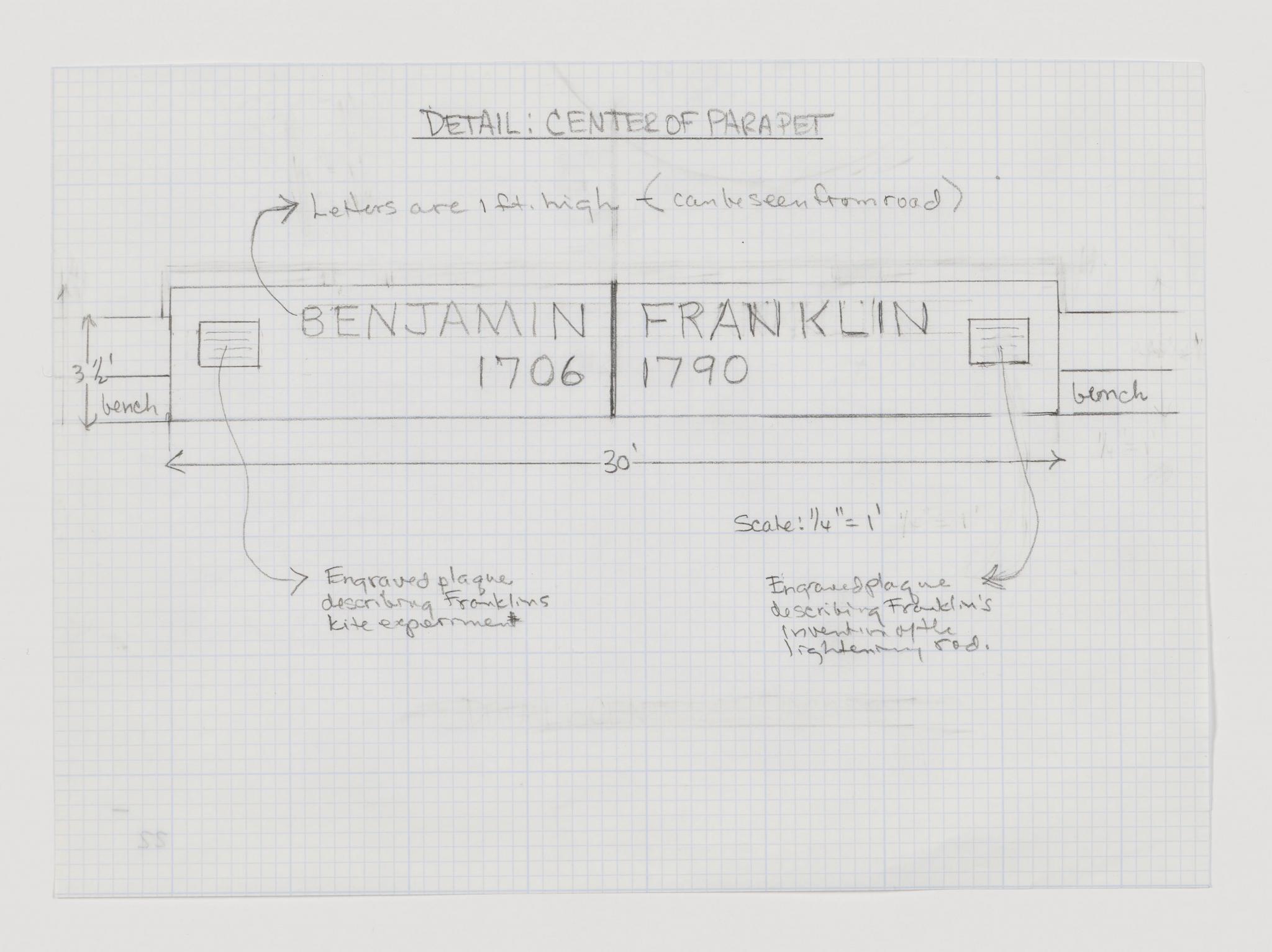
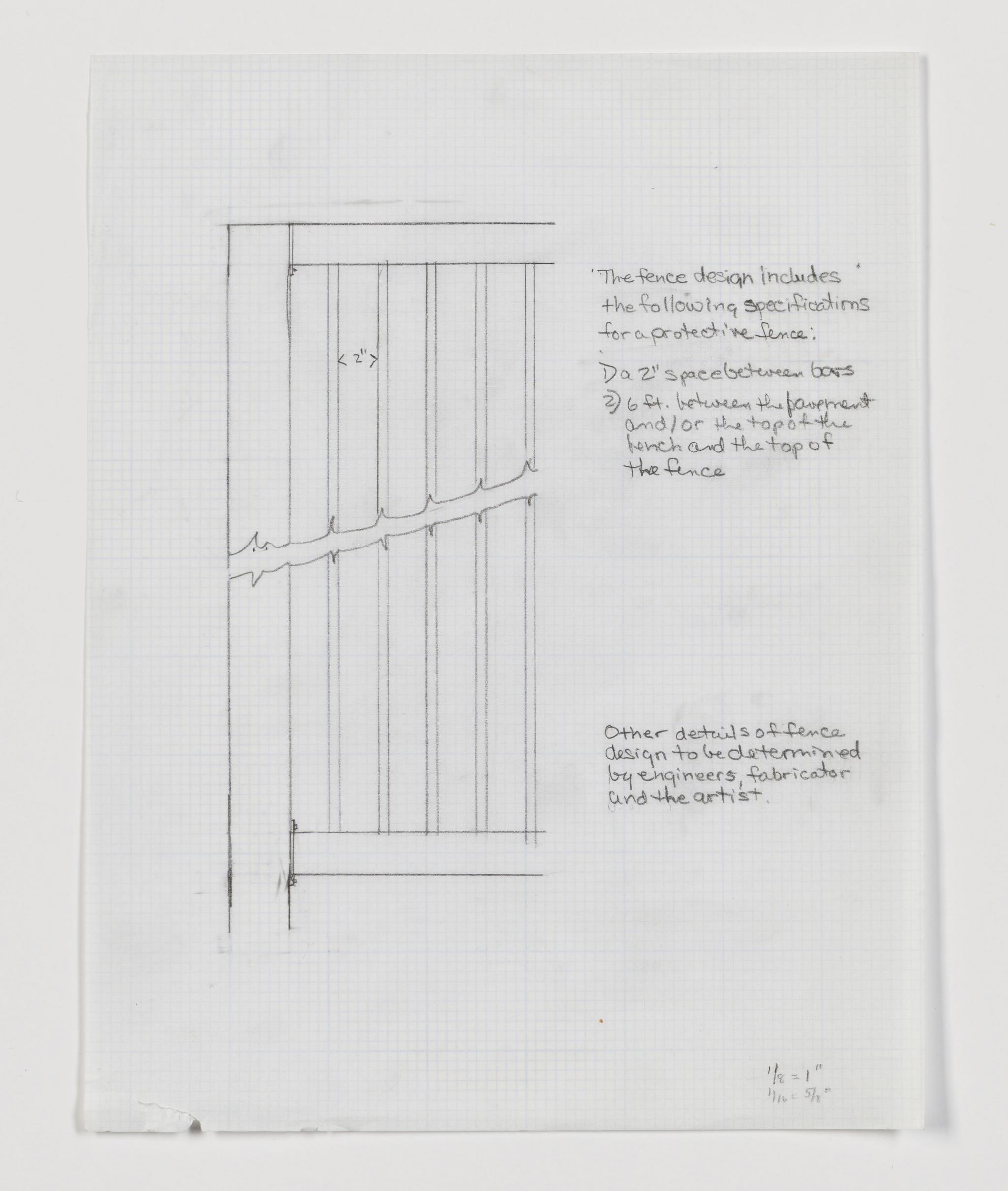
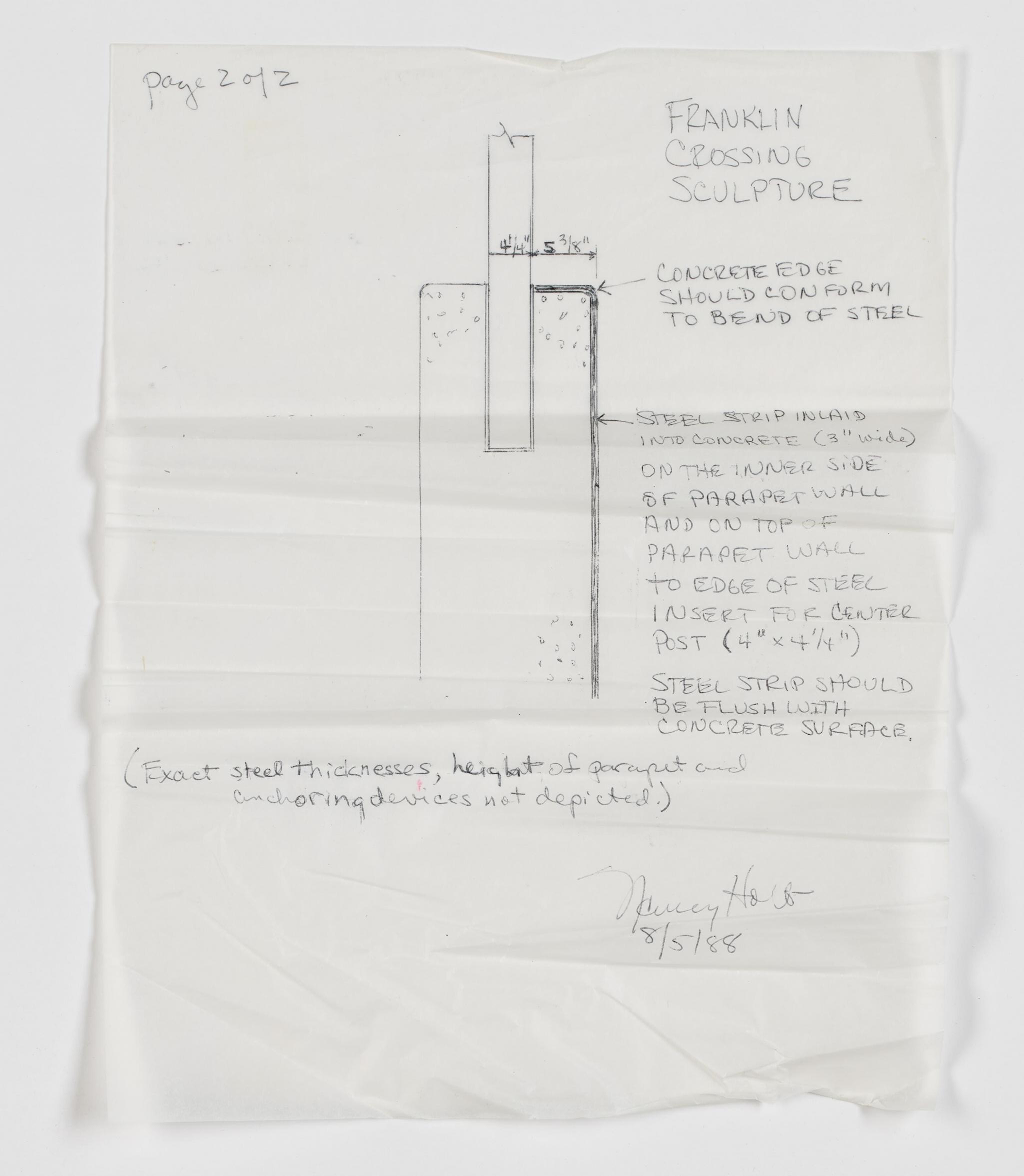
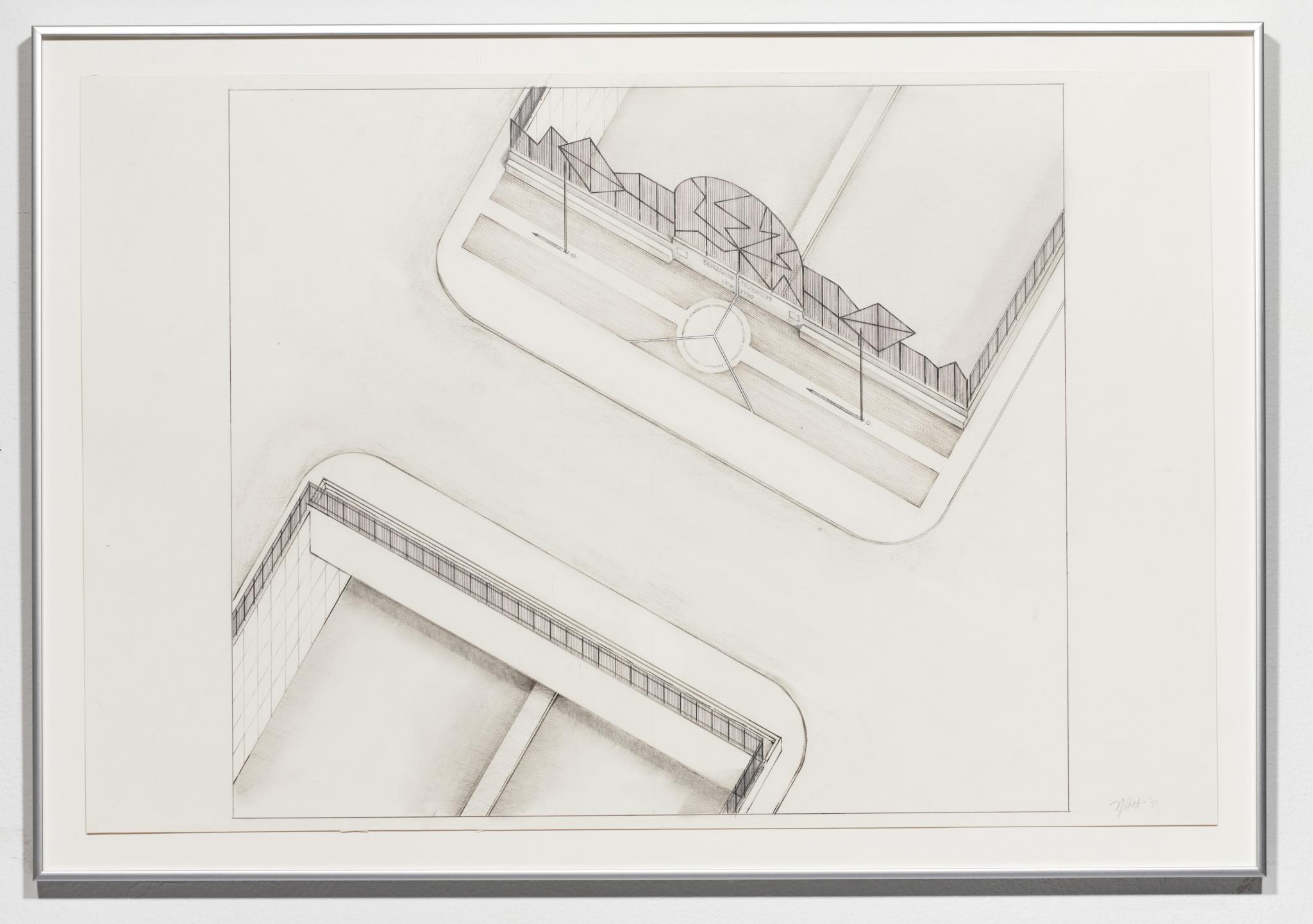
Holt conceived the sculpture to commemorate Benjamin Franklin (1706–1790), a founding figure of the United States closely associated with Philadelphia, noting in her papers that “his discovery of electricity being the most significant revelation [in his activities for] our modern, electronic age.” The proposed sculpture incorporated lightning rods, abstract lightning bolts, and kites into a black-painted steel fence spanning the bridge, with plaques describing Franklin’s experiments and inventions. Extending across the entire 22 × 116 ft. (6.7 × 35.4 m) site, Franklin Crossing transformed the bridge’s fence, pavement, parapet, and benches into elements of the sculpture.
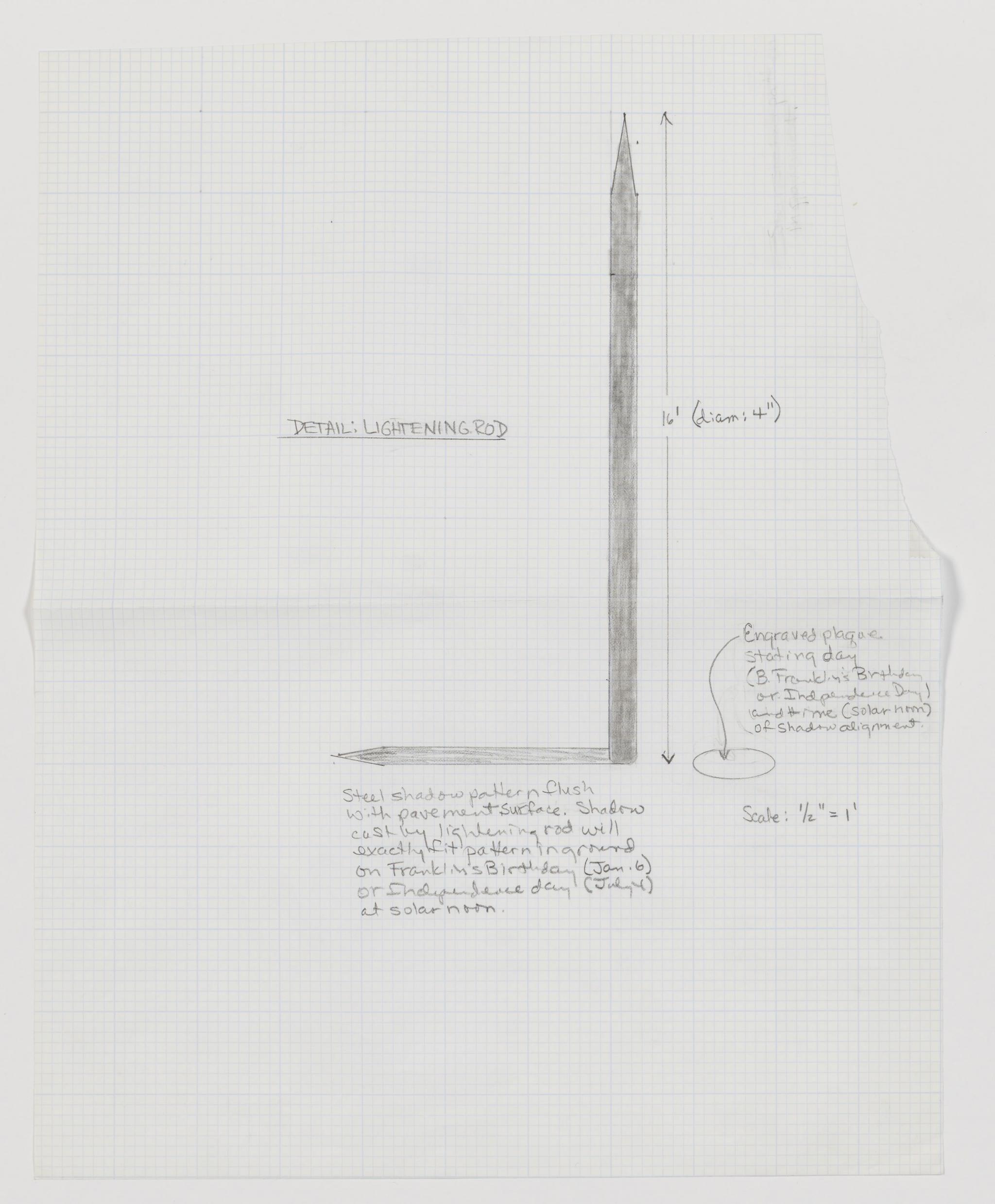
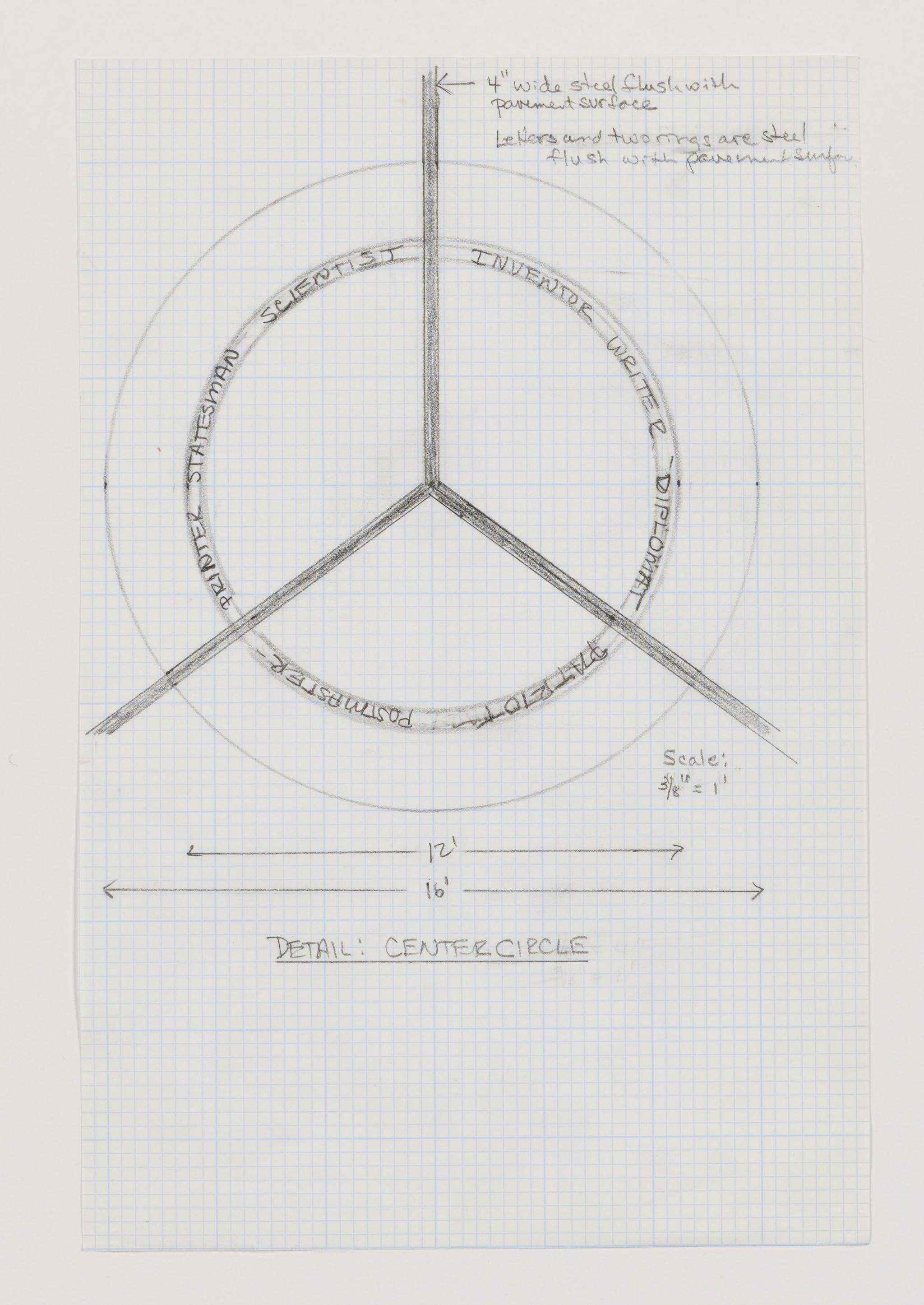
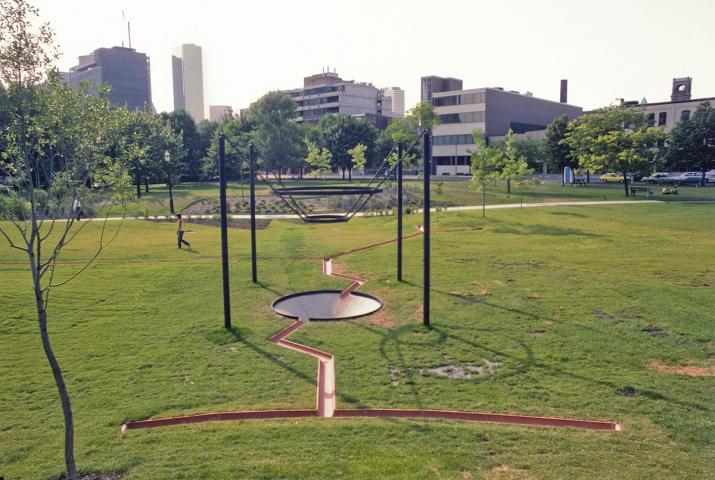
Holt planned to inscribe the words “statesman, scientist, inventor, writer, diplomat, patriot, postmaster, printer” in bronze around a circular element set into the ground. Two steel poles, pointed like lightning rods, would cast shadows across the pavement. Holt planned to mark their positions permanently in iron so that, each year at solar noon on Franklin’s birthday (January 6 in the calendar used at the time of his birth; January 17 in the modern calendar) and Independence Day (July 4), the shadows would align exactly with the markers. As Holt explained, “Since these dates are close to both the winter and summer solstices, there is an interesting appreciable difference in the length of shadows cast.”