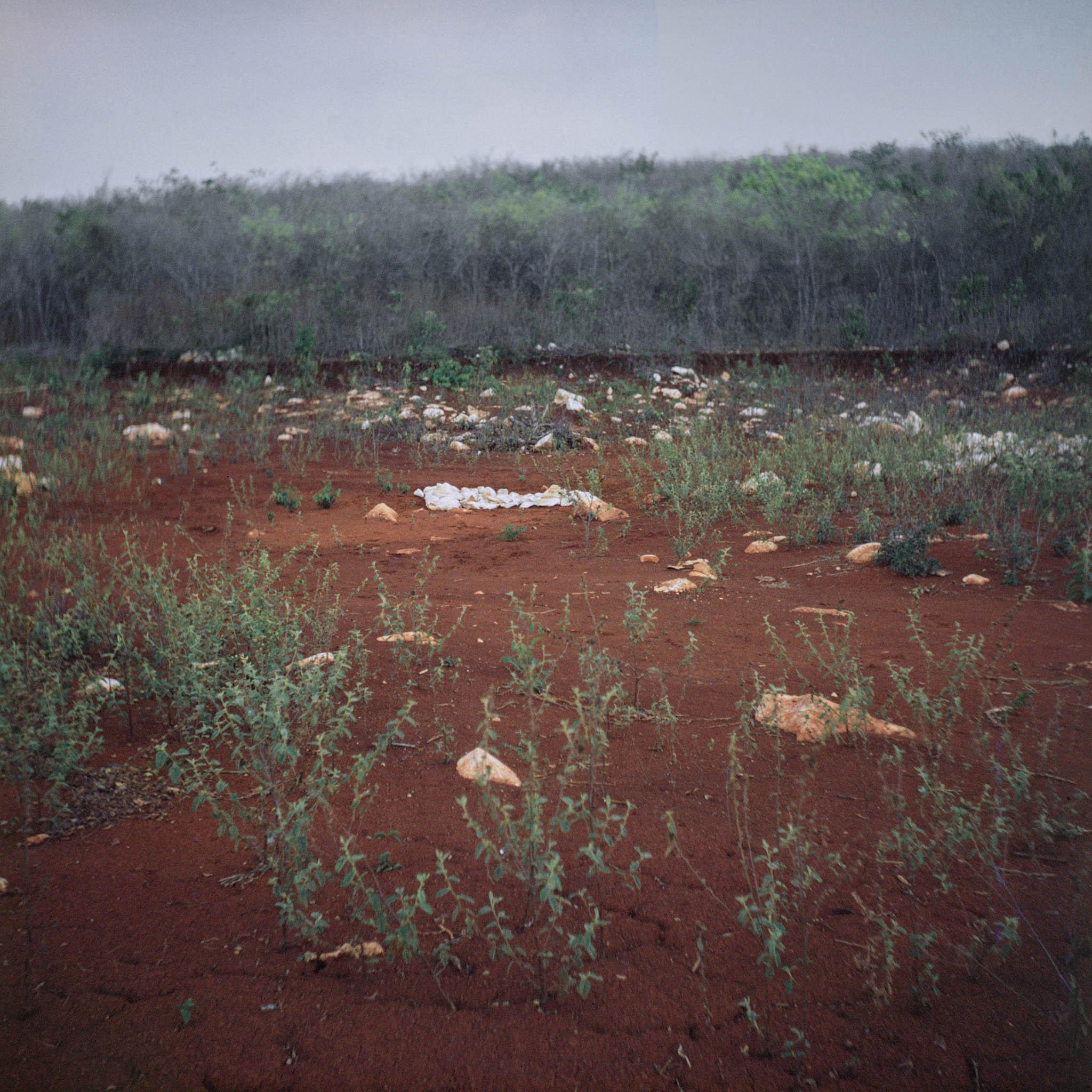
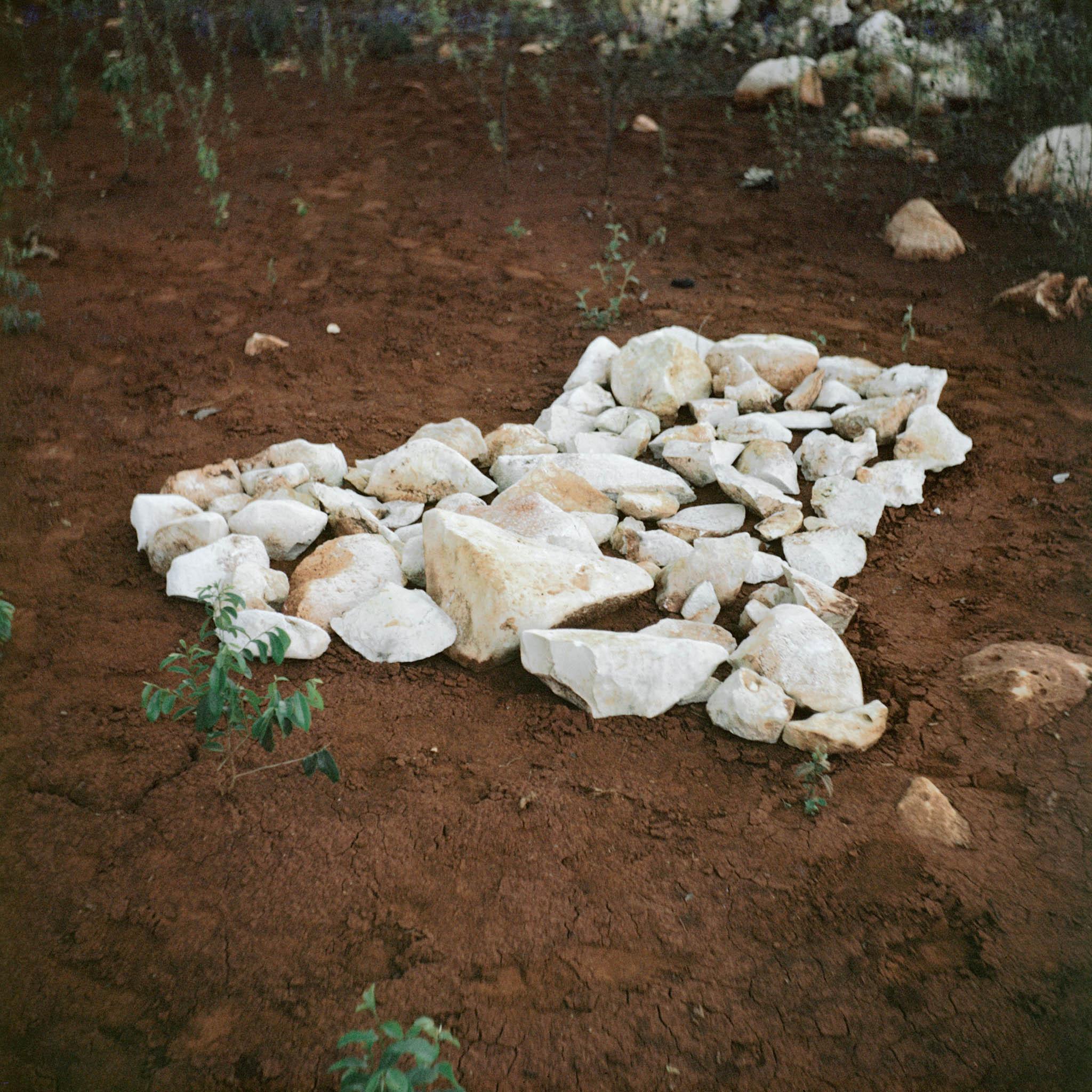
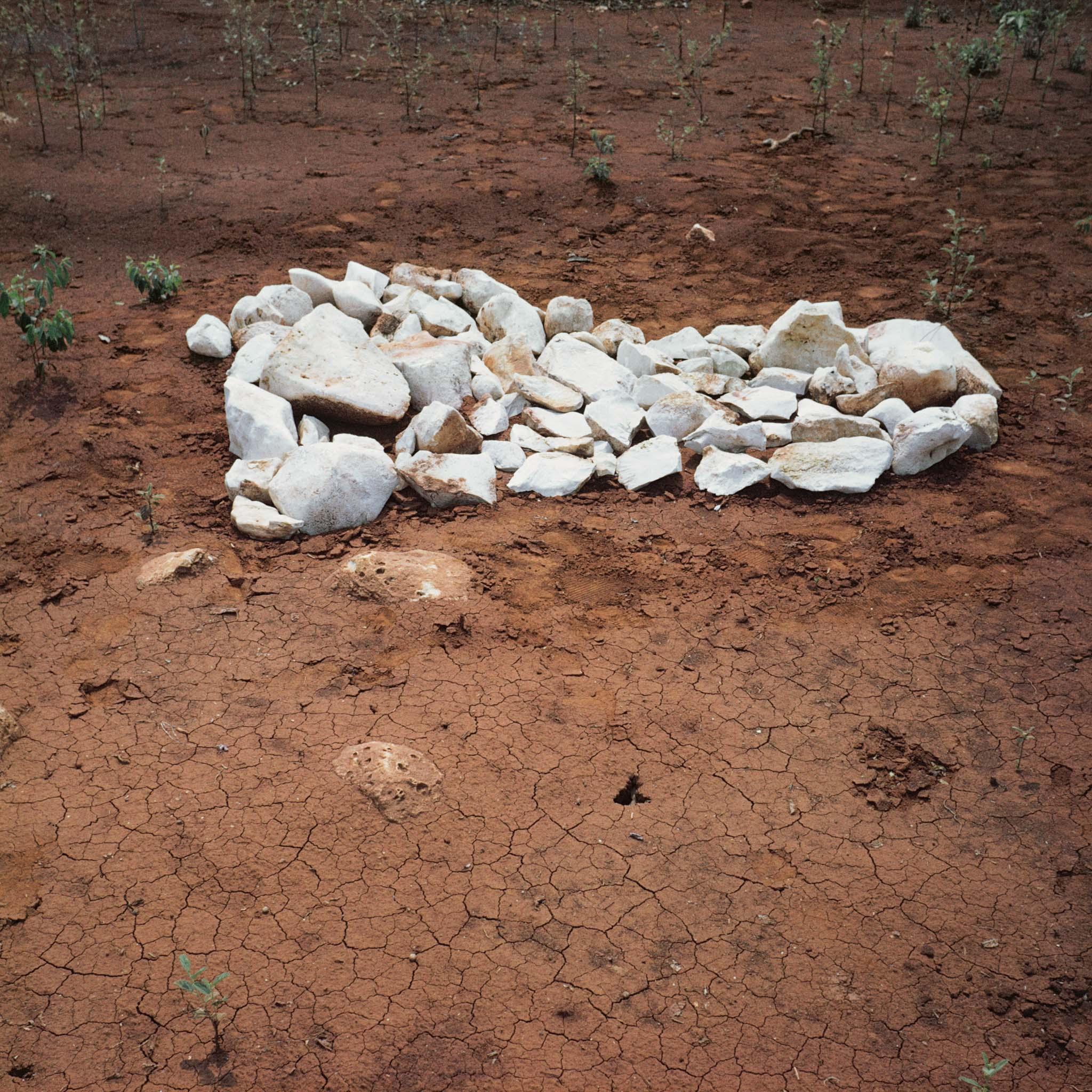
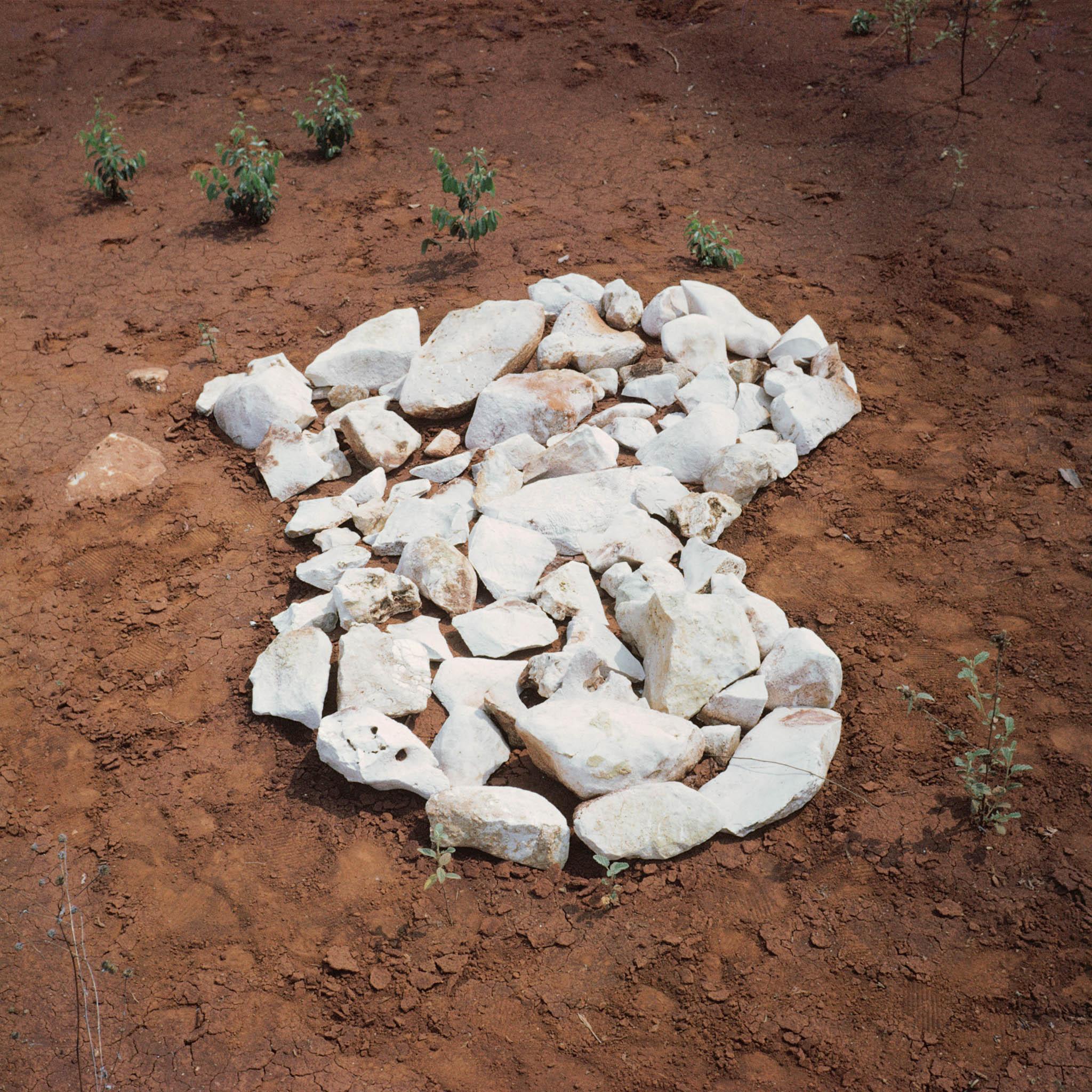
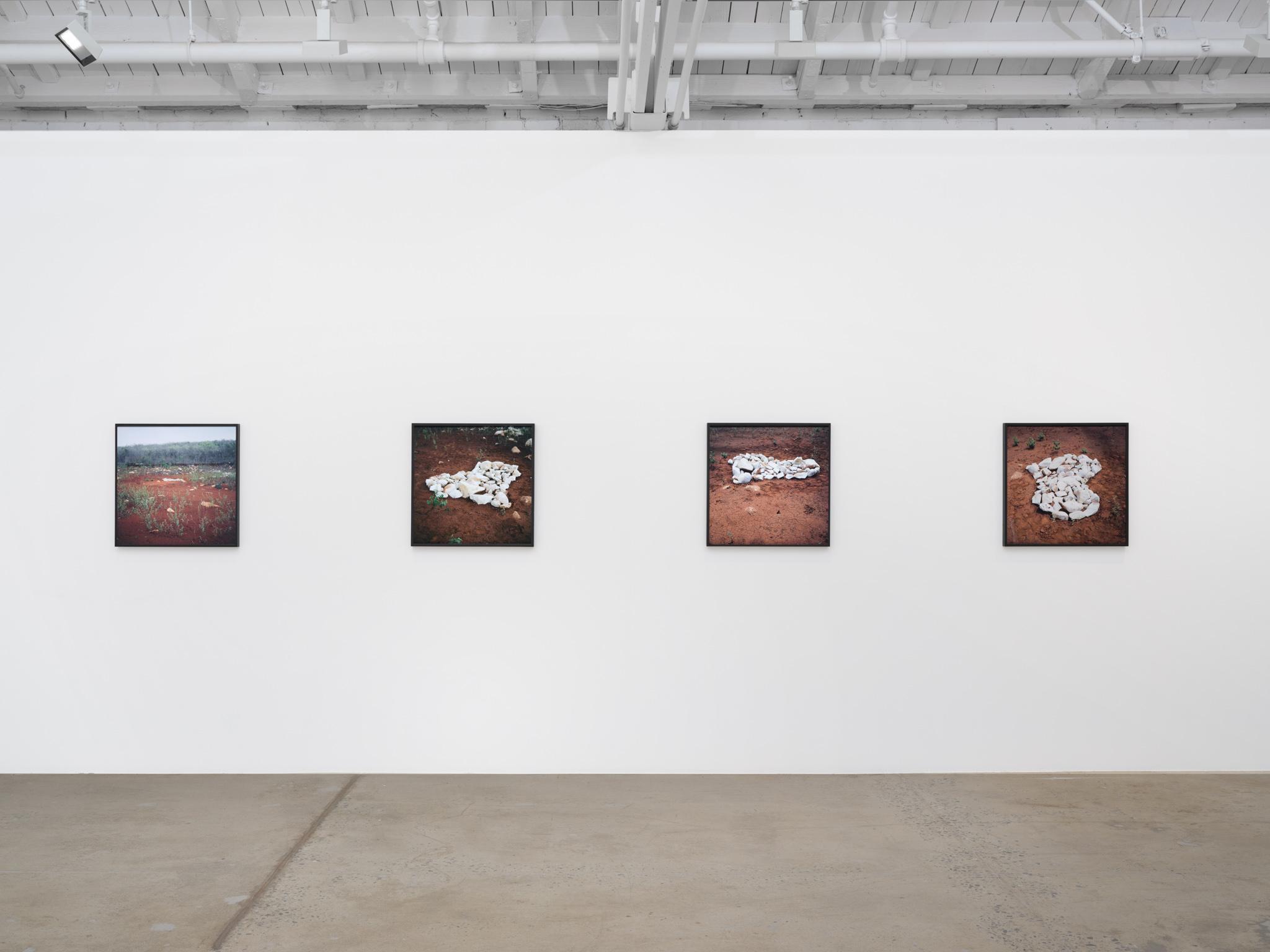
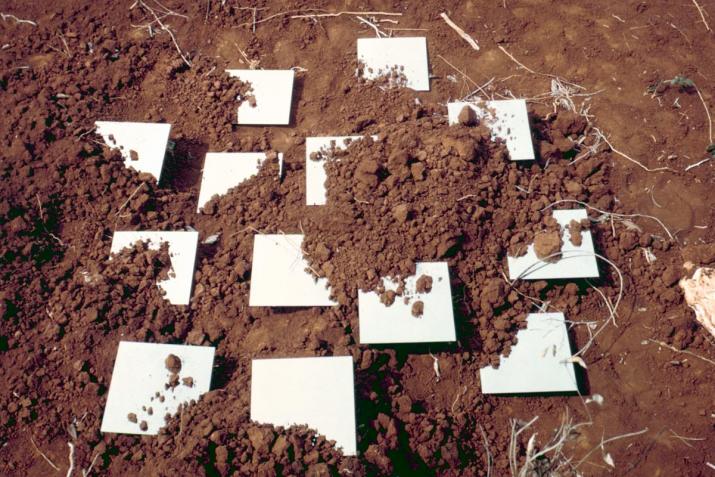
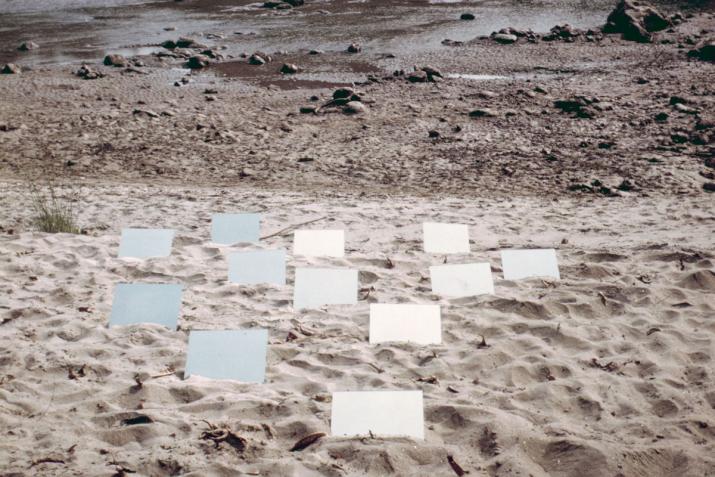
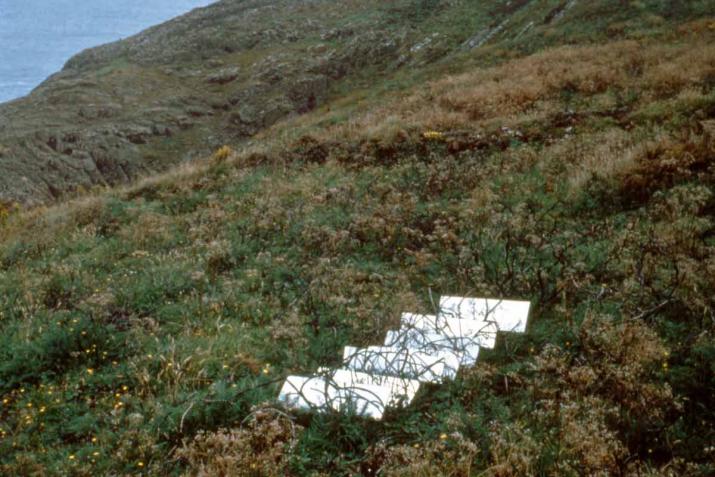
Four 126 format chromogenic slides
© Holt/Smithson Foundation / Licensed by Artists Rights Society, New York
In 1969, Robert Smithson produced a series of temporal sculptures in Europe and the Americas, works that existed briefly in the landscape and were fixed in time through photography. These projects challenged prevailing assumptions of sculpture as static, timeless, and monumental. Hypothetical Continent (Icecap of Gondwanaland) was realized in April 1969 near Uxmal, during Smithson’s travels in Mexico with Nancy Holt and the gallerist Virginia Dwan. On this trip, which also included visits to Chiapas and Palenque, Smithson produced several significant works. For this sculpture, he arranged white stones on the earth to map a fragment of Gondwana—the prehistoric supercontinent that once joined much of the Southern Hemisphere’s landmasses—then documented the configuration photographically. He then selected four images, transforming a temporary, site-bound action into a portable and material work.
This unique artwork consists of four 126-format chromogenic slides. When exhibited, photographic prints are produced from the slides. The work belongs to Smithson’s broader investigation of the Nonsite: sculptures he described as “material maps” that displace elements of a specific location into the institutional space of the museum. Here, the images transport the site of the sculpture into the gallery, where it is displaced again through its translation from slide to photographic print.