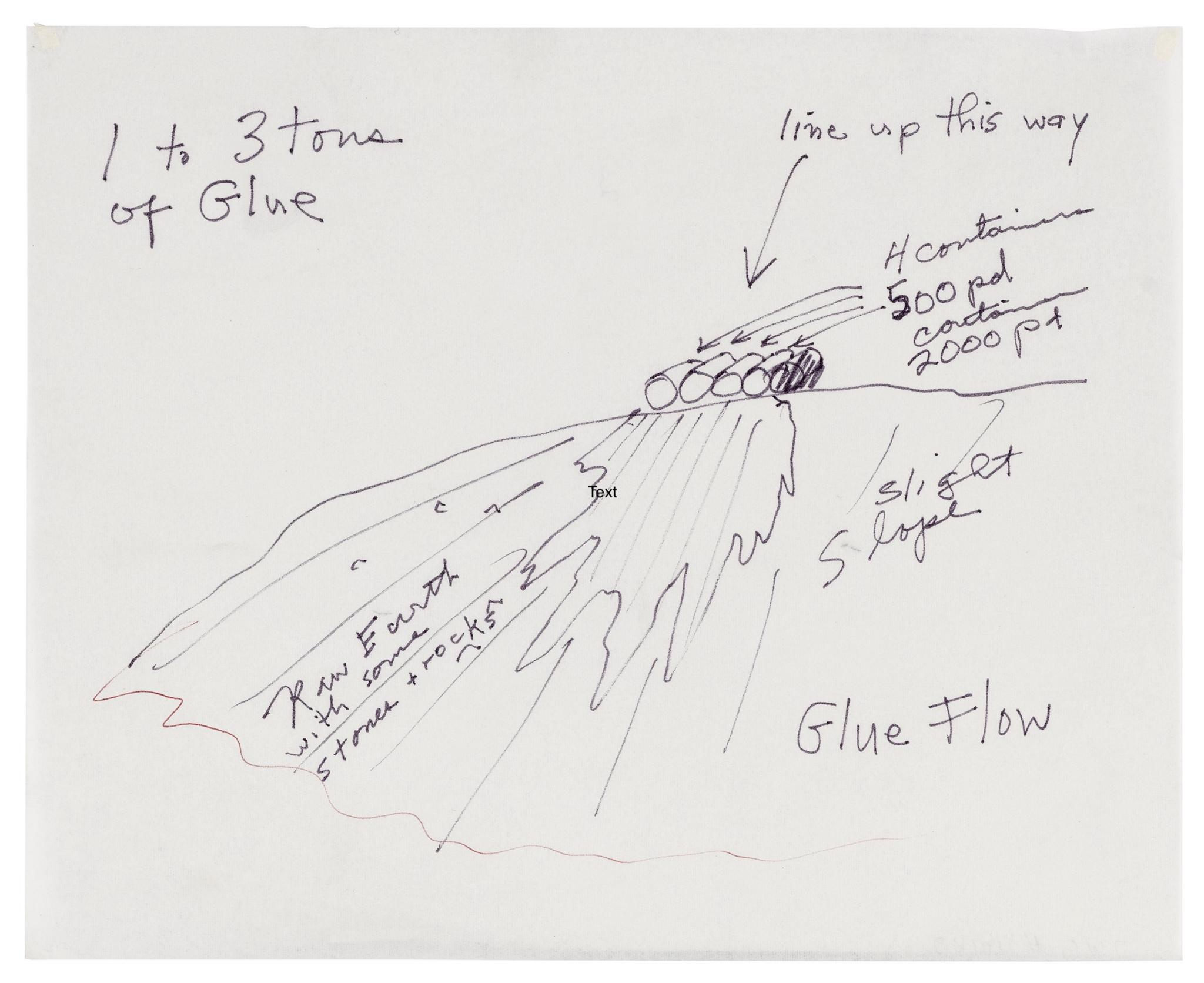
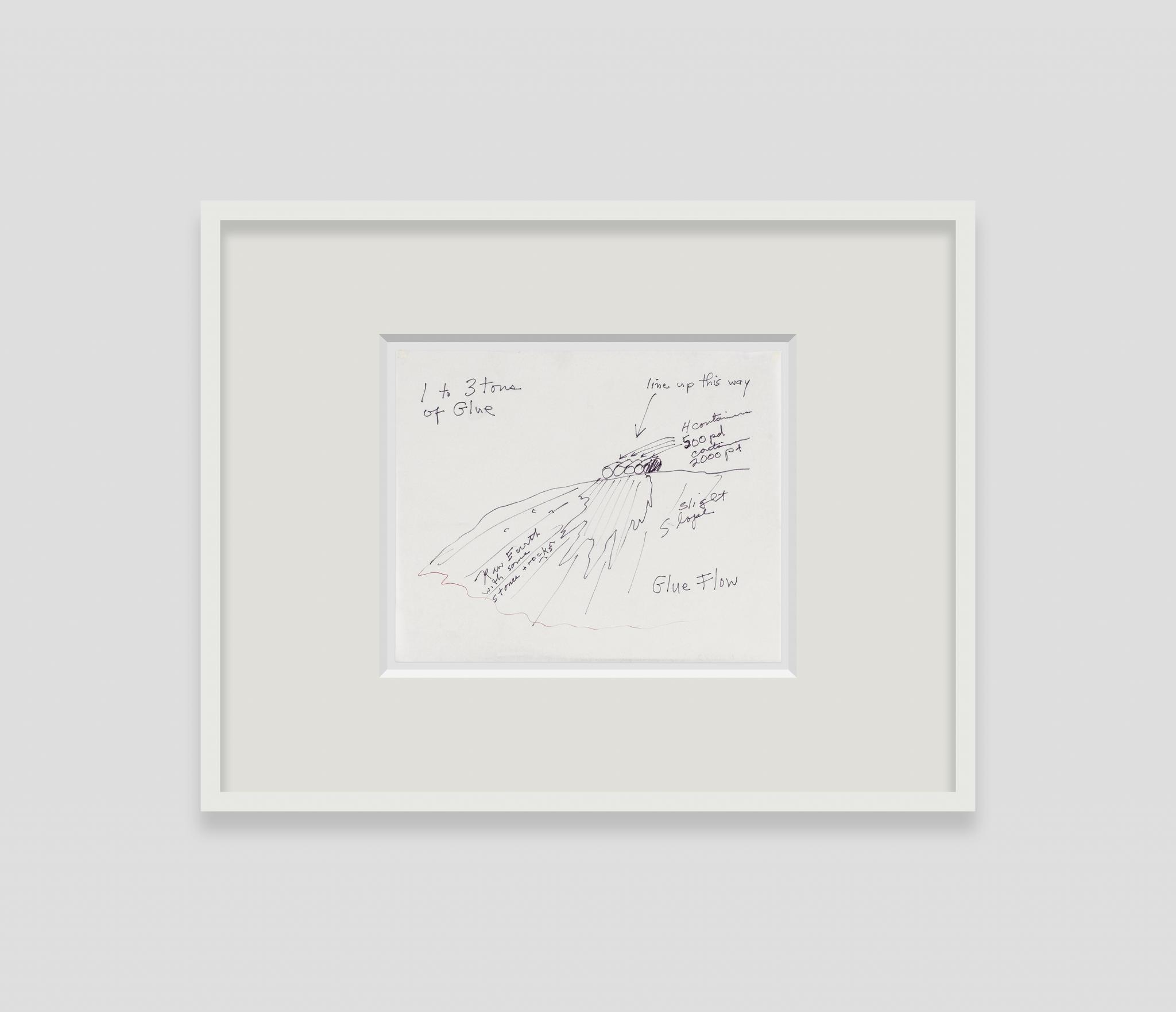
Glue Flow

Robert Smithson
1969
Red and black ink on paper
8 x 10 in. (20.3 x 25.4 cm)

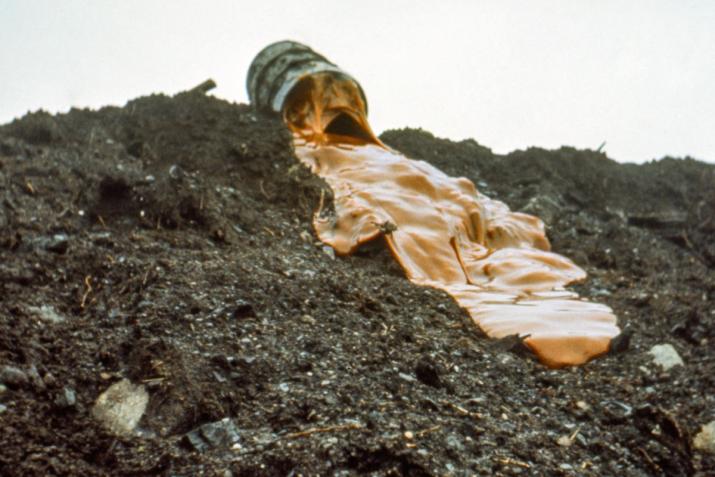
In 1969, Smithson began working with temporal sculptures made from gravitational flows and pours, developing these alluvial ideas through drawing. For Smithson, landscape and its inhabitants were always undergoing change. The first realized flow was Asphalt Rundown, made in October 1969 at Cava di Selce, an abandoned quarry outside Rome. That same year, Smithson was invited by Lucy Lippard to contribute to her exhibition 955,000, presented at the Vancouver Art Gallery and other sites throughout the city. In this drawing, he outlines his proposal for Glue Flow, which, when realized that December, became known as Glue Pour. The drawing indicates that one to three tons of glue—Smithson ultimately chose bottle gum—were to be poured down a slight rocky slope from four barrels arranged one behind the other. 

Writing

Scholarly Text

Asphalt Rundown

Serena Solin

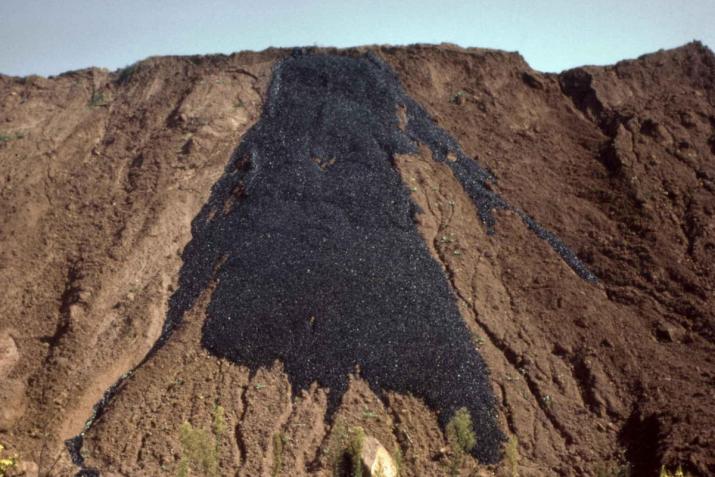
In 1969 and 1970, Robert Smithson created three “pour” sculptures that demonstrated his mastery of a difficult and deadly medium: entropy. In all three, an industrial material was prepared and poured downhill at a remote or neglected site and left to solidify. The first of these sculptures, Asphalt Rundown, was a dramatic release of hot, viscous black material down the shorn crags of the defunct quarry, intended—and perceived—as a “powerful, annihilating gesture,” in the words of Frank Stella.1
Scholarly Text

Britannia Beach Project

Ron Graziani

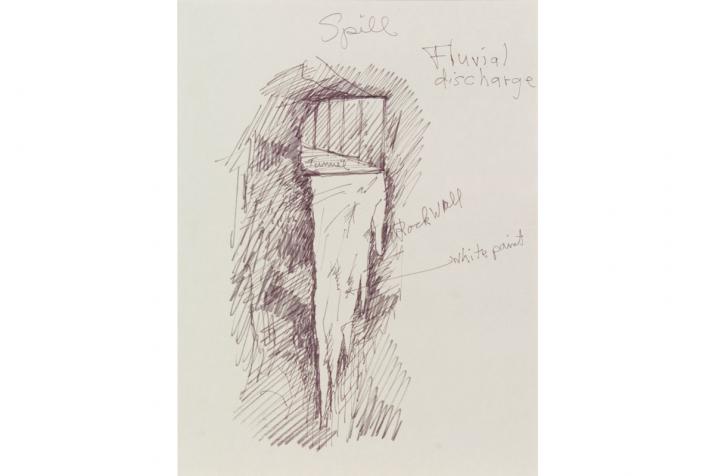
It was early in December 1969, while still in negotiations with the government of British Columbia over securing the Miami Islet site for his Island of Broken Glass proposal1 , when Smithson visited the Anaconda Copper Mine at Britannia Beach (just north of the city of Vancouver, British Columbia). What came out of that visit was a series of drawings that included Spill: Fluvial Discharge (Britannia Beach Project).

Related Info

See Also