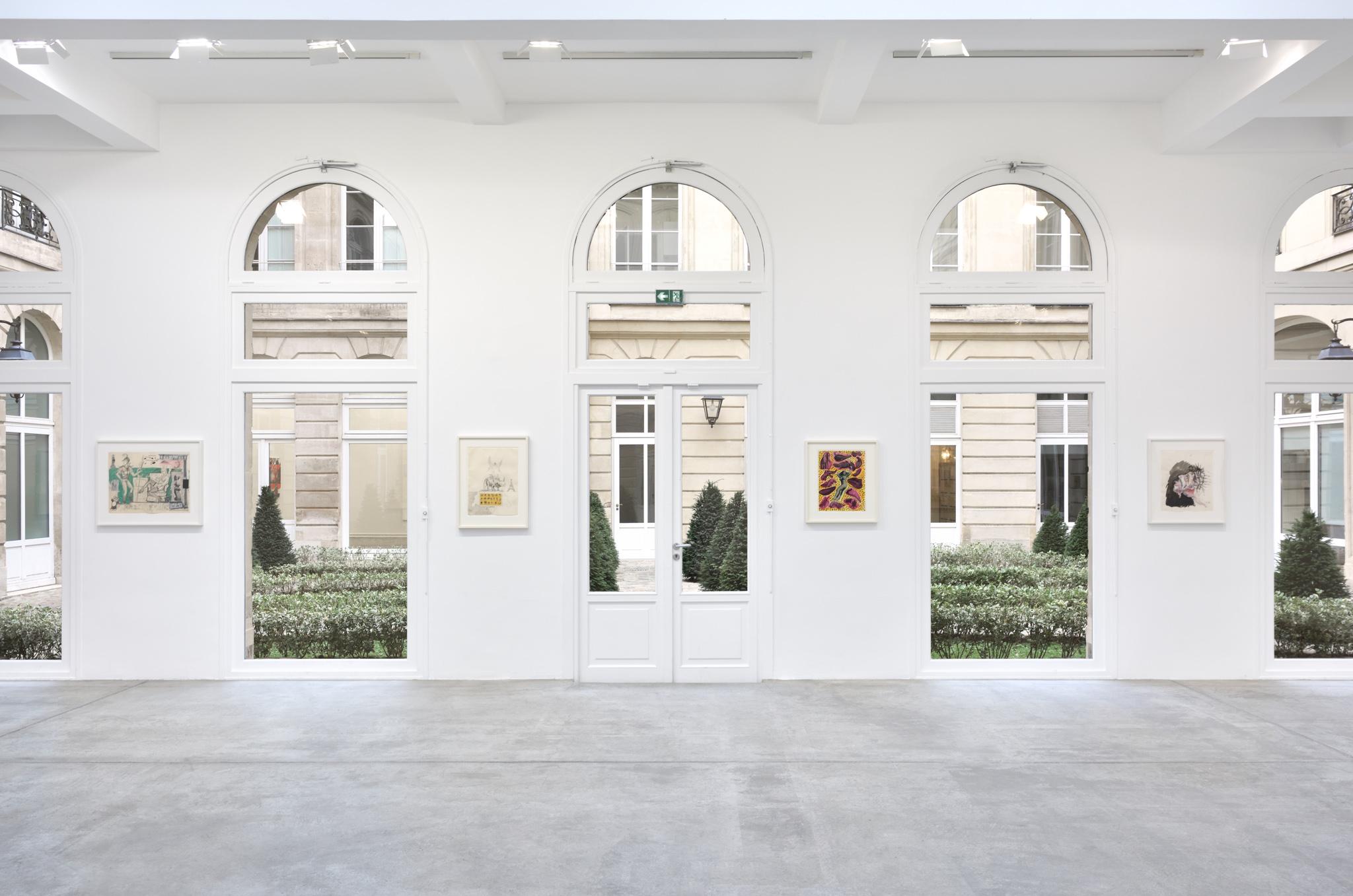
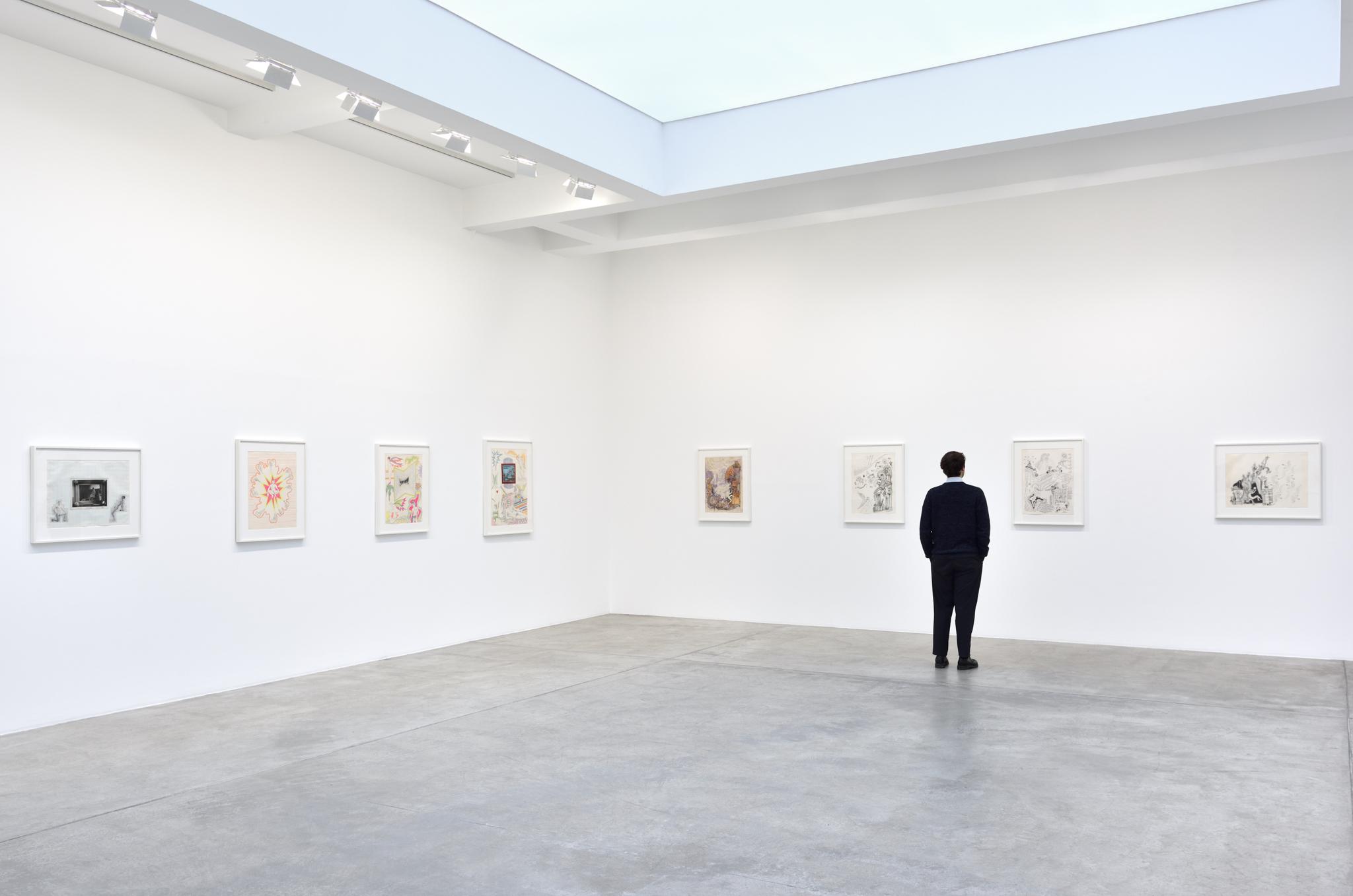
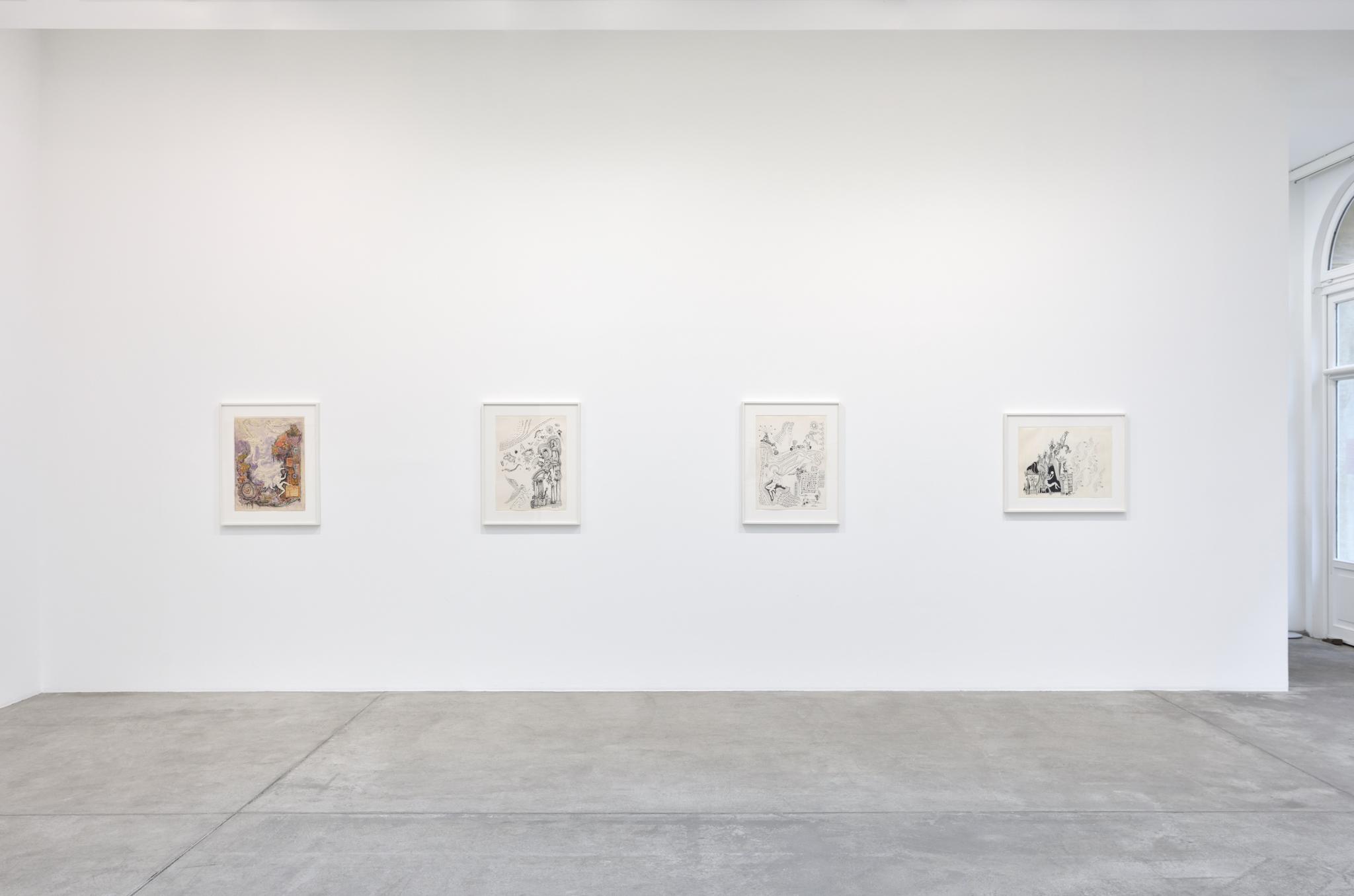
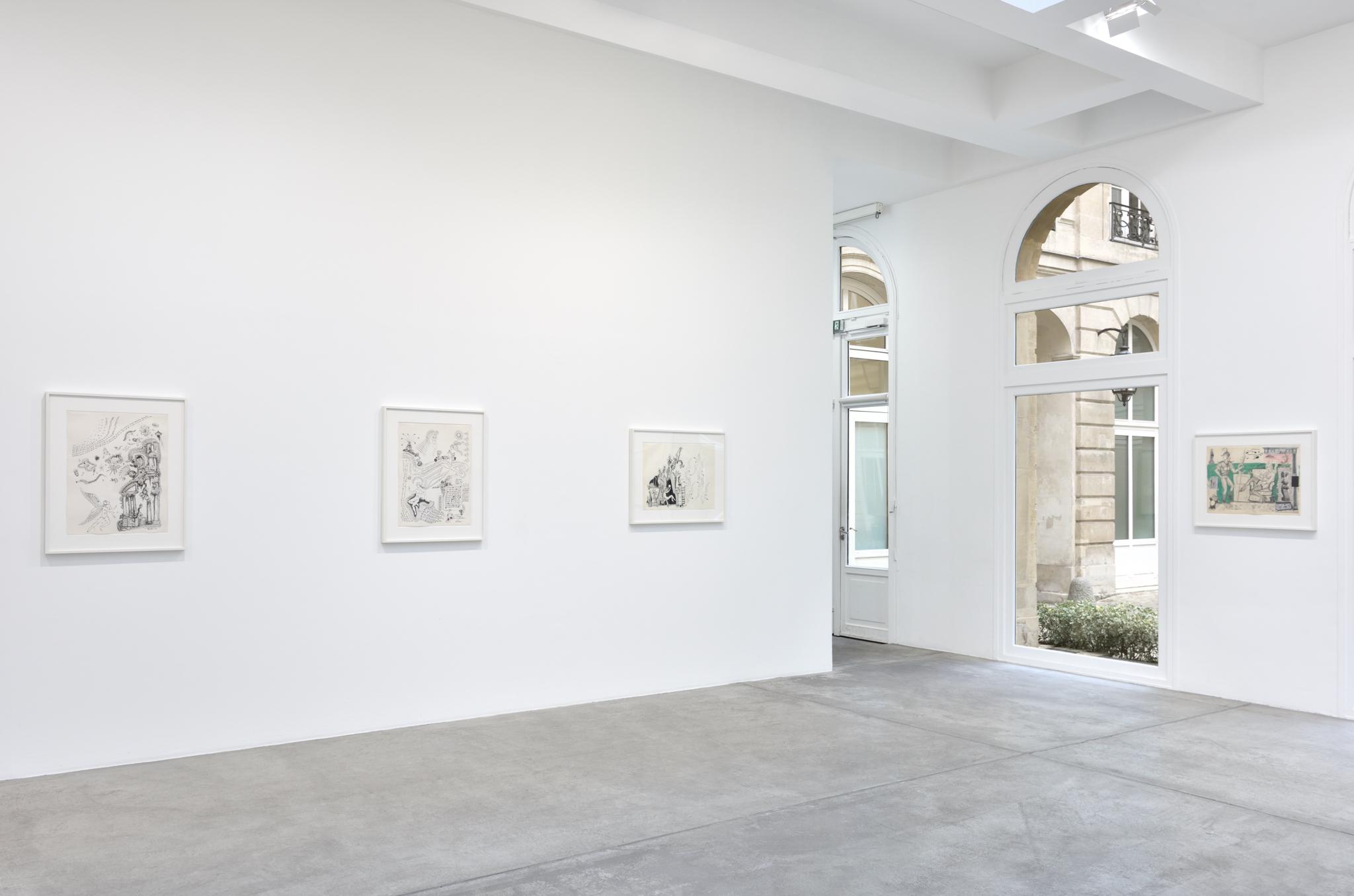
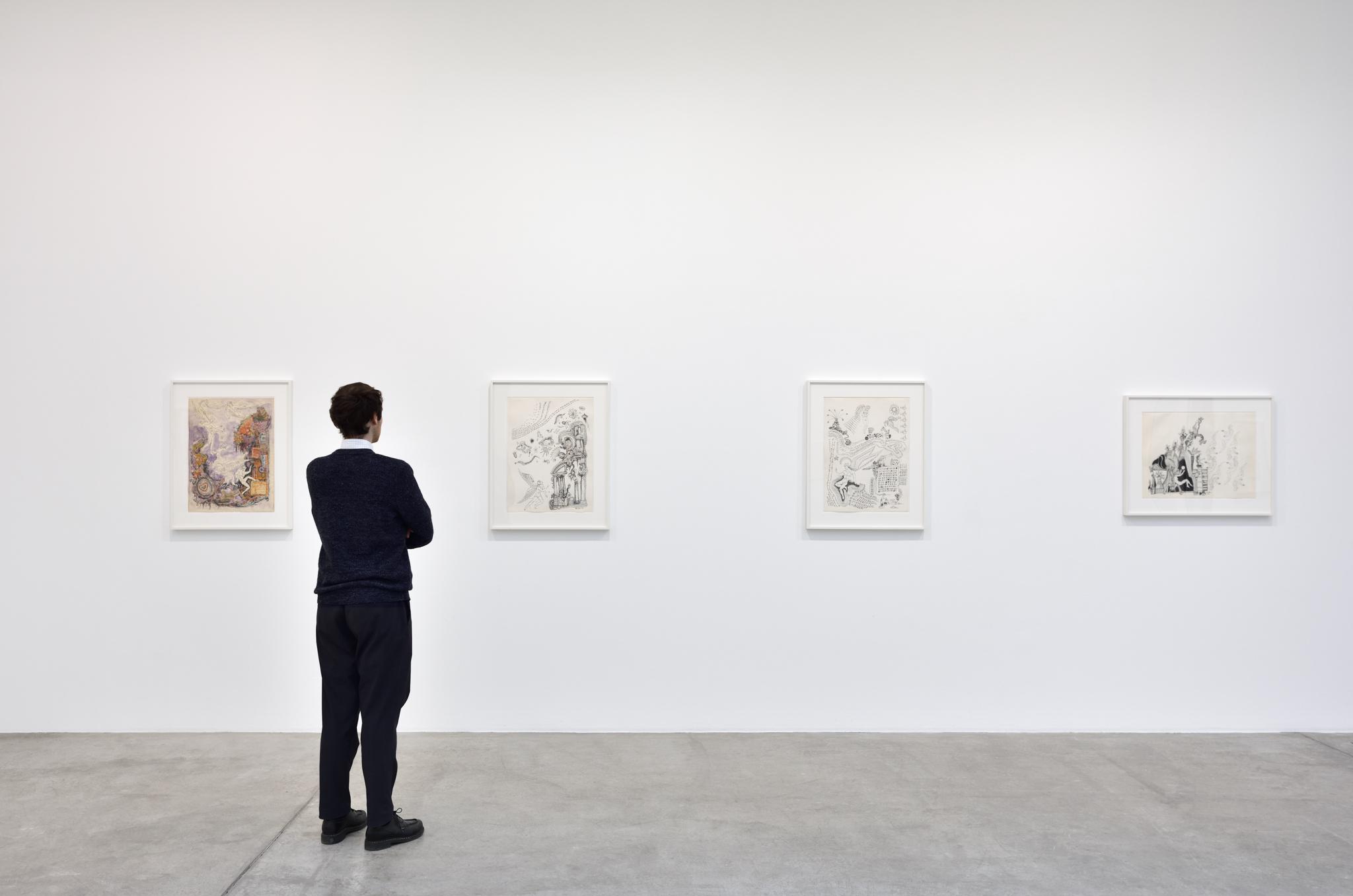
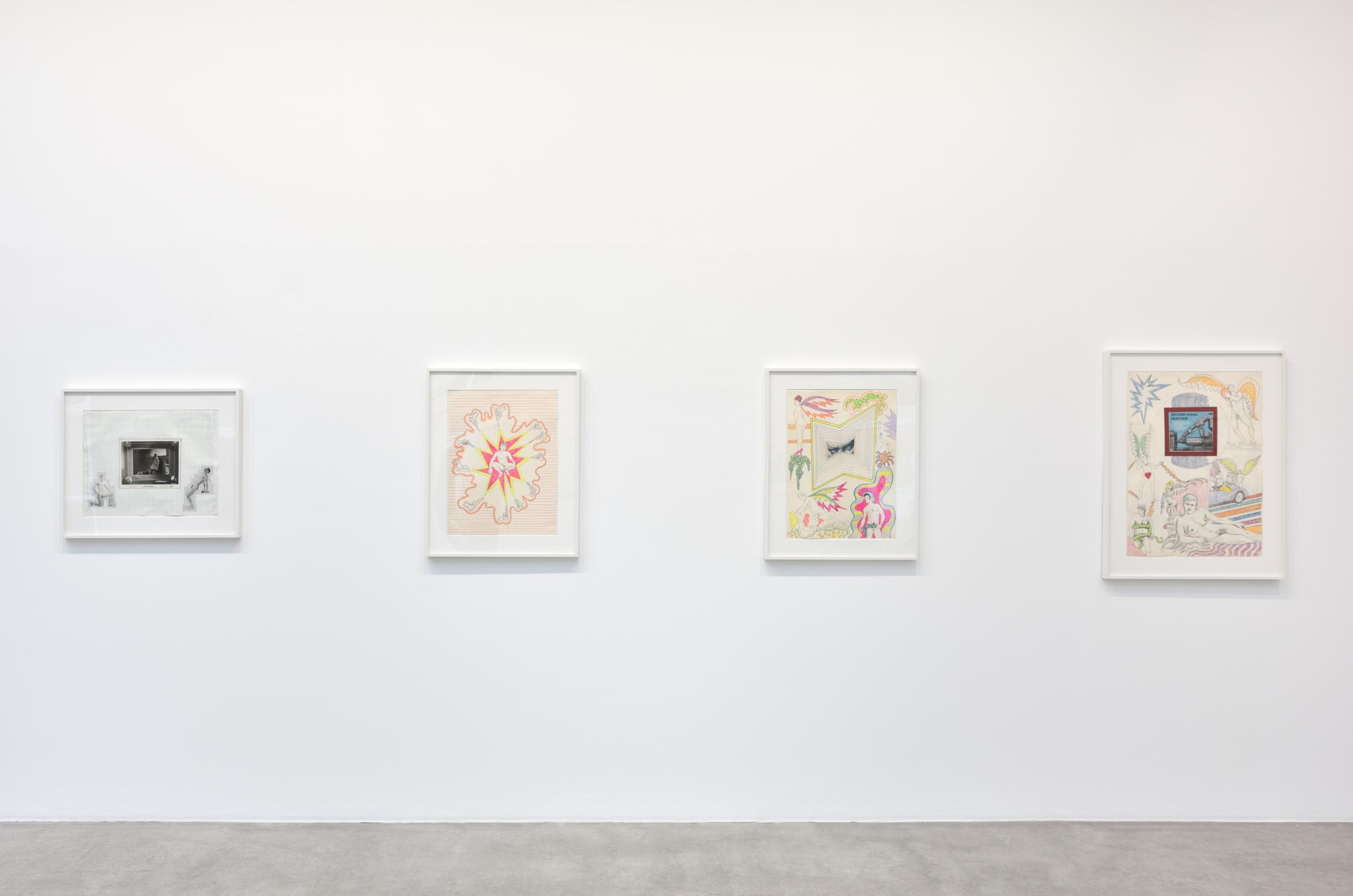
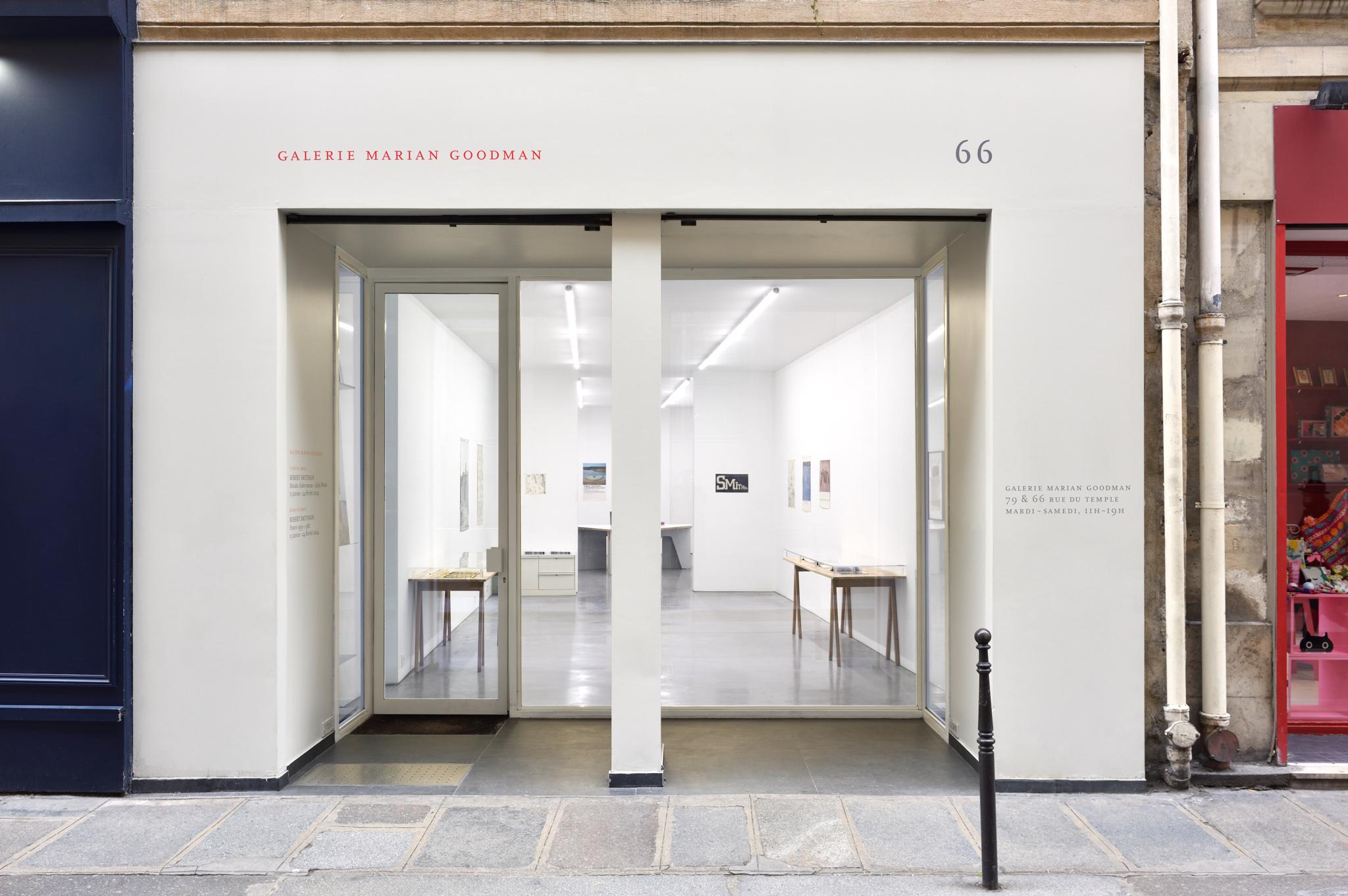
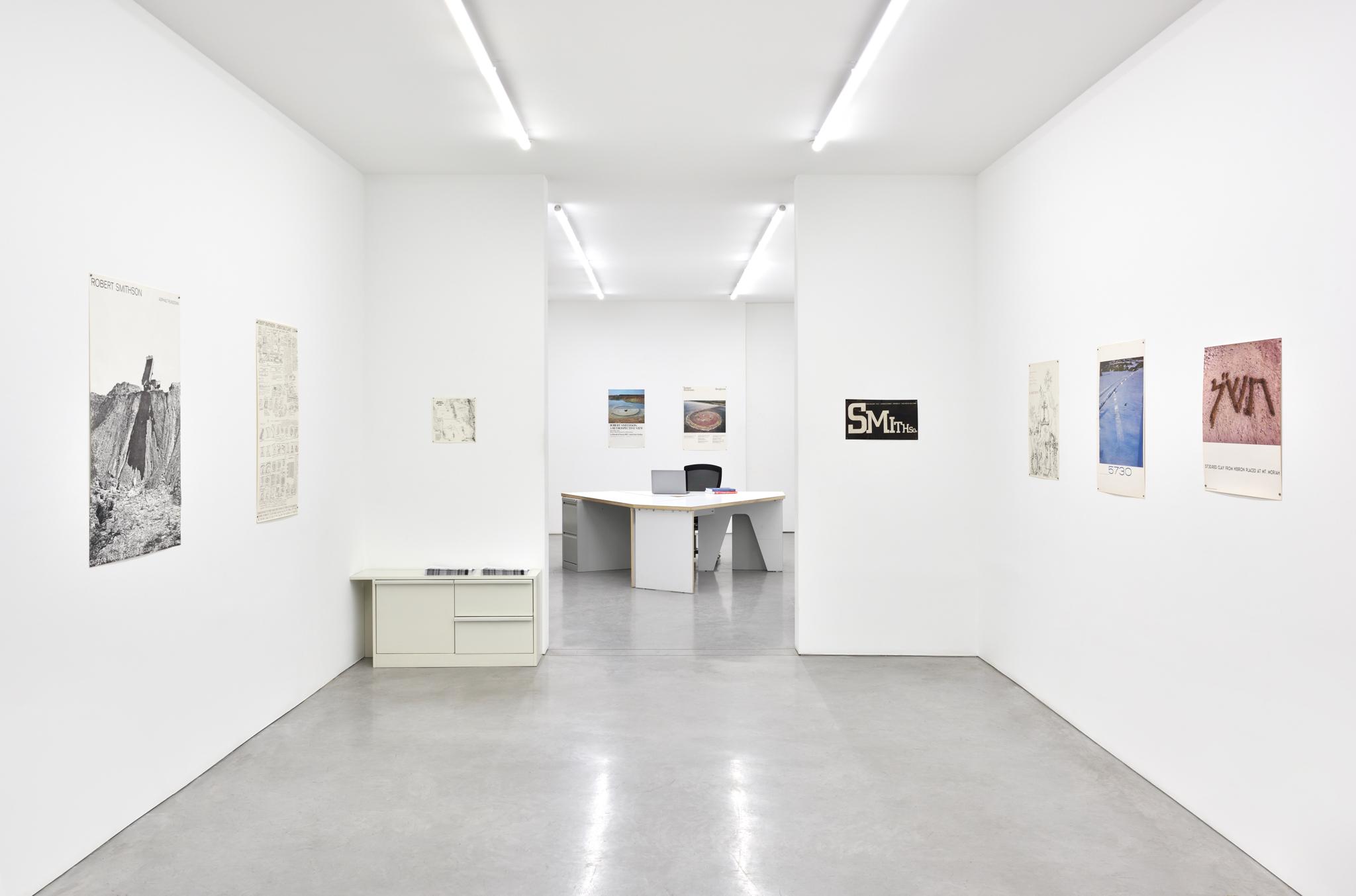
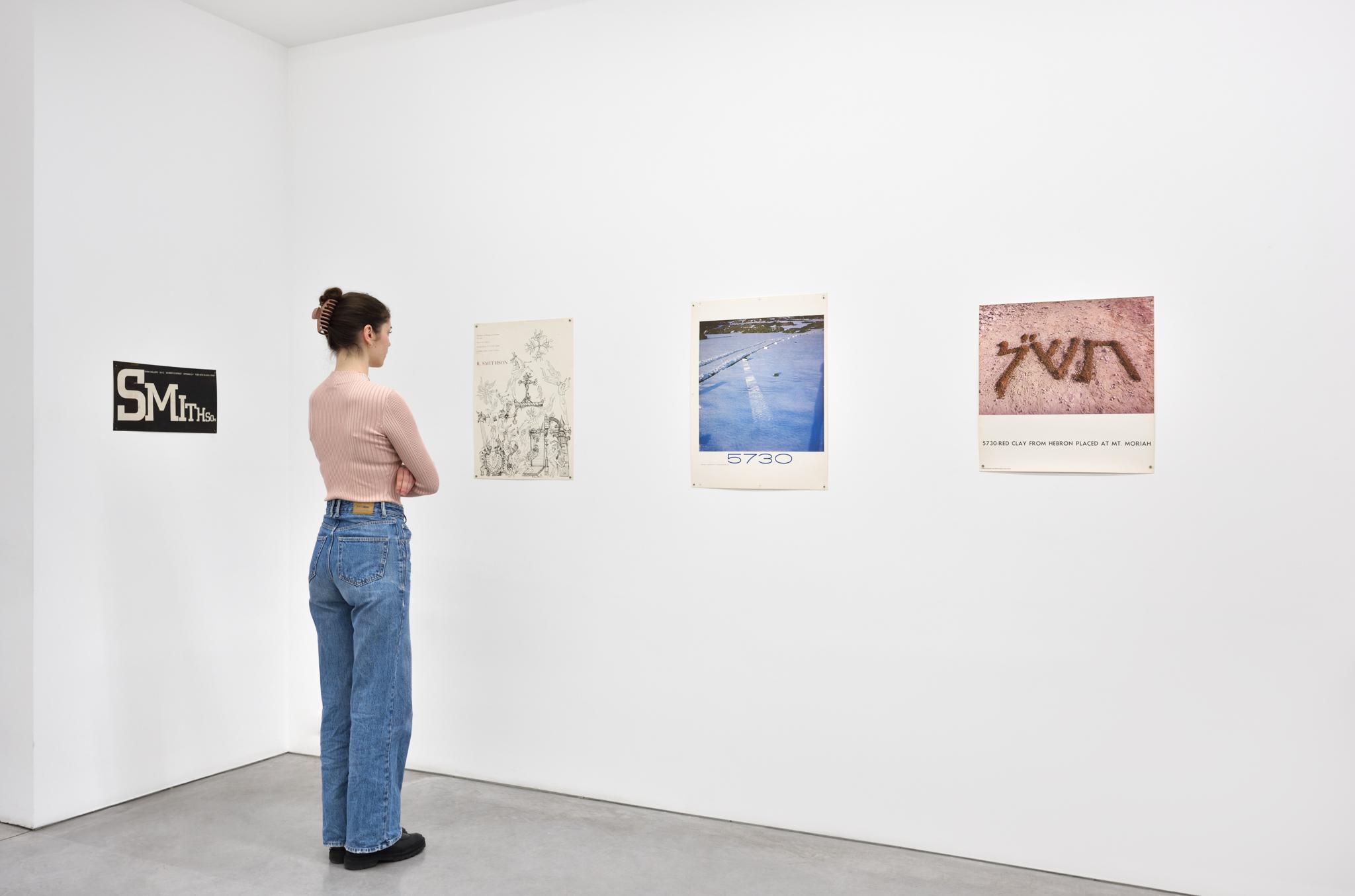
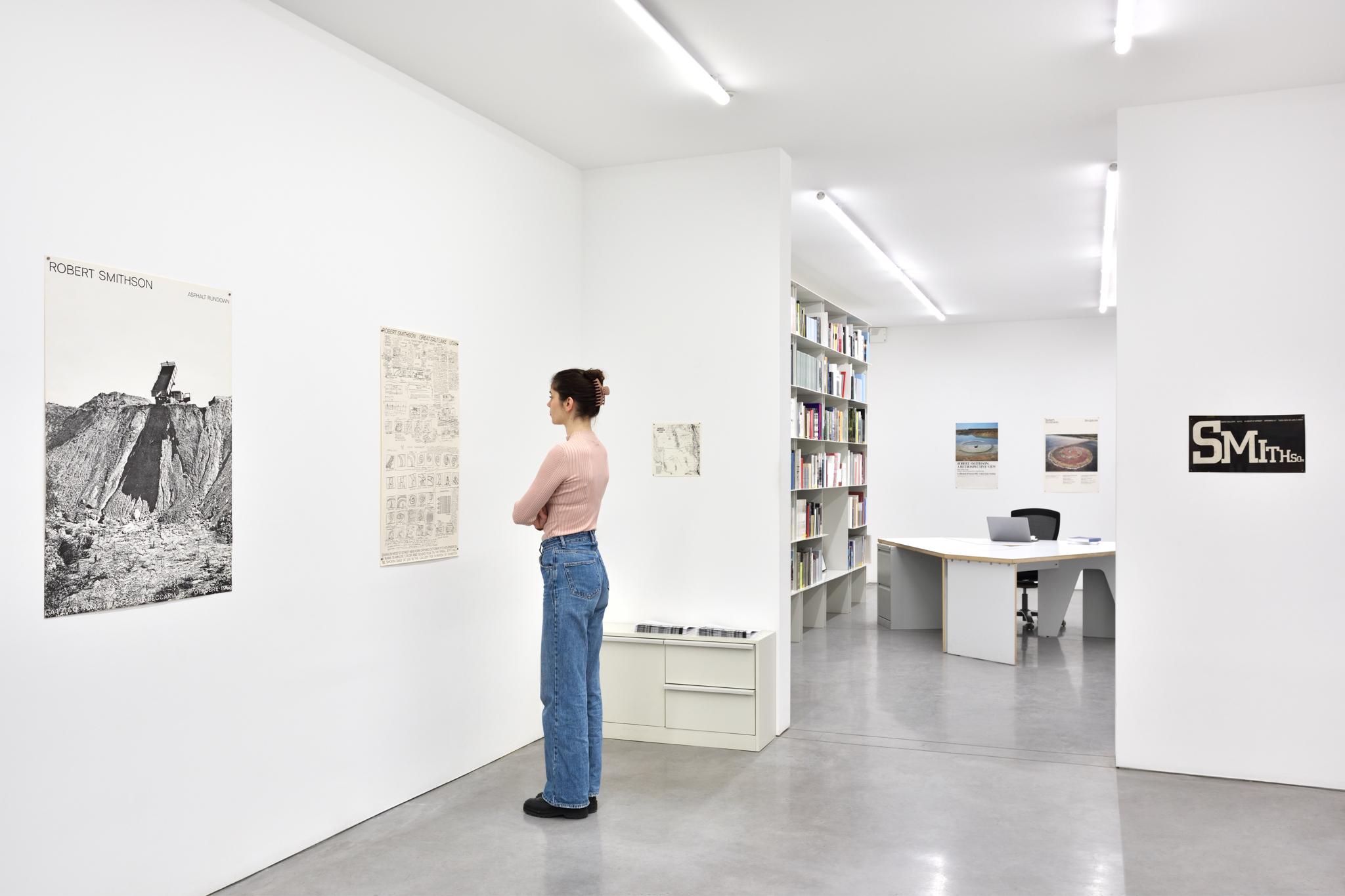
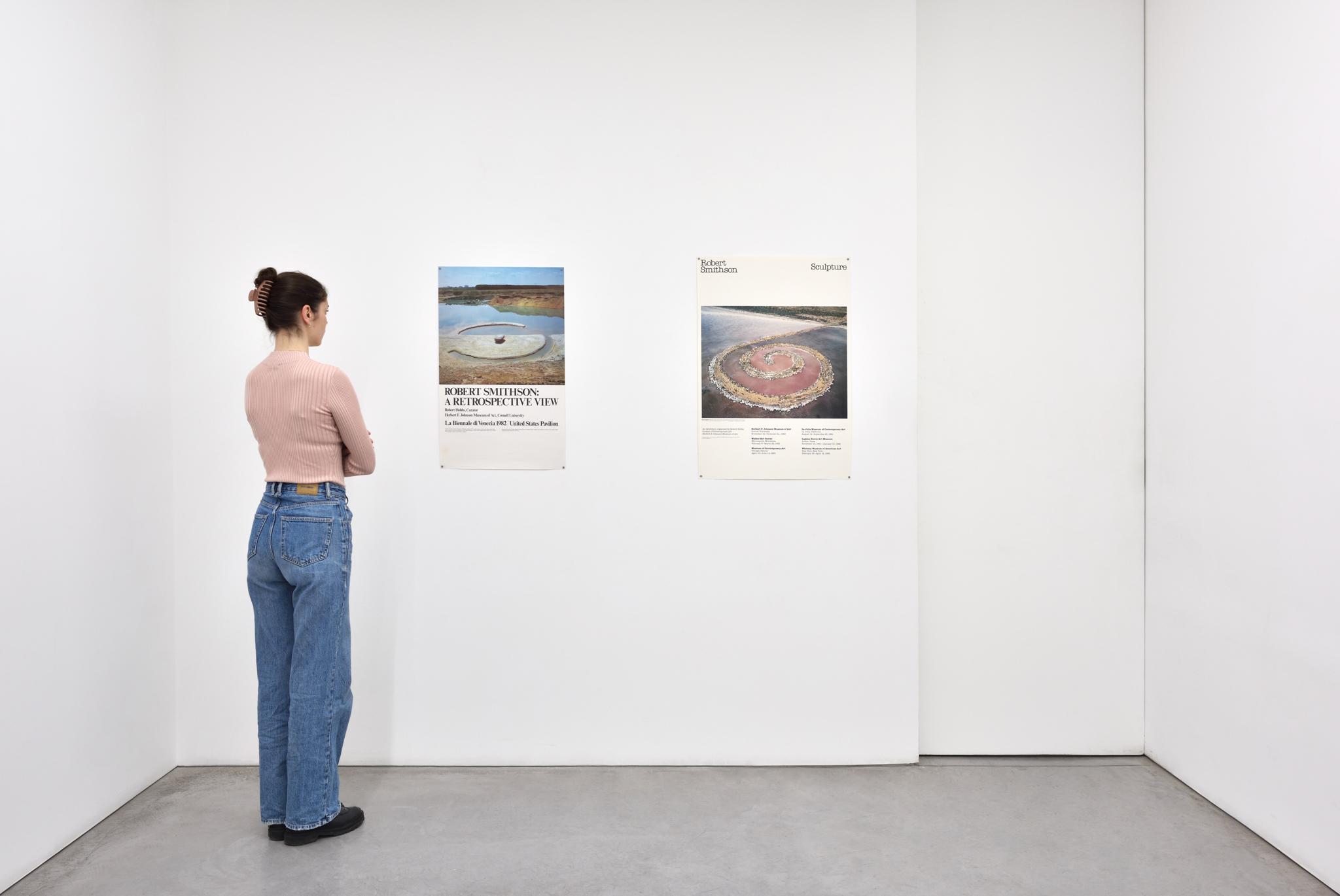
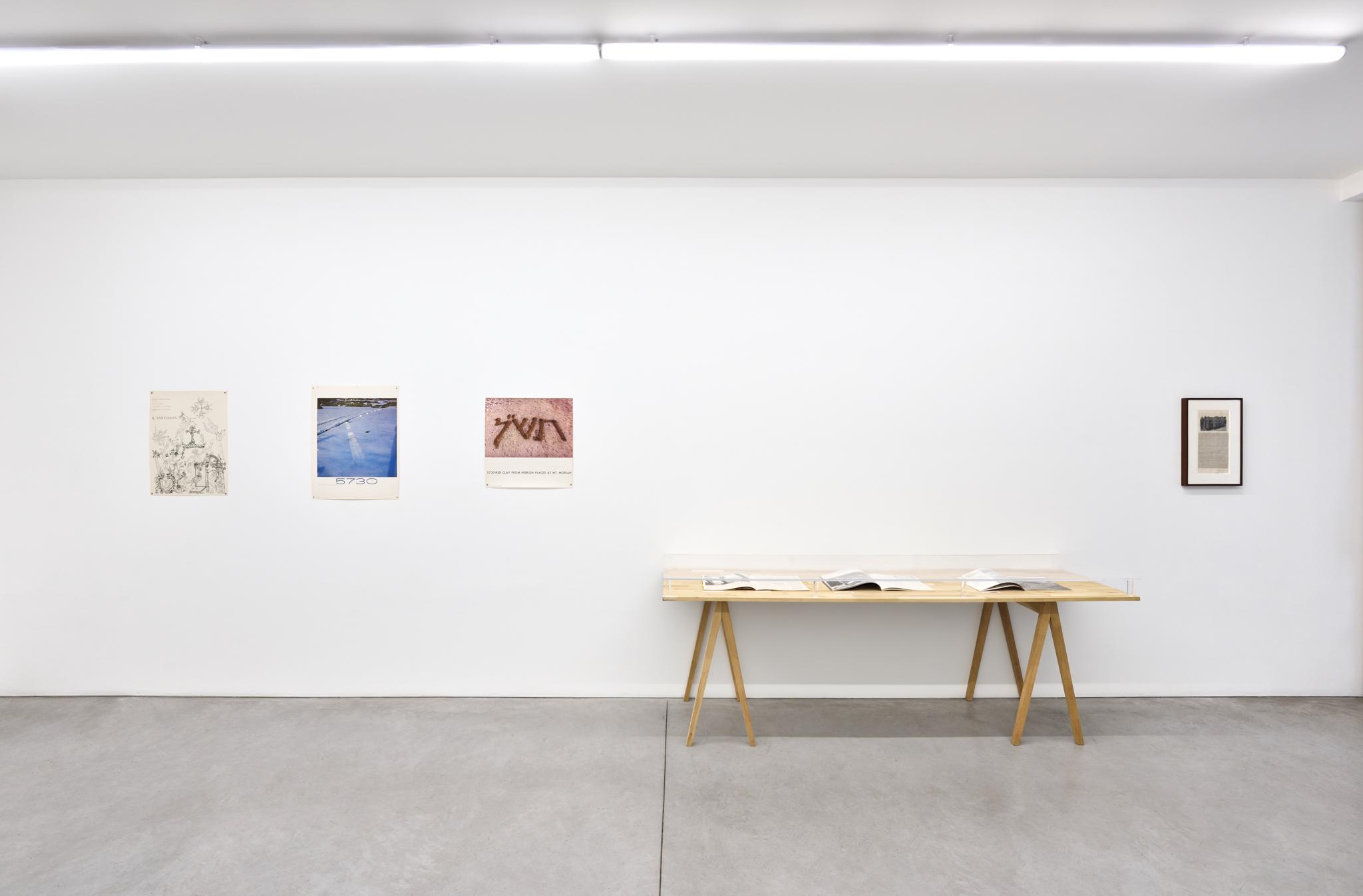
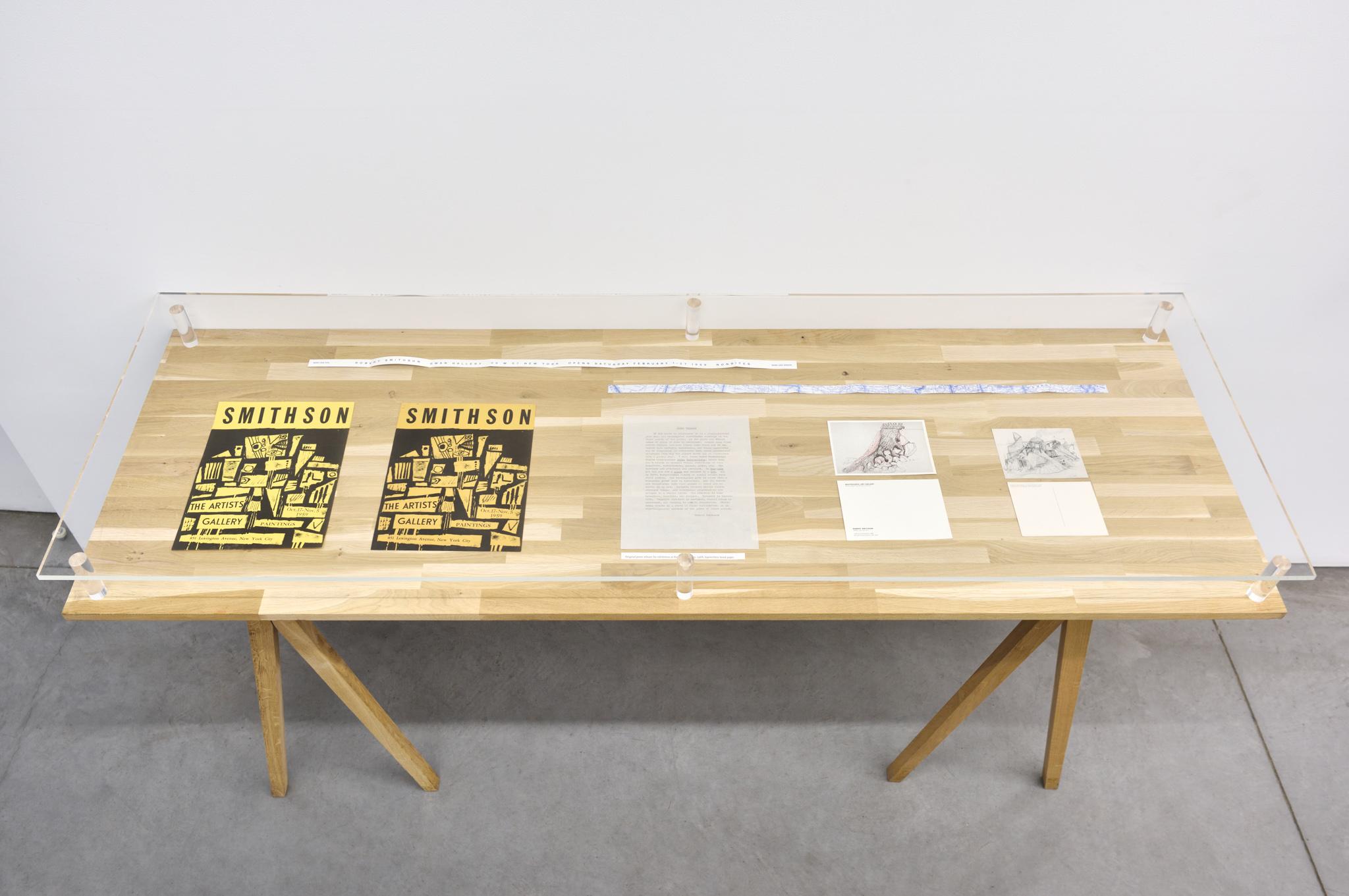
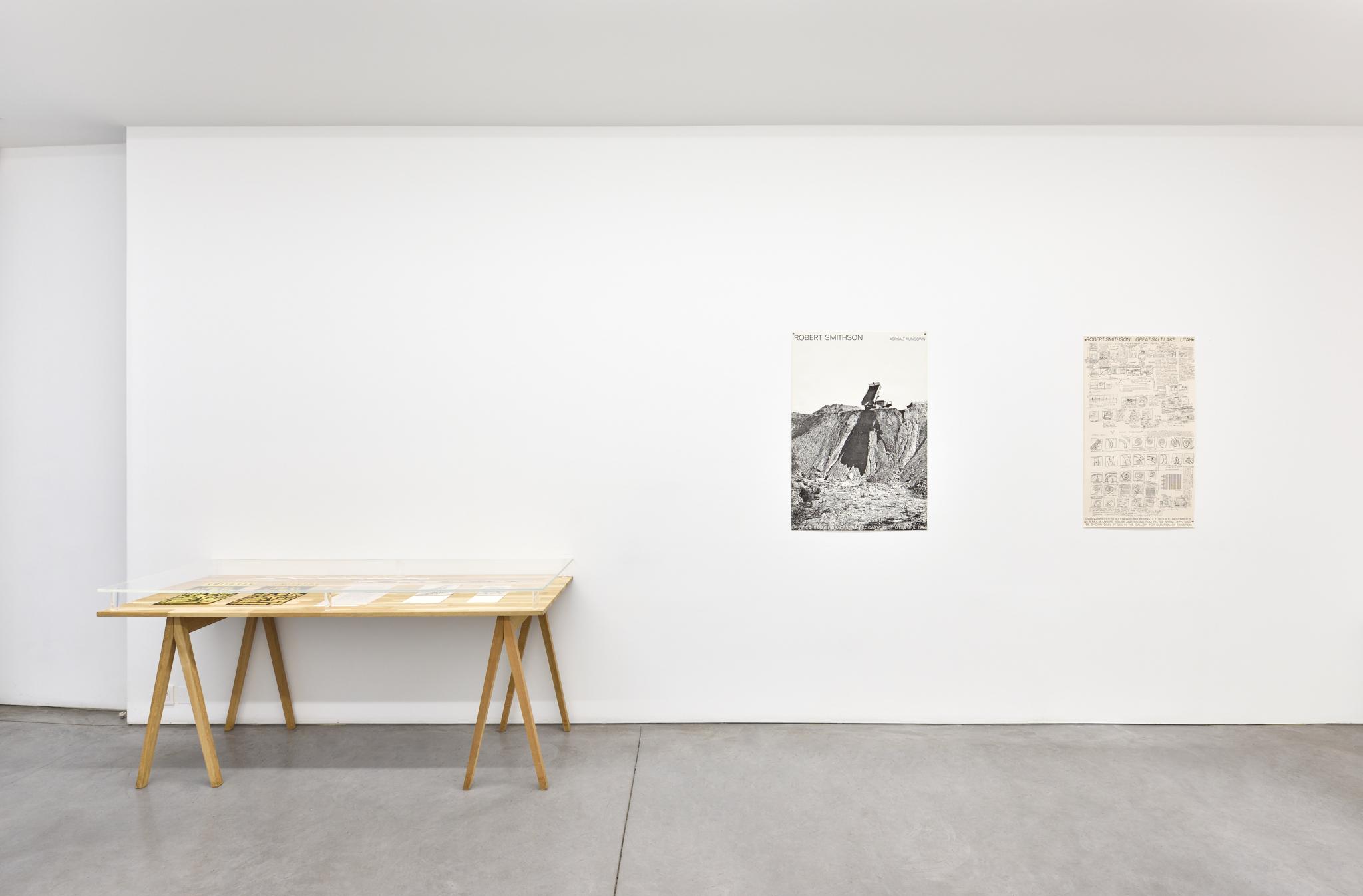
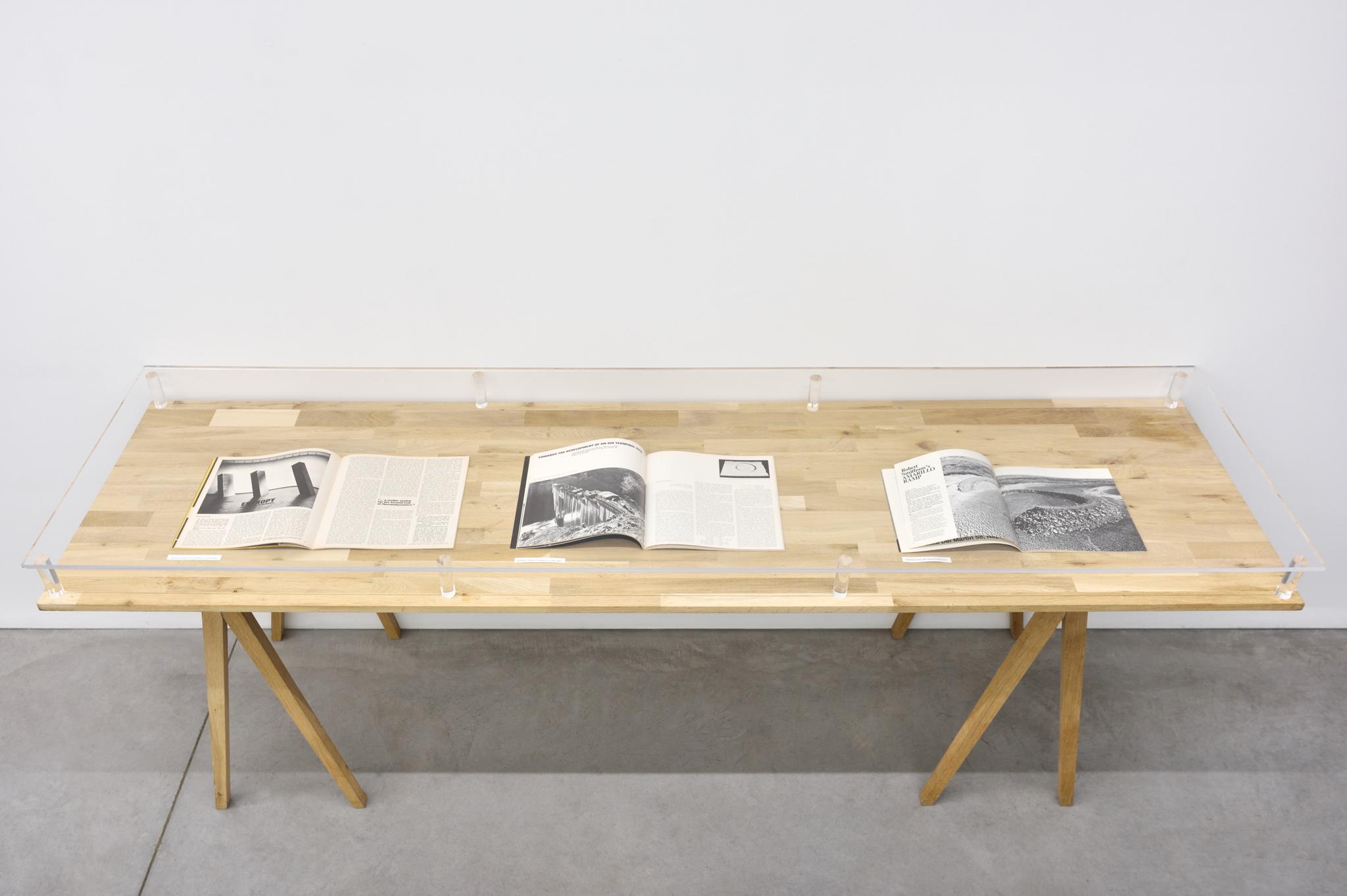
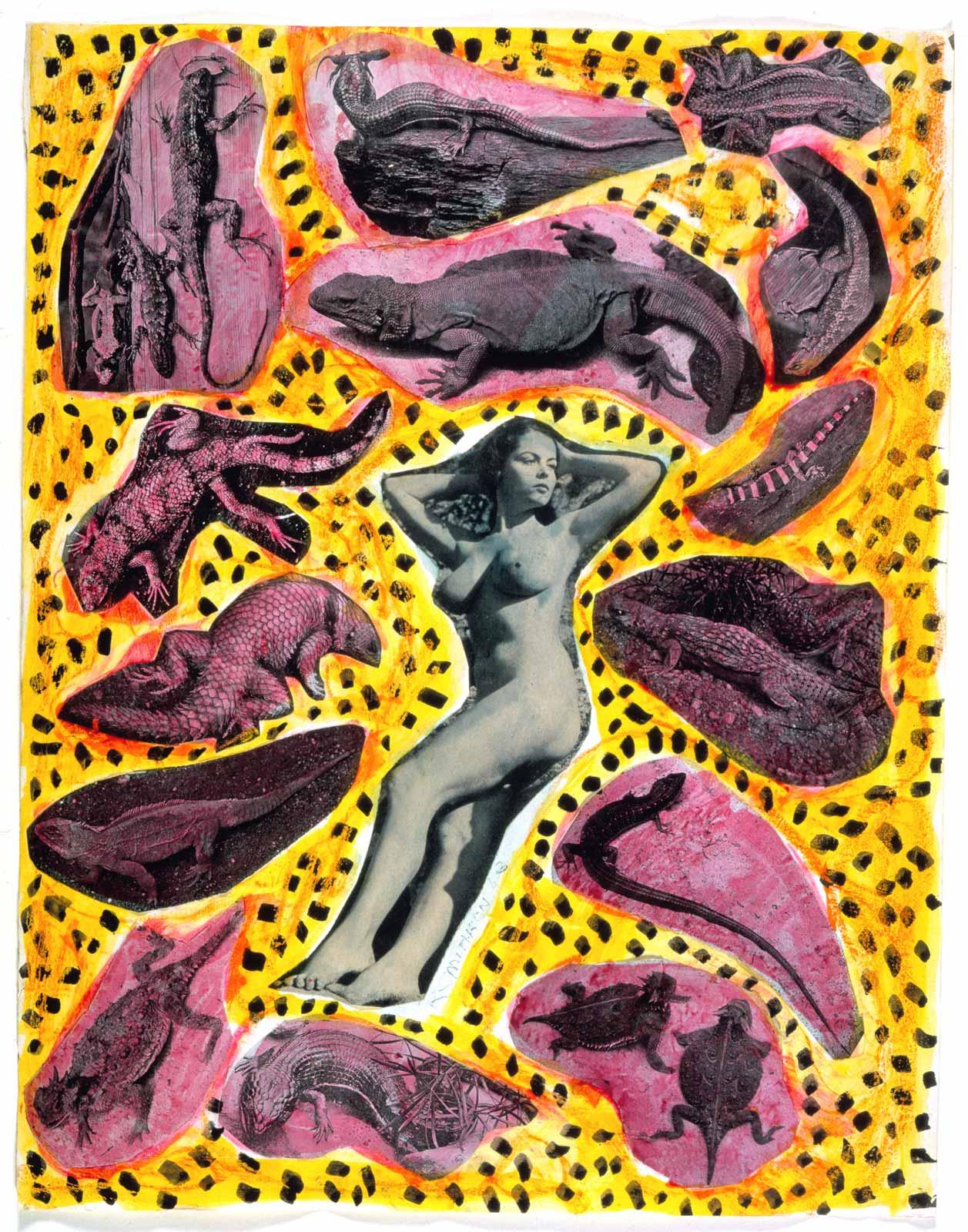
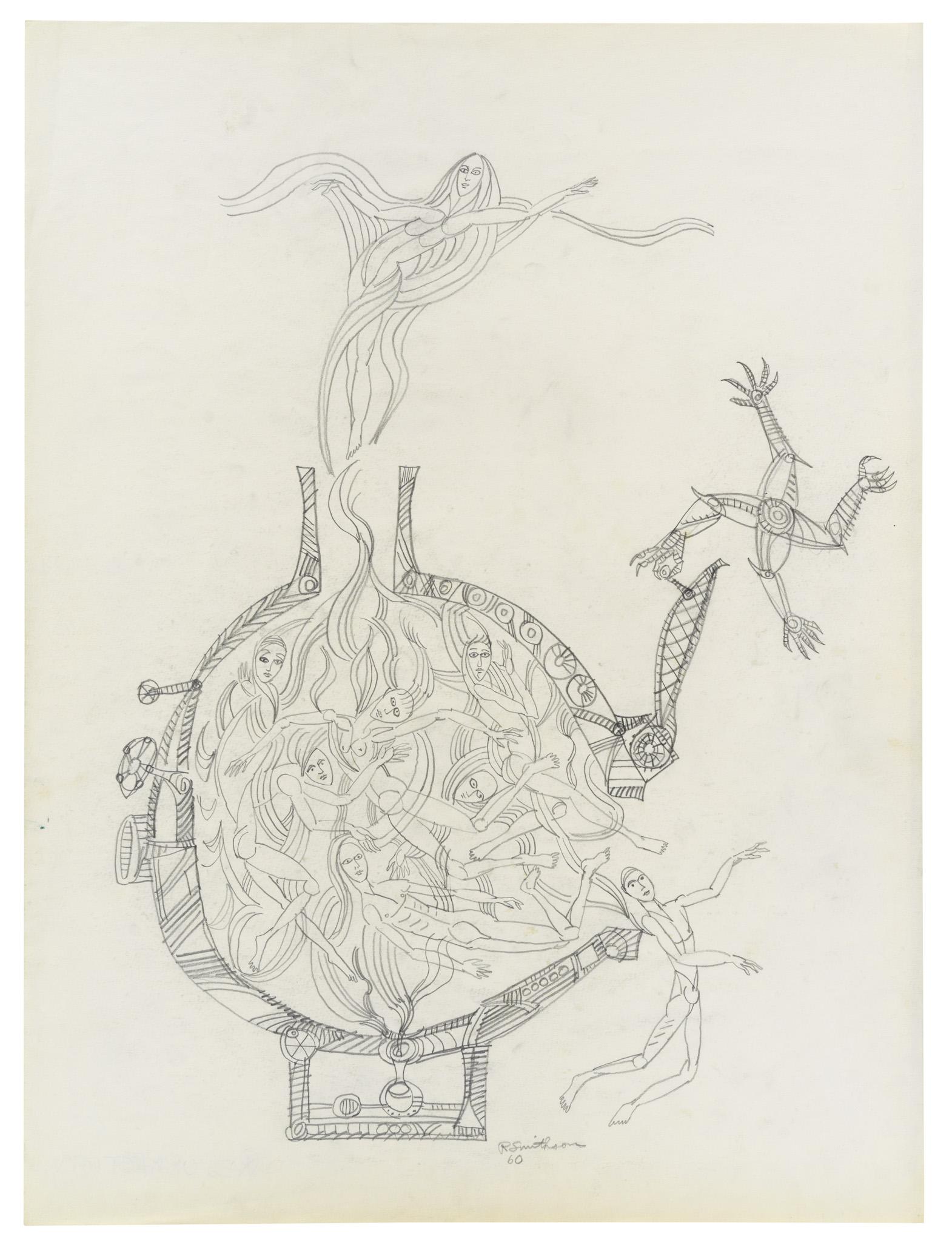
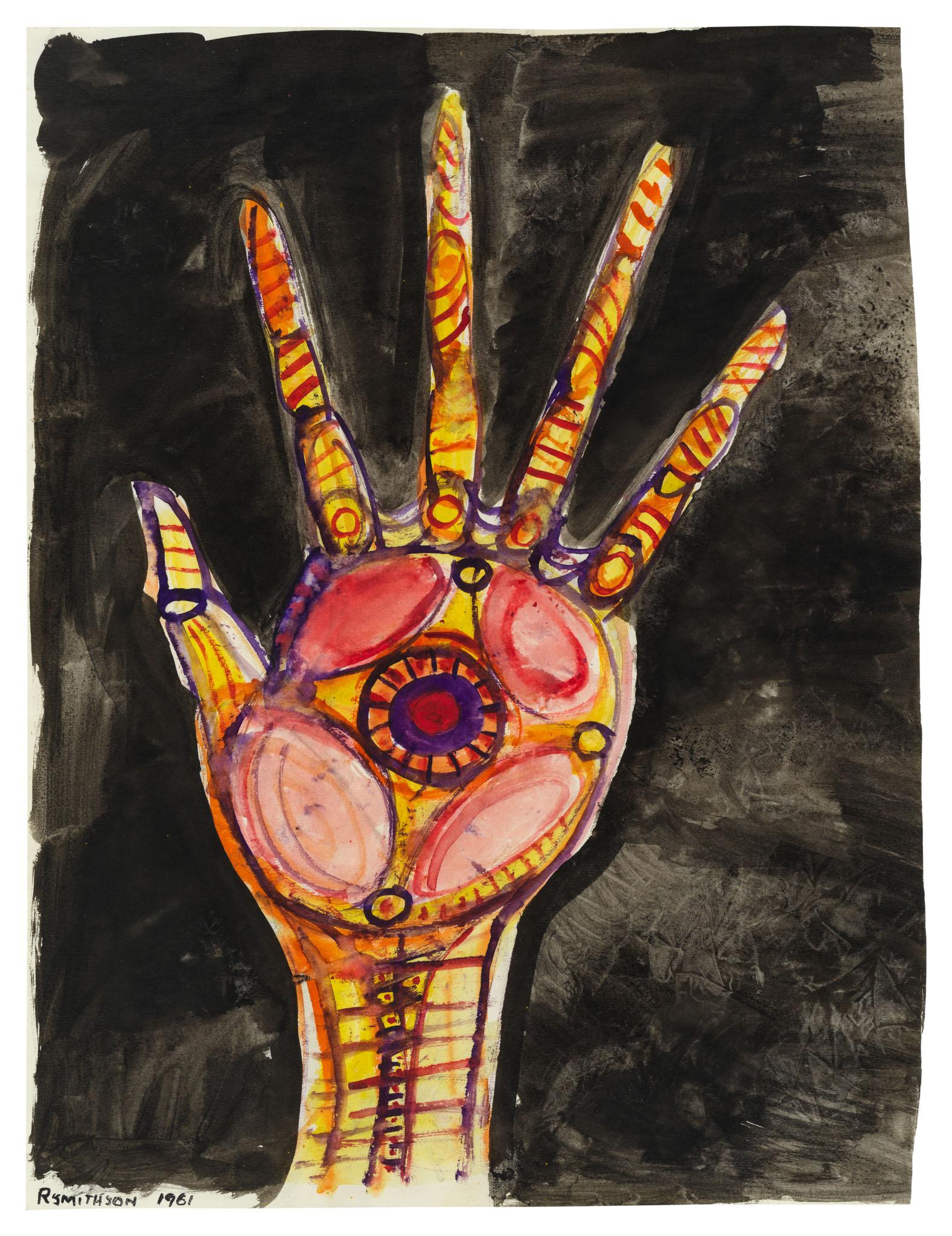
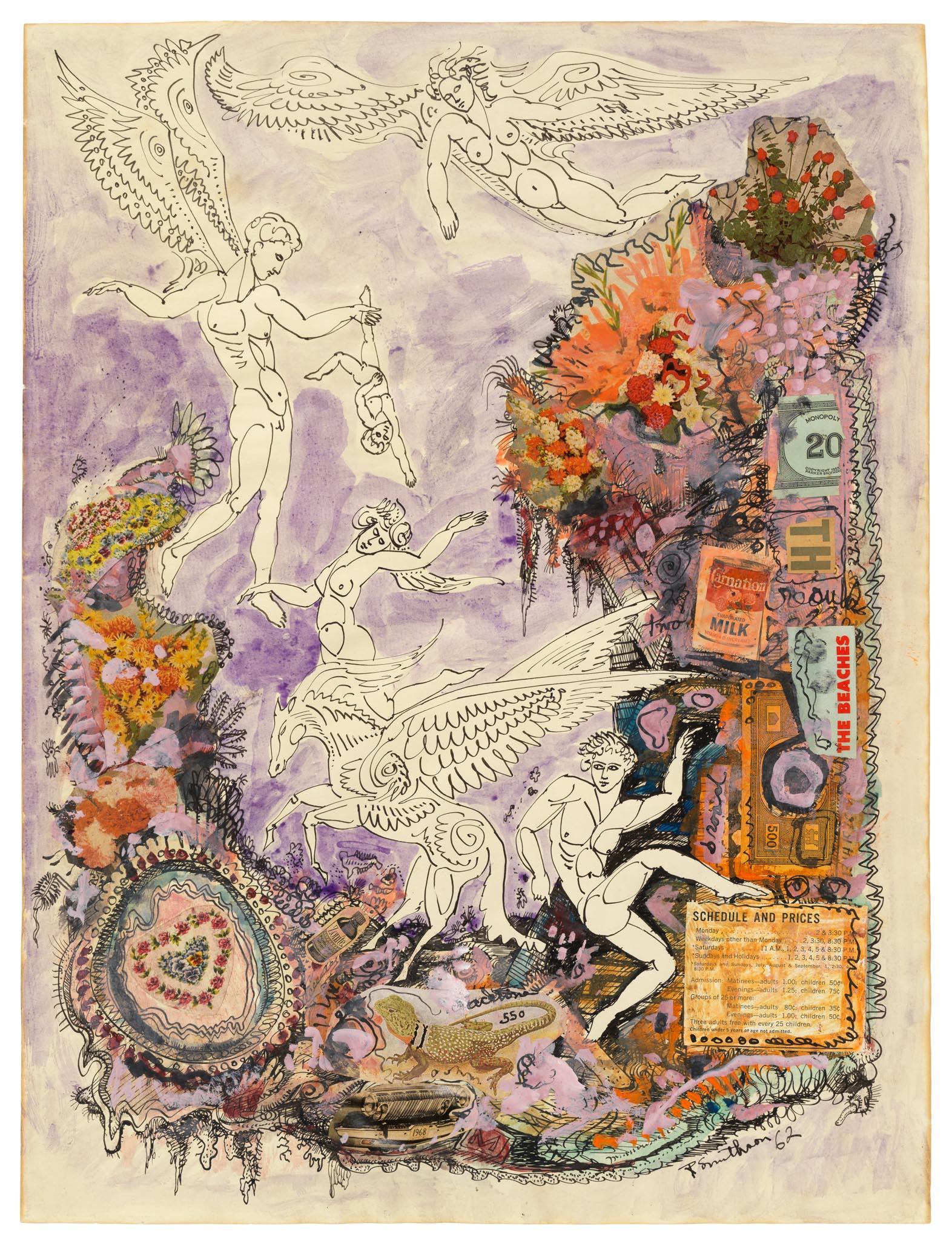
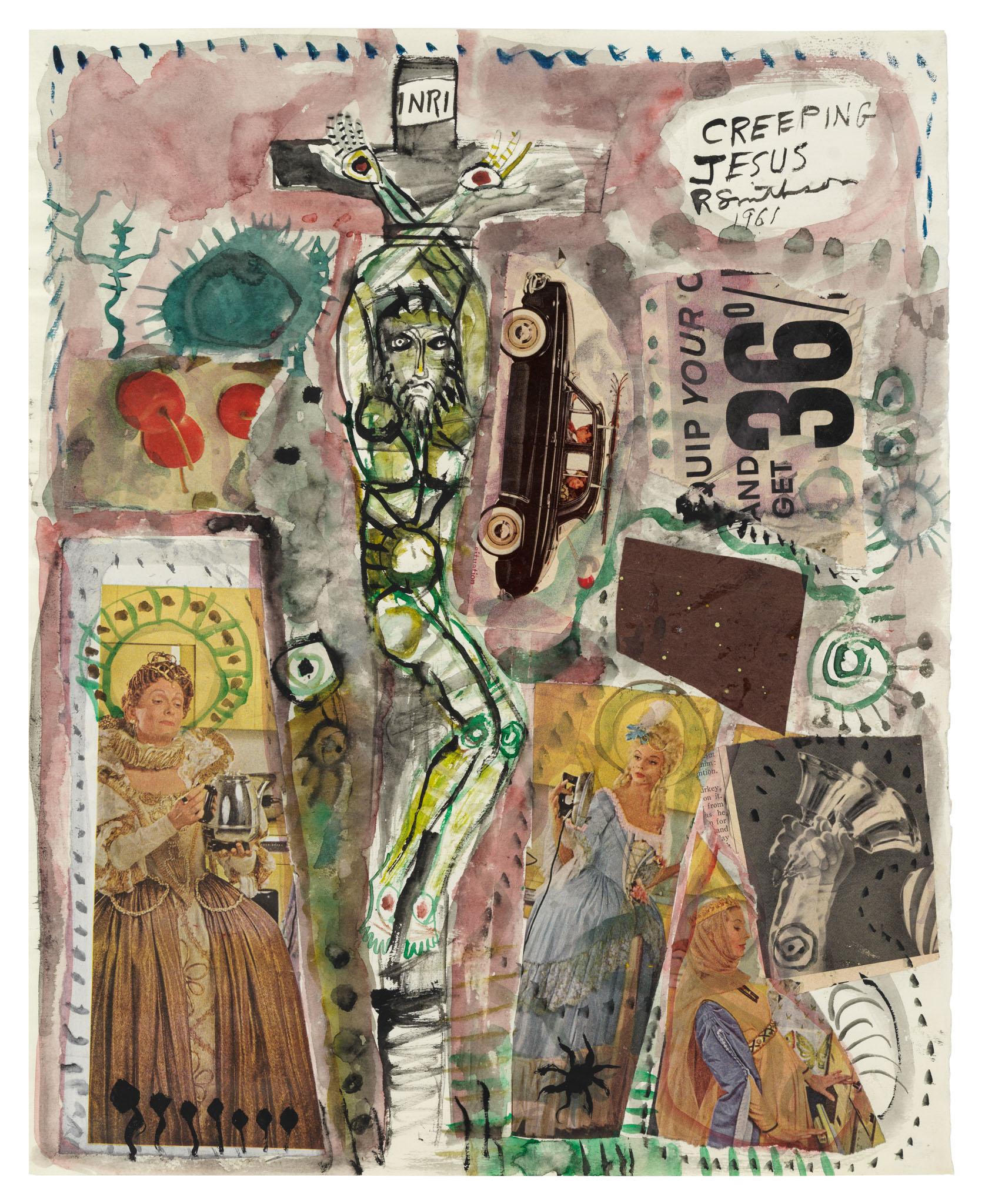
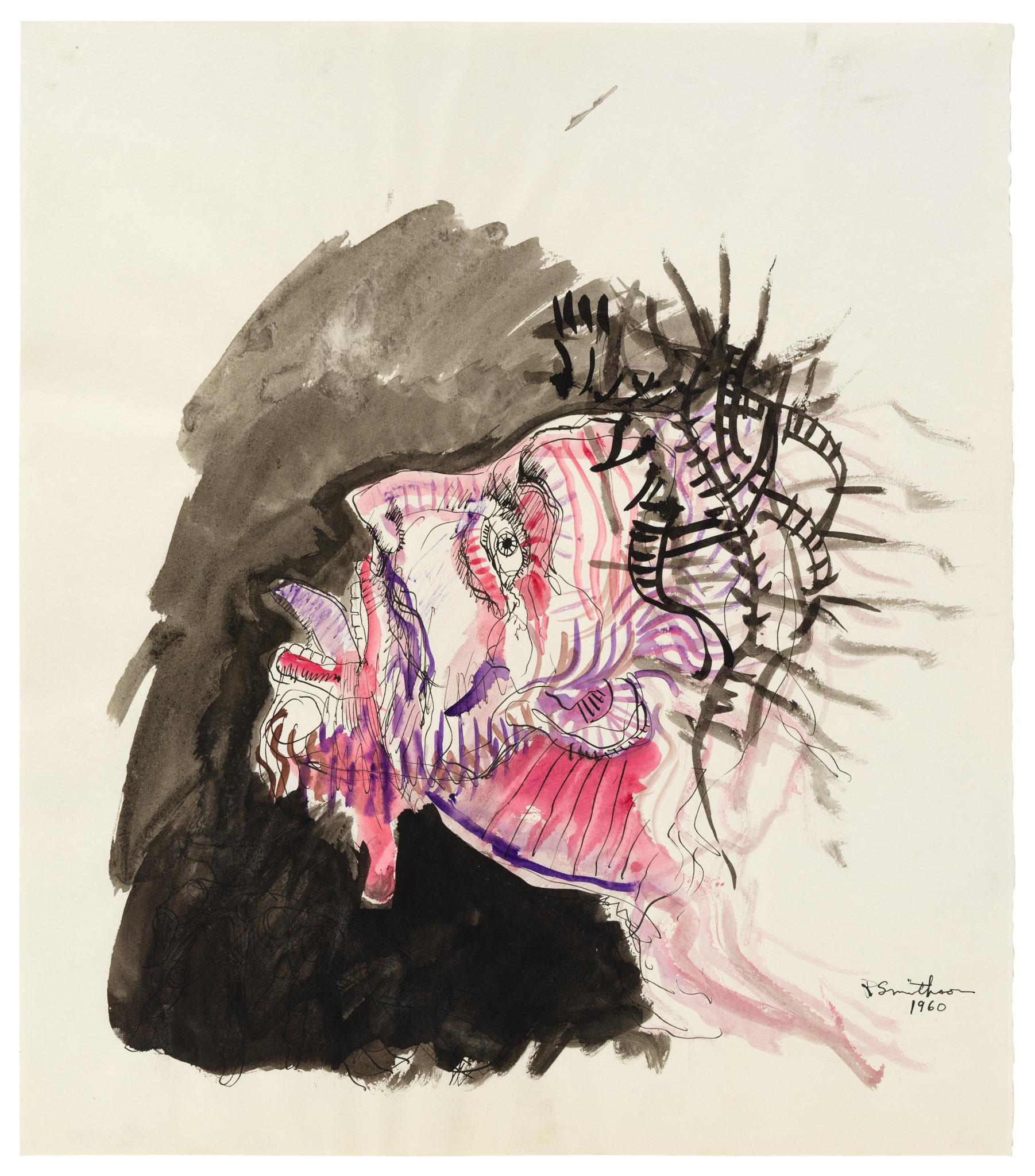
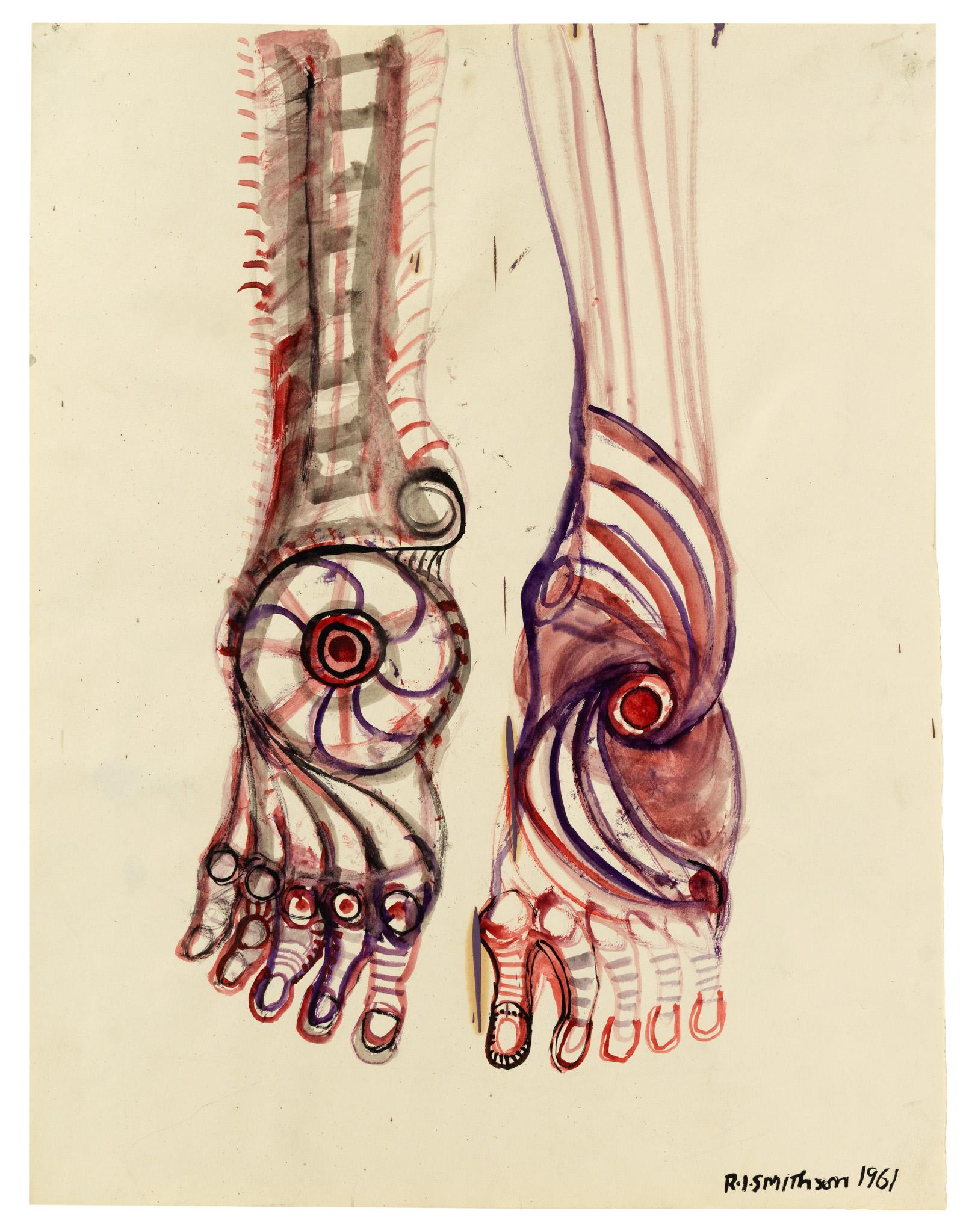
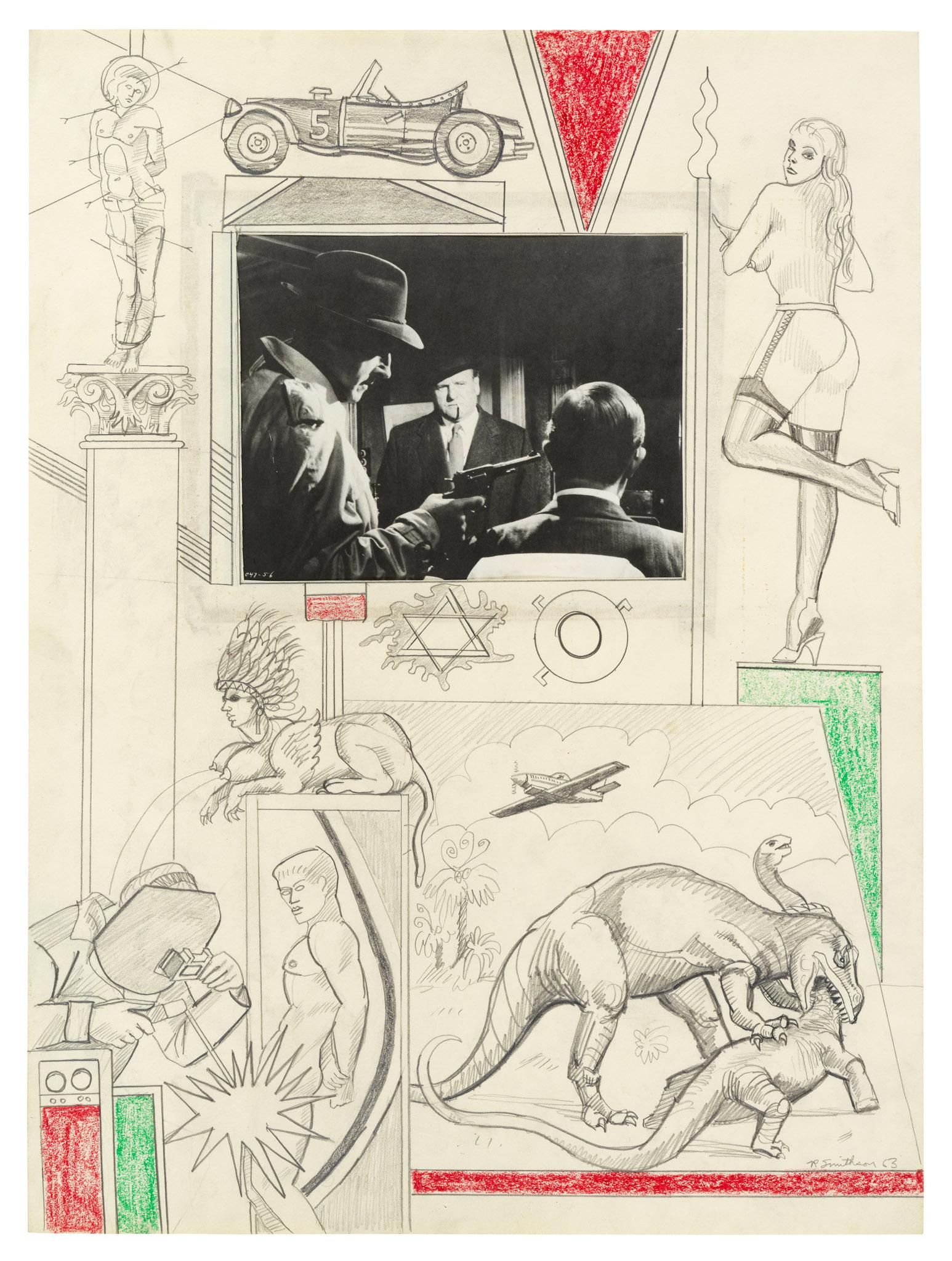
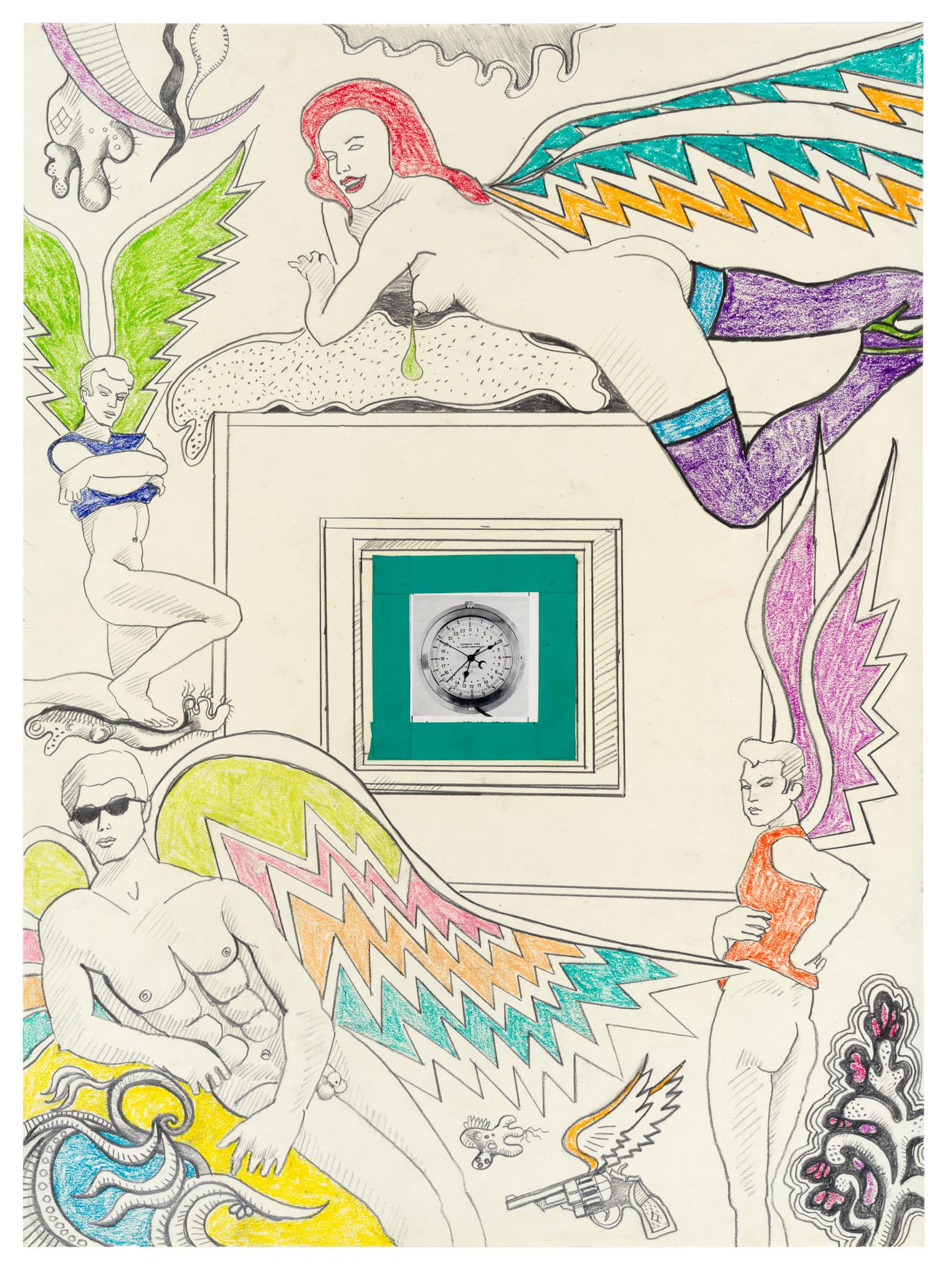
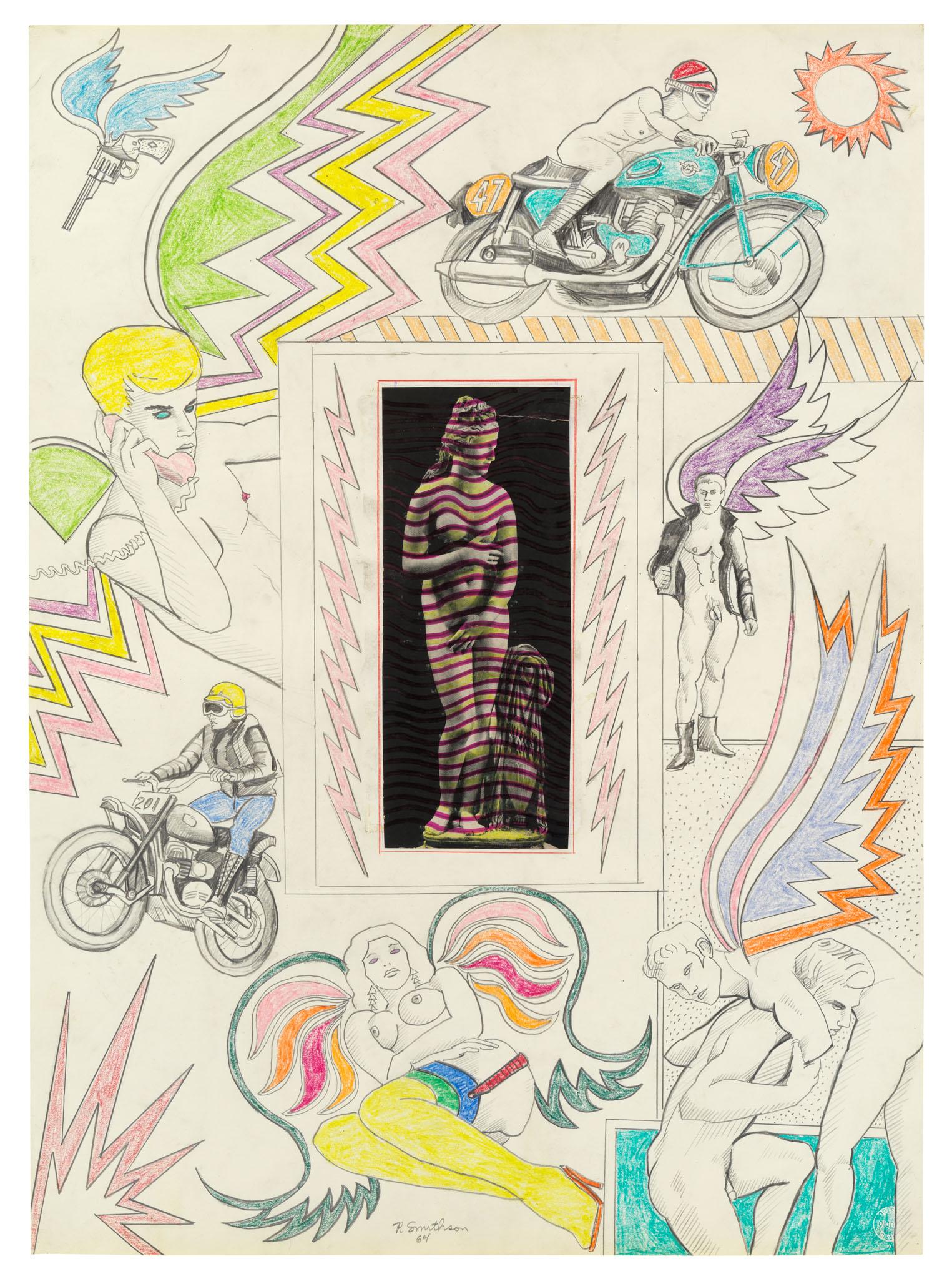
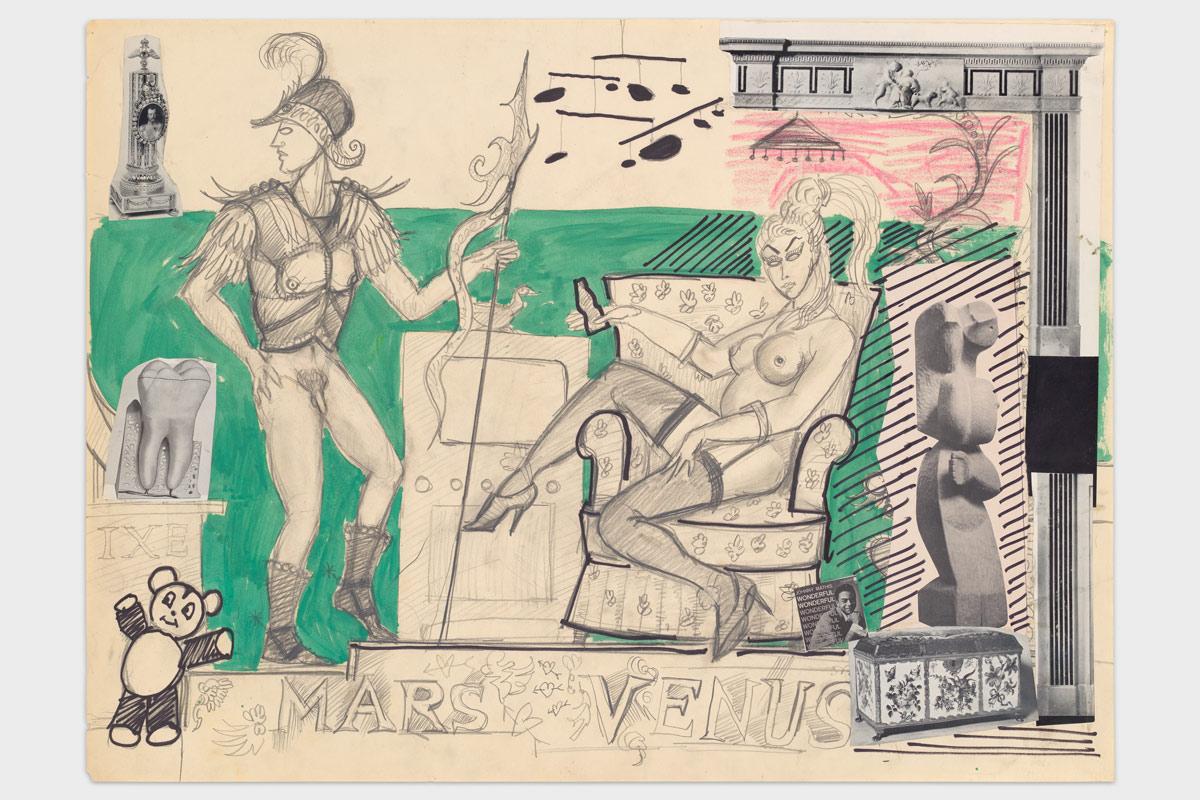
Robert Smithson: Mundus Subterraneus was presented at Marian Goodman Gallery, Paris from January 13 through February 24, 2024. Developed with Professor Adrian Rifkin, this exhibition focuses on Smithson’s works on paper made in the early 1960s, presenting drawings and collages that set the ground for his studies of entropy and the fall of modernism. Many of these drawings have never previously been seen. Leather-clad bikers, crumbling cities, movie stills, occult books, and erotic entanglements buzz against references to the dogmas of art history, religion, and totalitarianism. Alongside Mundus Subterraneus, a presentation of rare exhibition posters and print material is on view at the gallery’s 66 rue du Temple space. The selection is related to Smithson’s exhibitions and projects spanning several decades from the late 1950s to the 1980s at venues including New York’s Artists Gallery, Castellane Gallery, Dwan Gallery, and the Jewish Museum.
In 1972 Smithson reflected in an interview that his early works were “a kind of groping, investigating period,” made at a time when he was “interested in origins and primordial beginnings, the archetypal nature of things.” These concerns he described were “haunting me all the way through 1959 and 1960, when I got interested in Catholicism through T. S. Eliot and, through that range of thinking, T. E. Hulme led me to an interest in the Byzantine and his notions of abstraction as a counterpoint to the humanism of the late Renaissance.” In 1964 he announced that he morphed into a more “conscious” artist who rejected “lurking pagan religious anthropomorphism.”
Mundus Subterraneus pays attention to this groping, investigating phase of artmaking, to a moment when Smithson described himself as creating “phantasmagorical drawings of cosmological worlds somewhat between Blake and a kind of Boschian imagery.” These drawings are a raw, unfettered analysis on the idea of modernism and on systems of knowledge. The exhibition’s title is taken from a drawing Smithson made in 1971 based on an illustration of earth’s volcanoes and interconnected lava tubes found in Mundus Subterraneus, a wide-ranging scientific encyclopedia from 1665 written by the polymath and fabulist Athanasius Kircher. Both Smithson and Kircher were fascinated by what lies beneath the earth’s surface and the limitations of human knowledge. In the 1970 film Spiral Jetty Smithson narrates, “the earth’s history seems at times like a story recorded in a book, each page of which is torn into small pieces. Many of the pages and some of the pieces of each page are missing.” The incongruities and mysteries in the earth’s history that fascinated Smithson spiral their way through the layers of historical and cultural archetypes referenced in the works in Mundus Subterraneus.
Smithson’s works on paper include dinosaurs collaged with magazine advertisements, film stills paired with Corinthian columns, and statues from antiquity layered with bright pop abstractions and flying motorcycles. There are human bodies transforming into trees, references to superstition and esotericism, gender-fluid figures, and queered tropes of ultra-masculinity. He uses a still from the 1961 Ealing Studios film The Secret Partner and the record sleeve to Johnny Mathis’ album cover Wonderful, Wonderful. In some drawings he outlines the swastika, an ancient symbol transmuted through association, set beside a queer coupling in one work, being ingested by a monstrous fish in another. Smithson creates conversations and contradictions by combining divergent imagery from art history, movies, and fetish magazines. Smithson’s early drawings have rarely been seen, and they demand much research. They are complicated decipher, yet are necessary to engage with to fully understand the scope of Smithson’s critical engagement with signs and structures of society.
About the exhibition
Robert Smithson: Mundus Subterraneus was curated by Lisa Le Feuvre, Executive Director of Holt/Smithson Foundation with Professor Adrian Rifkin. It was accompanied by an illustrated newspaper with a commissioned text by Professor Rifkin, which he presented as a performance event, that can be purchased through our bookshop. Professor Rifkin has taught in art schools since 1970, most recently as Professor of Art Writing at Goldsmiths, University of London. Robert Smithson’s 1961 essay The Iconography of Desolation is also included in the newspaper, along with illustrations of key works from the exhibition.
Watch a conversation between the curators Lisa Le Feuvre and Adrian Rifkin here.