Wild Spot: Notes on a Few Coincidences of Art and Life
May 10 to August 17, 1979
I receive several letters at my studio in New York from Wellesley College telling me that they are interested in commissioning one of my sculptures. Before this, the last correspondence I received from Wellesley arrived at my home in New Jersey when I was a senior in High School. It was a rejection notice from Admissions.
October 16-17, 1979
After two decades I return to Wellesley, only this time rather than being interviewed for possible admission, the purpose is to select a site for my artwork. It was to this genteel, rarified Wellesley College world that my parents, who both died in 1962, brought me – a teenage New Jersey kid from a large public High School where about 5-10% went on to college.
Then, in the late fifties, the campus had made me feel acutely a hard, wild energy in my core - the existential, rebel without a cause, never to be subdued by education type of wildness, a feeling that continued to stay with me through my college years in the Boston area (Jackson College at Tufts University) and remains, transmuted, a part of me even now.
What amazes me on returning to Wellesley after so many years is the sting of rejection that goes through me several times as I walk around. I had figured that any residue of disappointment in not getting into the school of my mother’s passionate choice would have been dissolved by my psychic chemistry by now. I conclude that not living up to your parents’ dreams for you can not only be rough but can lead to long-term seizure of the being.
As I leave the campus at noontime and enter the town of Wellesley, I notice a road sign with large letters reading "Worcester 28 miles". Worcester - my birthplace, my mother's hometown, and the place where she married my father, who spent five years there attending Worcester Tech. It was when I was three that we all moved to New Jersey.
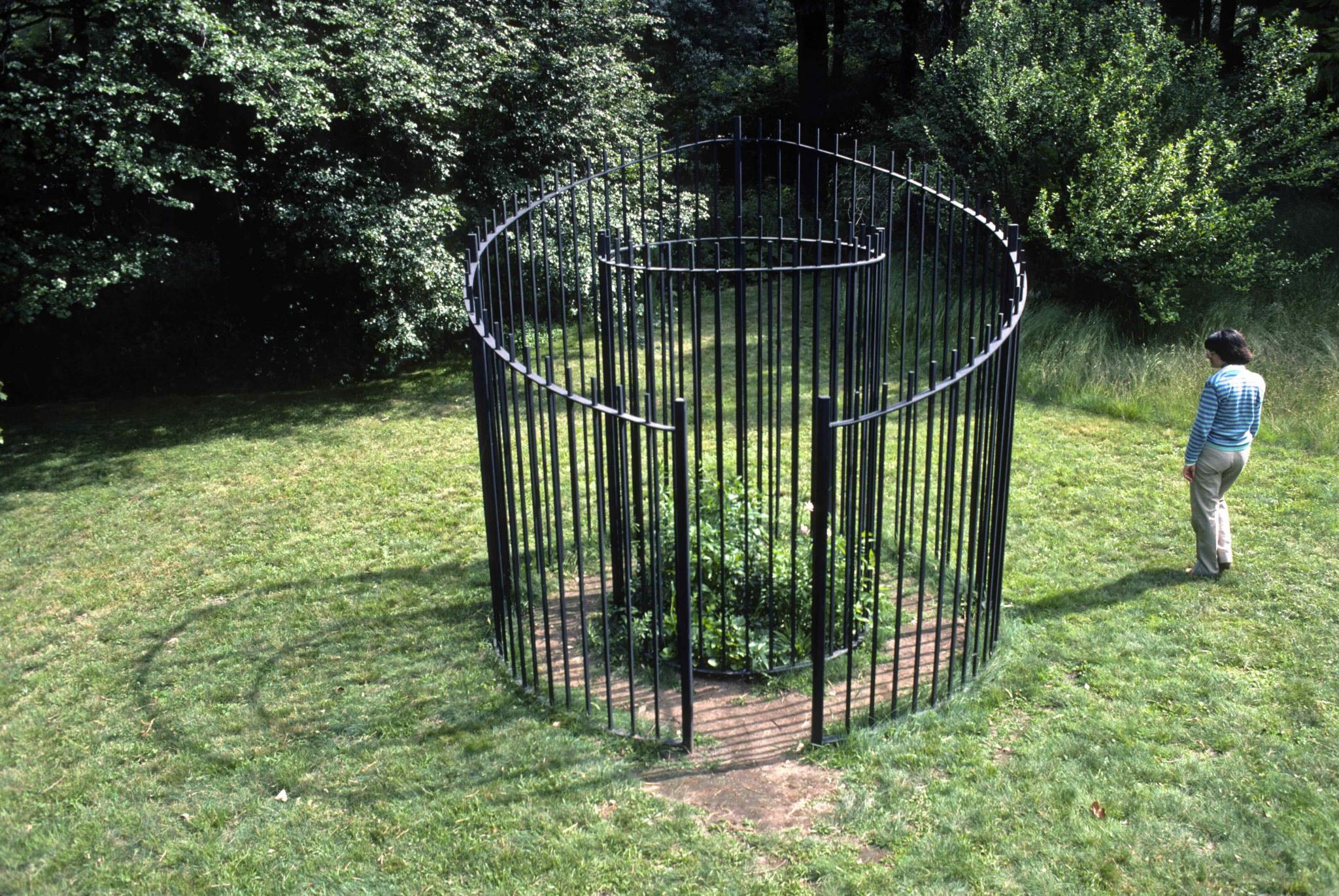
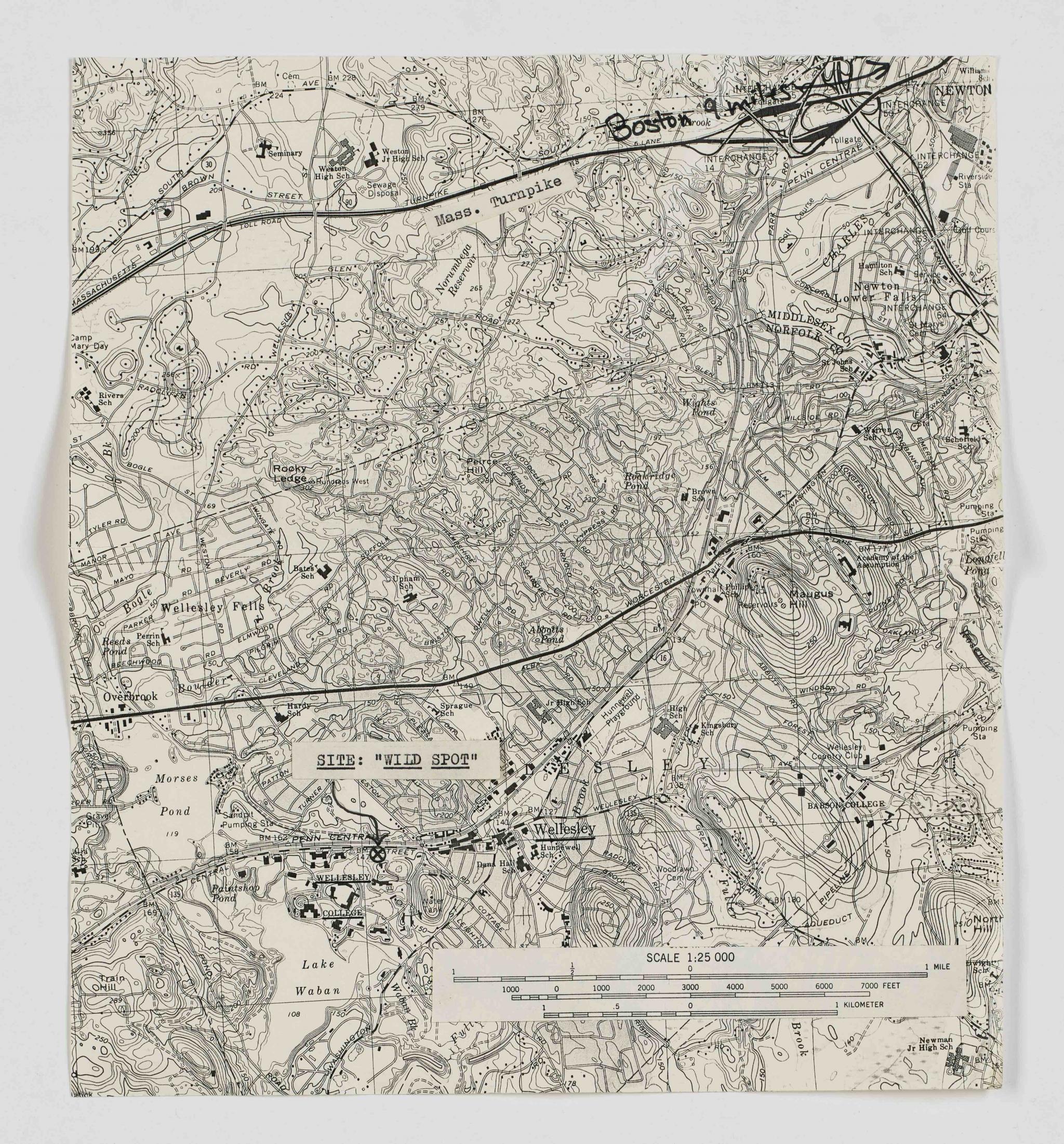
In the afternoon with Judy Fox, curator at the Wellesley Museum, I chose a site for the work, out of view of the college buildings near a small, winding brook. I try out different centers, mark and photograph the site, which is a natural cove formed by a stand of trees and a grassy mound, and with the site clearly in mind, I begin waiting for the idea for the artwork to precipitate out of my mental suspensions.
November 2, 1979
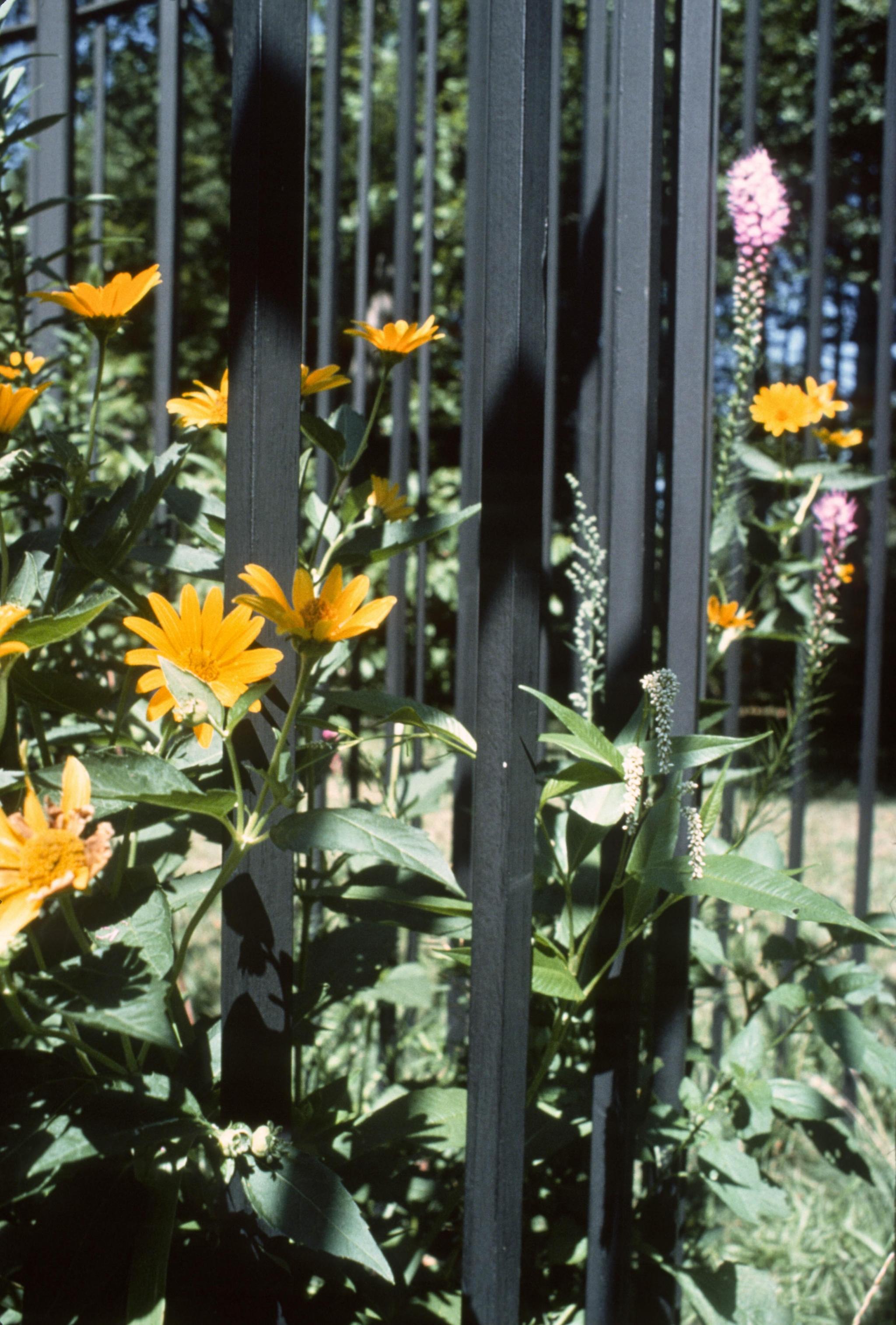
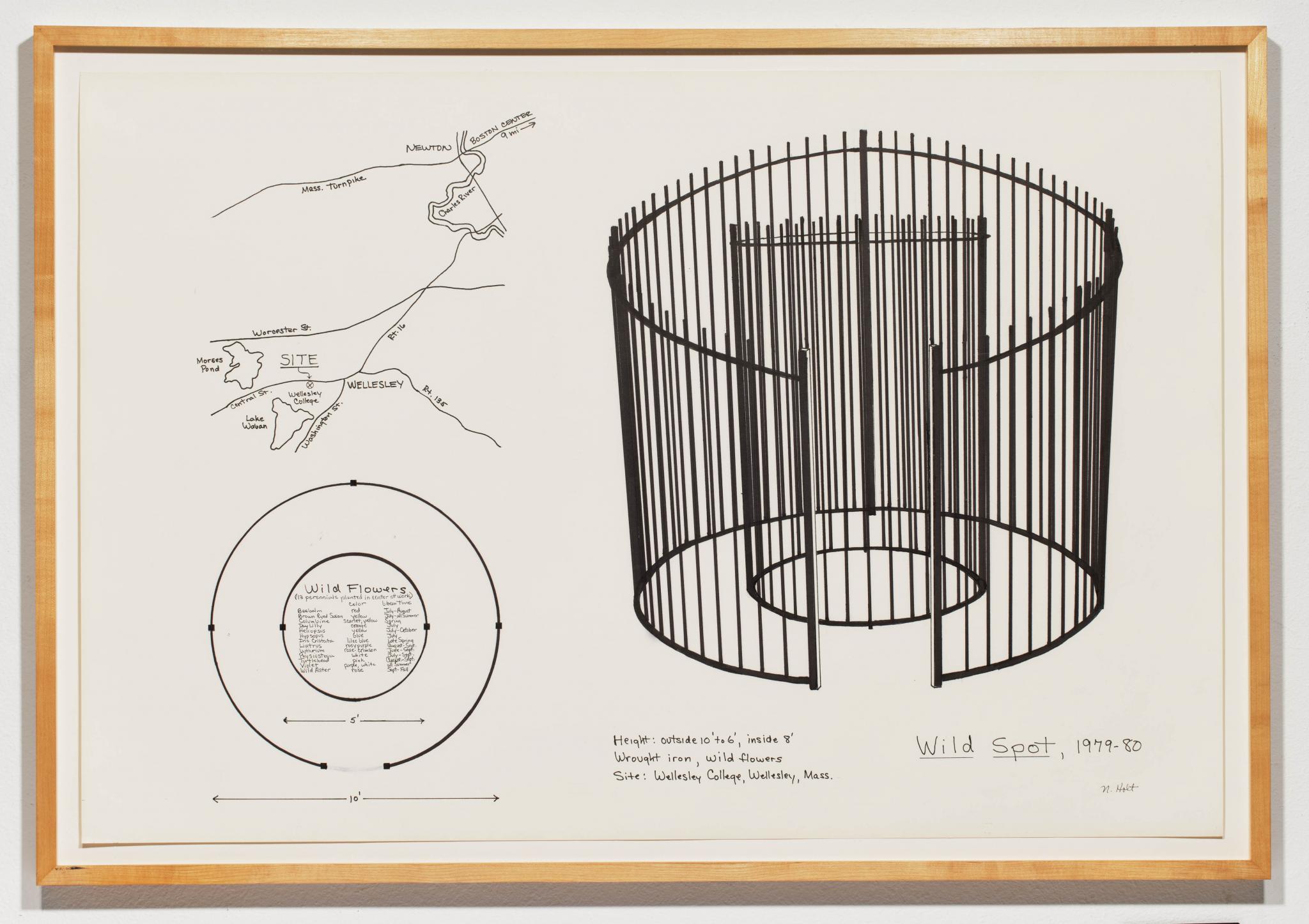
In a motel room in Oxford, Ohio where I'm building another sculpture entitled Star-Crossed at Miami University, the idea for Wild Spotcrystallizes in my mind – but with several shapes and sizes which I quickly sketch. Later drawings and estimates help decide the final configuration of the work - wild flowers surrounded by two concentrically circular wrought iron units, the outer one sloping and accessible to enter, the inner one enclosing the wild flowers, even and impenetrable.
December 18-19, 1979
Judy Fox and I go to at least ten wrought-iron works which she had researched in the Boston area. A few weeks later, after getting all the bids in, I settle on Santini Bros. Iron Works, a small family-run business then in Somerville, but relocating in Medford (where I happened to have gone to college) during the process of fabricating Wild Spot.
March 25, 1980
I drive up to Wellesley to help Rusty Santini and his assistants install my work.
March 29, 1980
Judy and I wander through an enormous nursery in Hopkinton, and I select perennials that grow wild in the region from the catalogue and garden with the help of an older woman who seems to emerge from the earth as she plants in the soils in the back fields of the nursery.
March 30, 1980
I read in the Sunday New York Times Book Review Section a review by Edward Hoagland of The Tree, a book by John Fowles and Frank Horvat. I am struck by some phrases in the review:
“We suppose that the limiting methods of scientific investigation correspond to daily experience, when on the contrary, daily experience, being composed of a tangle of past memories and present perceptions, private and public history, physiological and psychological factors, is quintessentially “wild.” Irrational, incalculable, unphilosophical, despite our efforts to “garden” it through social or intellectual disciplines, it corresponds closely to wild nature, which is why we must return to the wilderness of dreams each night."
"…to know nature is an art as well as a science; and the heart of this art lies in our own personal nature and its relationship to other nature, not in "nature” as an objective clutch of phenomena outside us. Furthermore, such intimate· knowledge cannot wholly be conveyed by painting, photography or nature writing either. In the end they can be used only as an inferior substitute…”
April 4, 1980
Because of the weather and difficulties pouring concrete footings in soft, sandy earth, the installation takes ten days ending on the eve of my birthday. I take off in my van for NYC in a rainstorm which is so torrential by the time I reach Worcester that I pull off the road and go into a roadside cafe to wait out the storm. And so it is that from a phone booth in my birthplace, within eleven hours of my birth-time, I call Wellesley and tell them to dedicate Wild Spot to my mother, E. Louise Holt. The pieces of past and present mesh then forming another of the coincidental webs which have repeatedly occurred in my life. Wild Spot, full circle, it is complete.
Nancy Holt, Wild Spot: Notes on a Few Coincidences of Art and Life; first published in Chelsea 39 (1981), pp1980-82