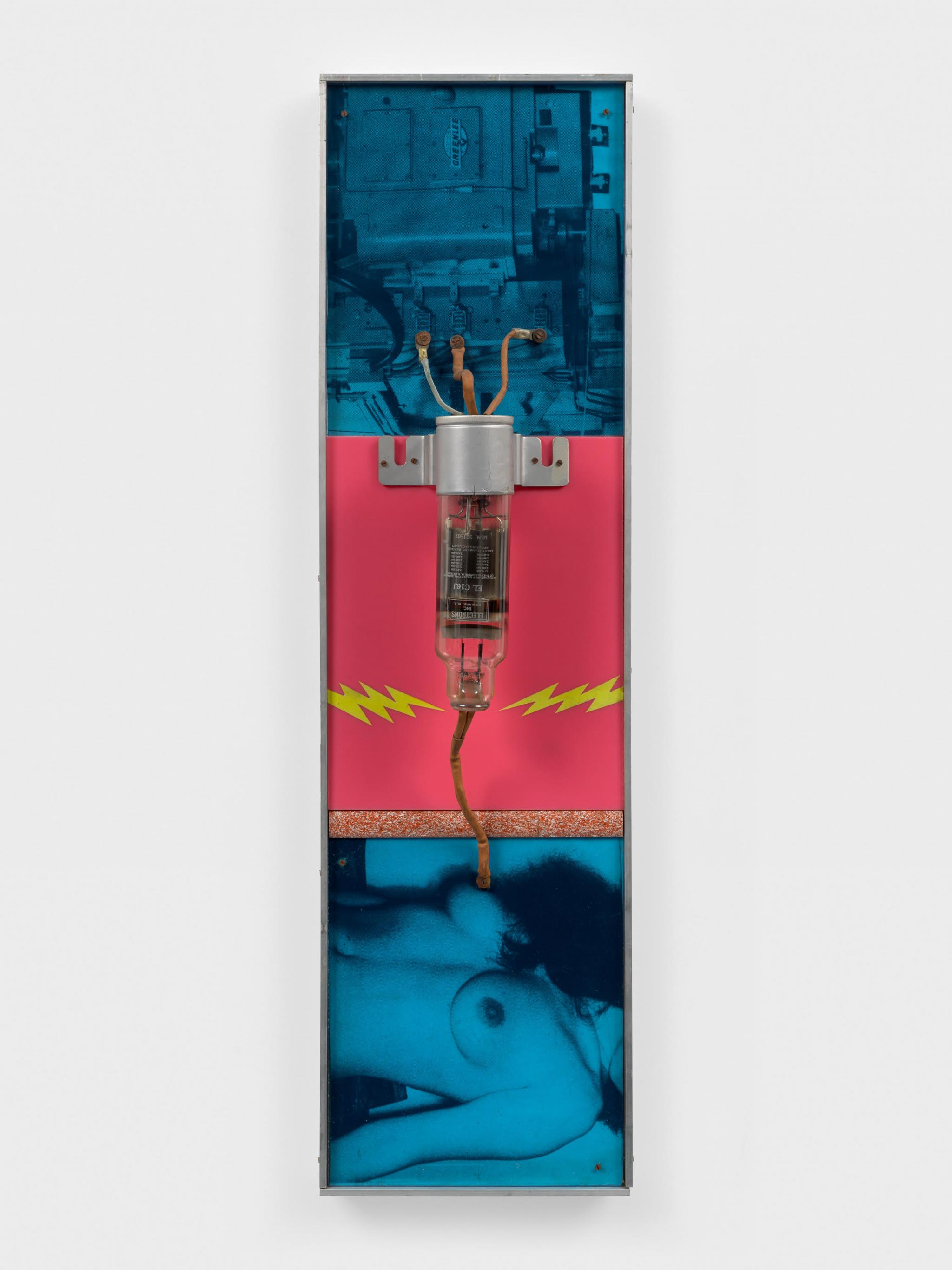
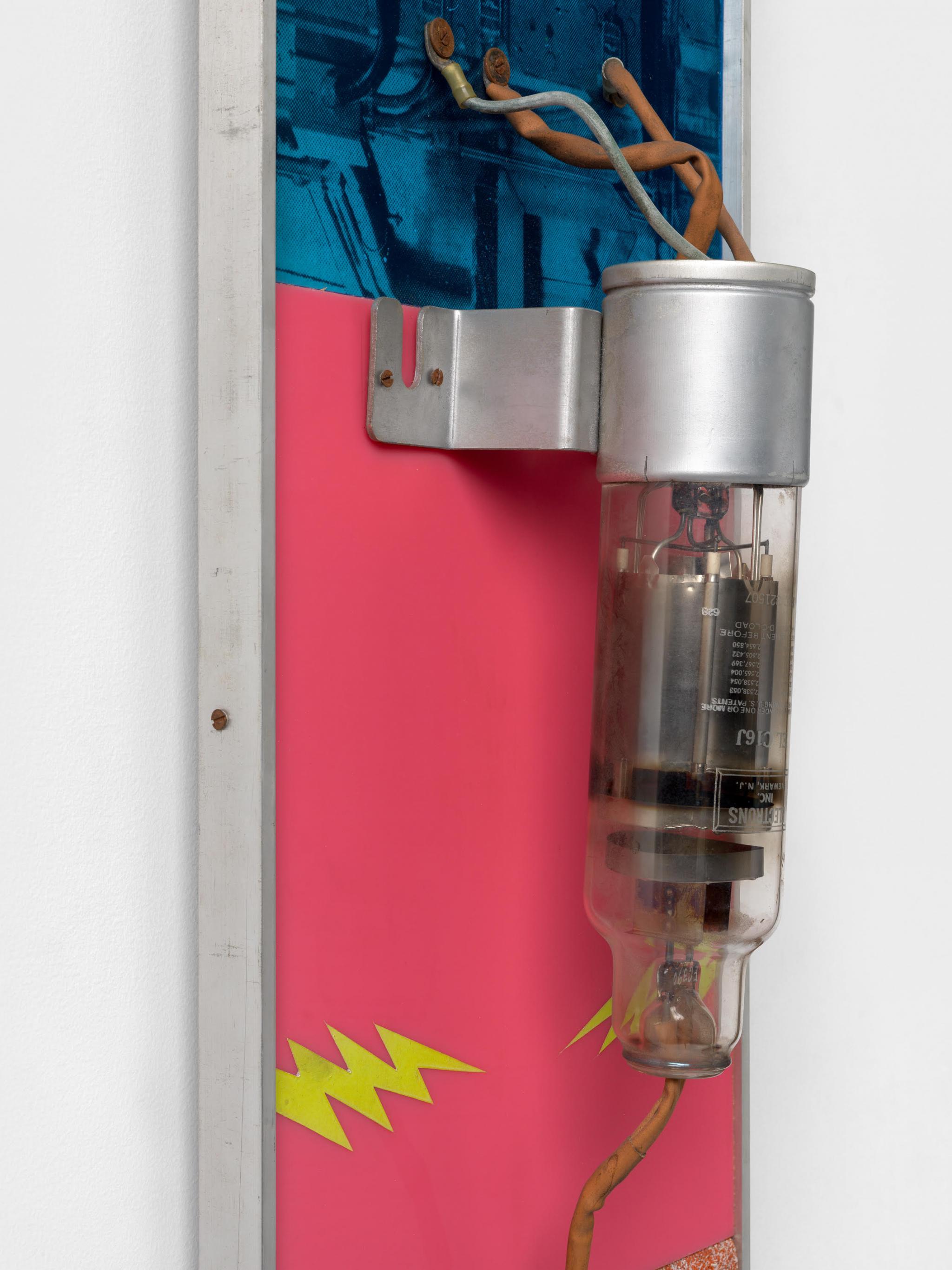
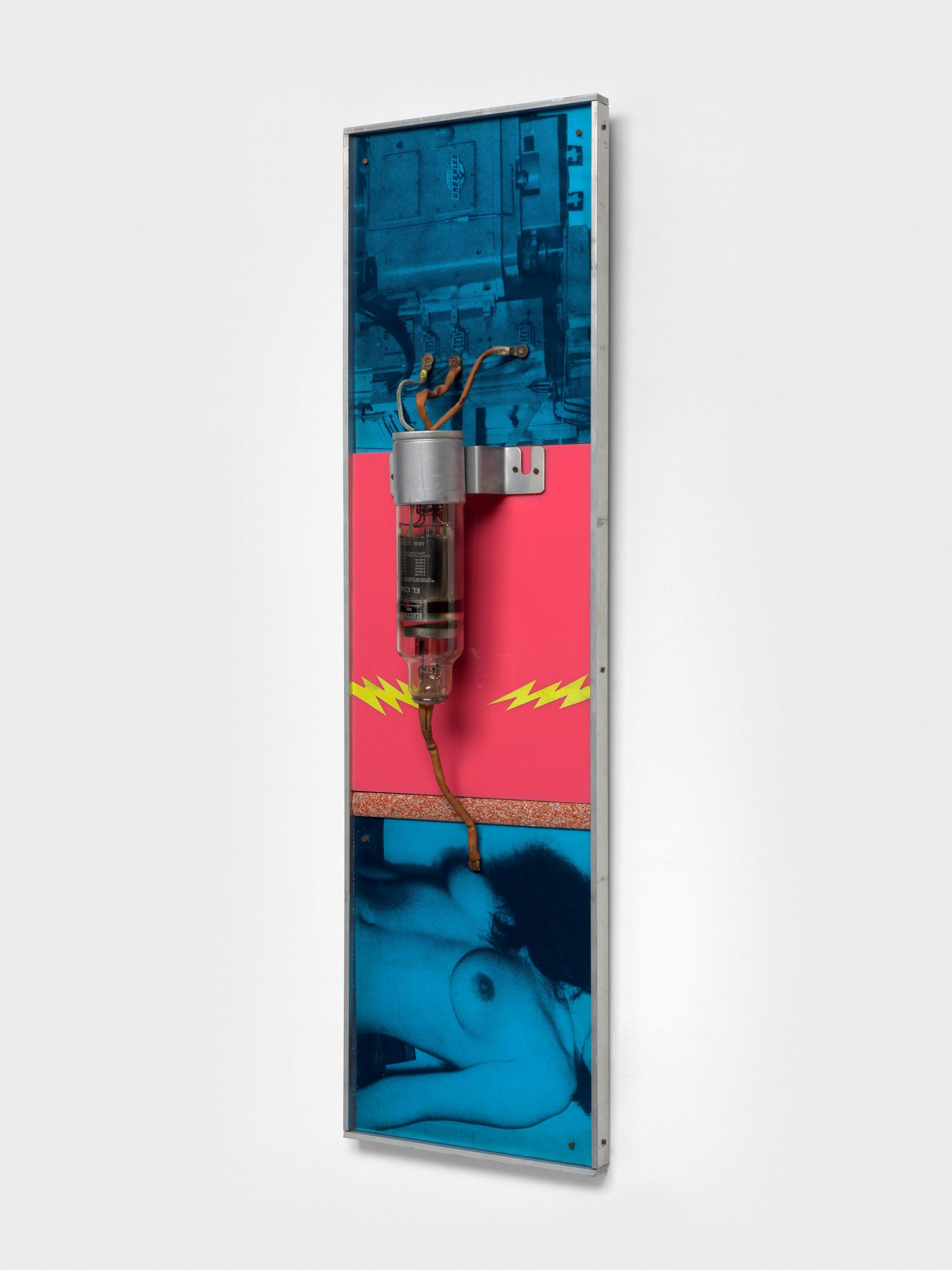
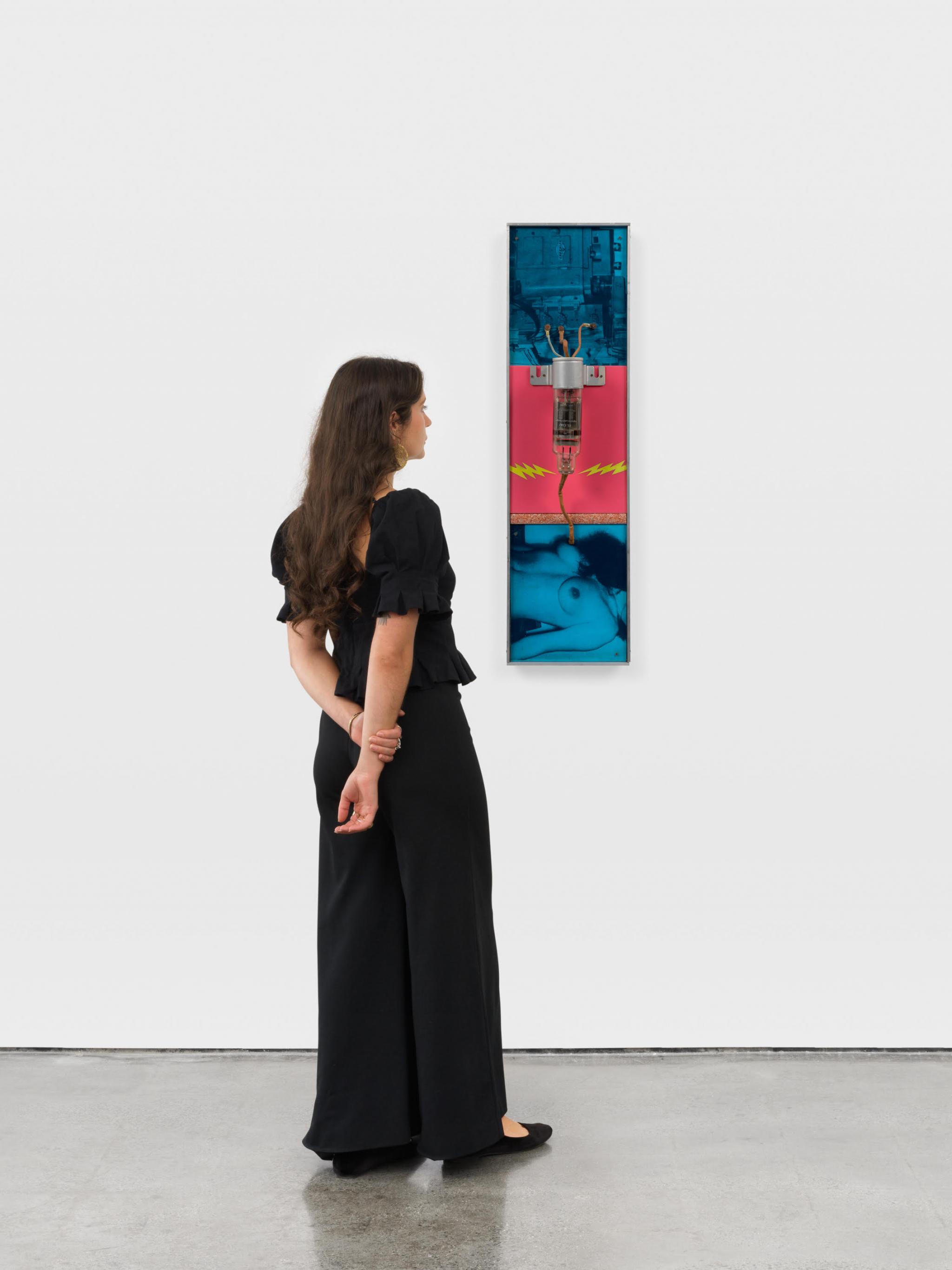
Plexiglass, machine parts, steel, and mirrors on wood
18 x 26 x 1 in. (45.7 x 66 x 2.5 cm)
Collection Holt/Smithson Foundation
© Holt/Smithson Foundation / Licensed by Artists Rights Society, New York
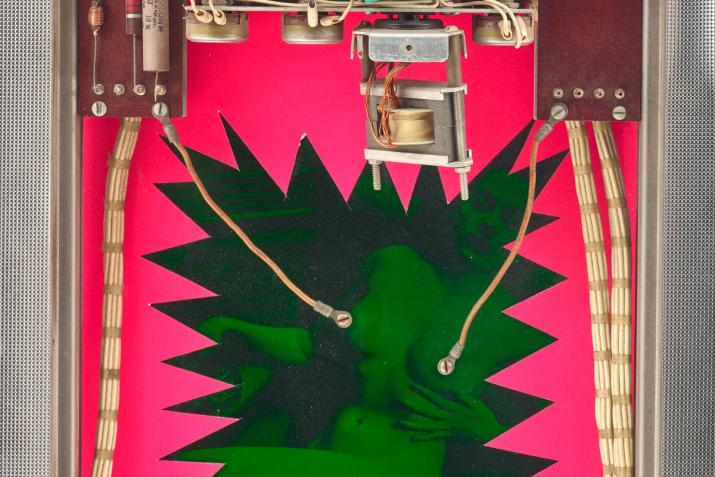
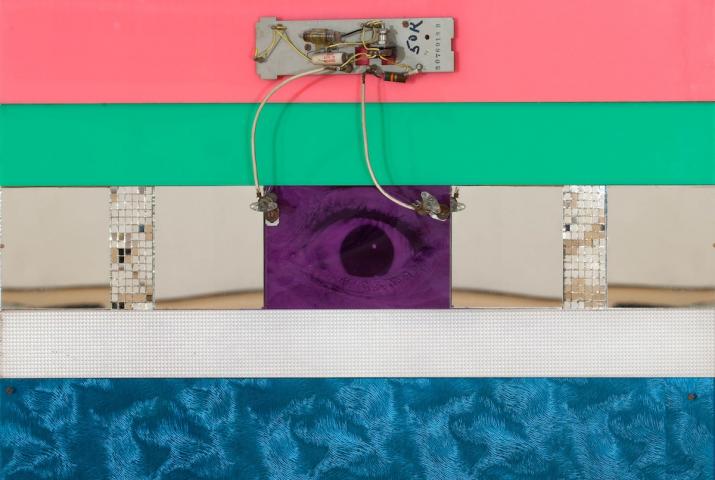
In The Machine Taking a Wife (1964), Robert Smithson extends his use of collage into sculpture. A green-tinged image of an industrial machine sits above a similarly tinted image of a female pin-up, framed in a hot pink outline. The two are linked by a rectifier tube, an electronic component that converts alternating current (AC) into direct current (DC). At the time, AC/DC was also American slang for bisexuality.
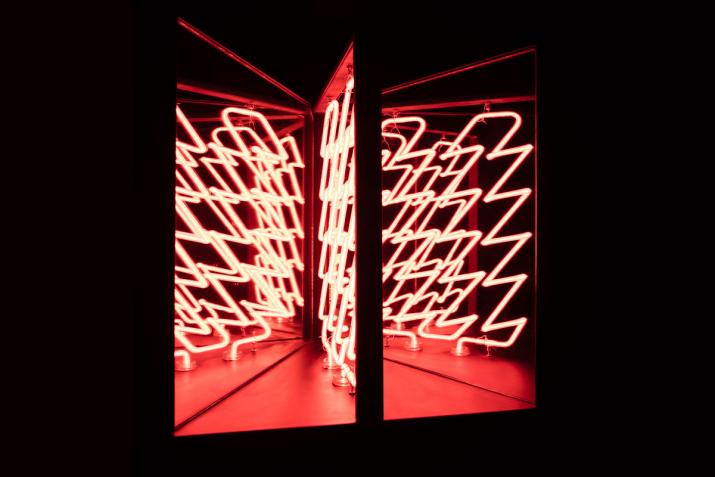
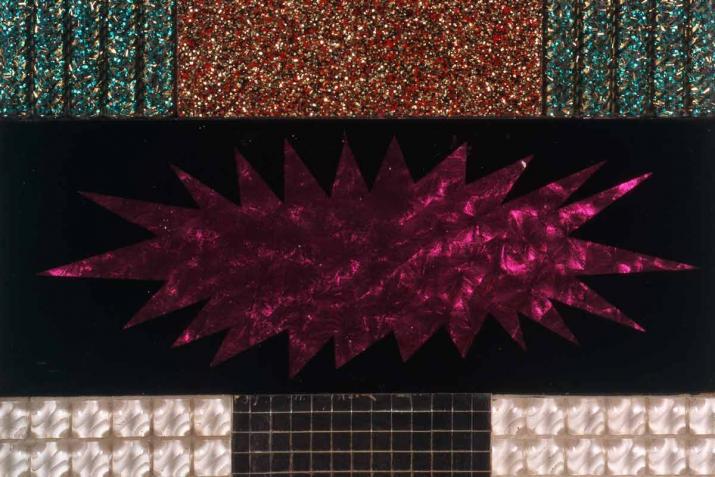
Like the assemblage Honeymoon Machine from the same year, this wall-based sculpture brings together sexuality and technology. Its title and coupling of erotic and mechanical imagery nod to Marcel Duchamp’s The Bride Stripped Bare by Her Bachelors, Even (The Large Glass) (1915–23). Here, the electrical components give that erotic connection a literal charge. Lightning bolts and the pin-up motif, familiar from Smithson’s drawings, appear here, although he more often drew on male soft-core imagery in these early works.