Super 8mm film and Instamatic slides, color, sound
Duration: 19 minutes, 54 seconds
© Holt/Smithson Foundation / Licensed by Artists Rights Society, New York. Distributed by Electronic Arts Intermix, New York
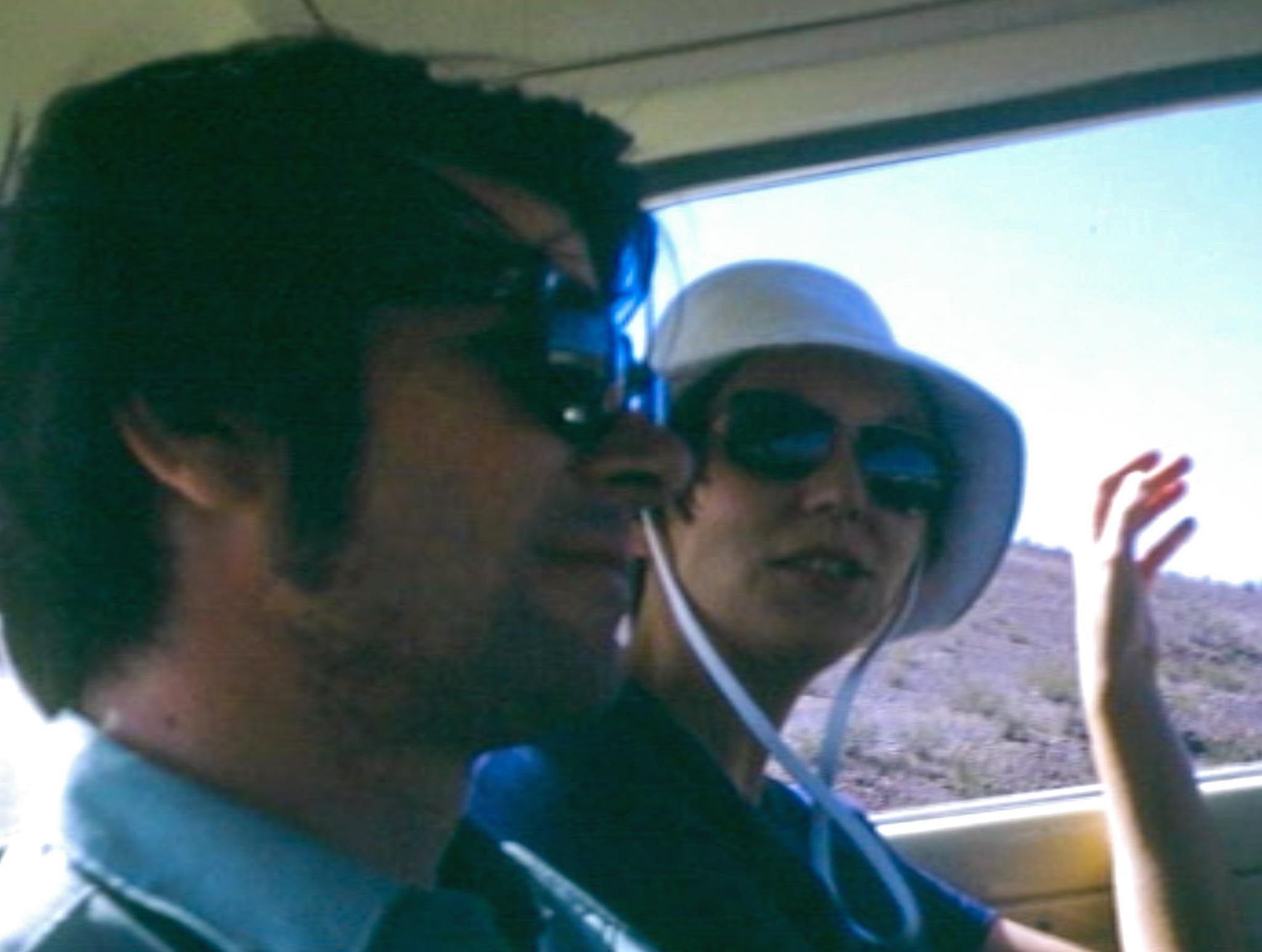
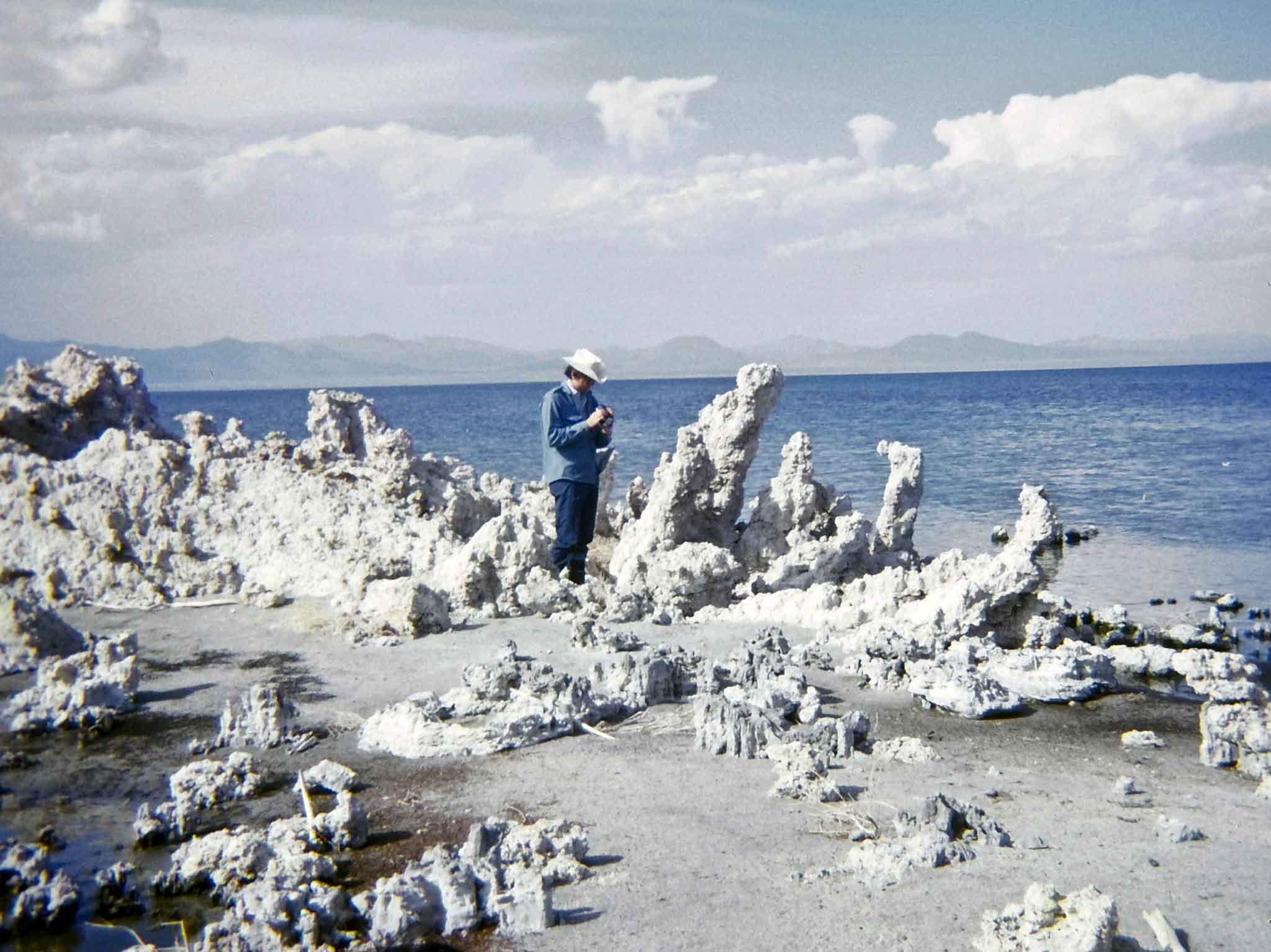
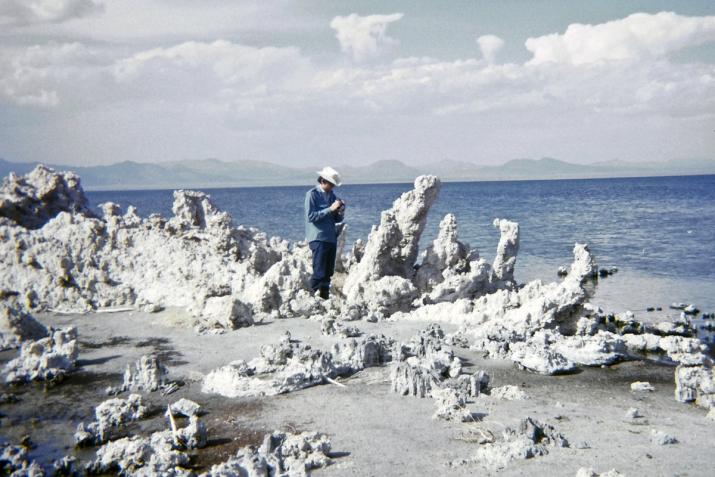
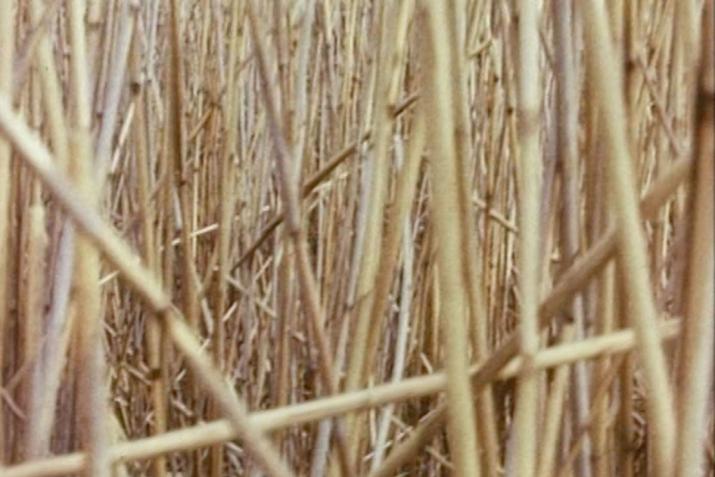
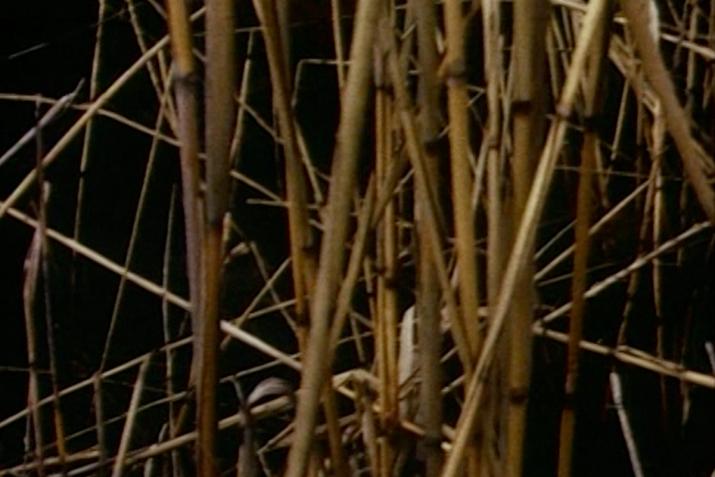
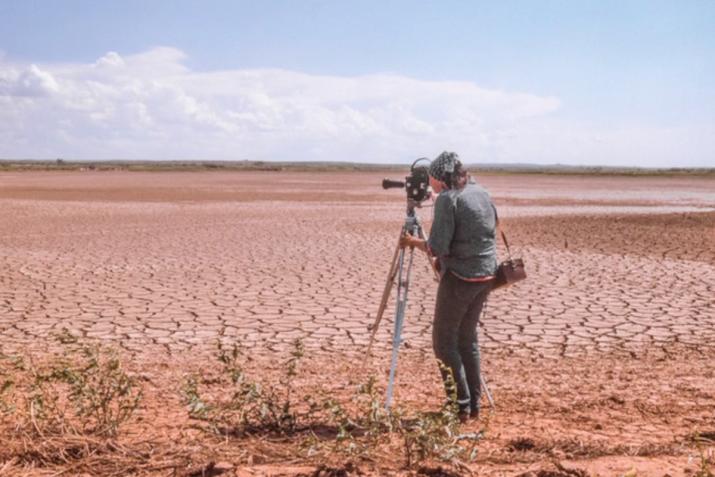
Mono Lake is an artwork by Nancy Holt and Robert Smithson. The film uses a combination of Super-8 film footage and Instamatic slides to document a trip the artists Robert Smithson, Nancy Holt, and Michael Heizer took to Mono Lake in California on July 28, 1968. Mono Lake is as much about a journey as it is a destination; it is both a document of a road trip and an exposition of the lake’s striking singularity and the uncanny beauty of its environment.
Mono Lake begins with the three artists on the road, rustling maps, consulting rock hounding guides, and searching for radio stations. The trio arrive at Mono Lake, park their car, ignore a “No Trespassing” sign, and head to the saline lake’s shore. Mono Lake covers over seventy square miles and is surrounded by volcanoes. It is a location where the traces of glacial movement can be seen and is a place that supports a unique and productive ecosystem where the long history of the surface of our planet can be seen directly.
On the soundtrack Heizer and Smithson read facts about the site’s geology, indigenous history, and unique ecosystem over a musical soundtrack. Some of the readings are from publication by Robert Fleming Heizer (Michael Heizer’s father), Kutsavi, a Great Basin Food, (Anthropological Society Papers 2, November 1950) and from the booklet Rock Hounding Out of Bishop by Cora B. Houghtaling (Chalfant Press, Bishop, CA, 1967). When the trio depart Mono Lake there is a stop at Lake Tahoe to toast marshmallows and check routes, and to create cinders that would find their way into Smithson’s sculpture Mono Lake Nonsite (Cinders Near Black Point) (1968).
At the time of filming, Smithson selected the readings and the music by Michel Legrand for an early unedited soundtrack, which was recorded close to the time of the filming. The project was put aside until 2004, when it was edited by Holt for the Robert Smithson retrospective at the Museum of Contemporary Art in Los Angeles, touring to the Whitney Museum of American Art, New York.